
CUTS urges Gov't to delay Traffitech-GH enforcement until traffic lights, road markings are fixed
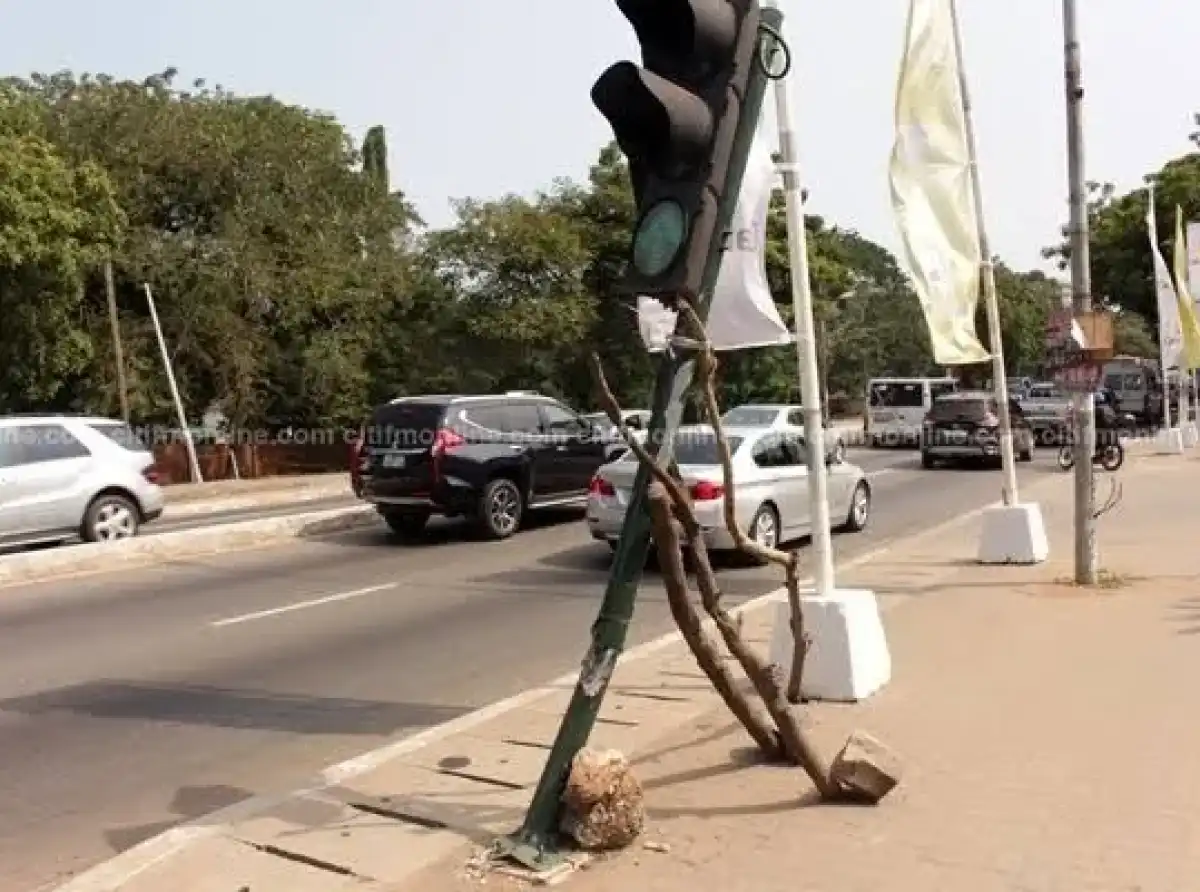
CUTS International Accra, a leading research and public policy think tank, has called on the government to delay the full enforcement of TRAFFITECH-GH, scheduled to begin on October 1, 2026, until traffic infrastructure at enforcement locations has been inspected and repaired.
CUTS supports the use of technology to improve compliance with road traffic regulations and reduce road crashes. However, the think tank says automated enforcement can only be fair and effective when drivers can clearly see traffic lights, identify applicable speed limits and follow visible road markings.
“Government should hold drivers to the law. Government must also make the law clear and visible on the road,” CUTS said. “The purpose of TRAFFITECH-GH is safer roads, not tickets arising from traffic lights drivers could not see.”
According to CUTS, several locations across Accra have traffic infrastructure problems that could affect drivers' ability to comply with road regulations.
The think tank said overgrown trees obscure some traffic lights, while other signal heads are damaged, displaced or out of service. At some junctions, it said, one of two traffic lights is functioning while the other is not.
CUTS also raised concerns about faded lane markings and stop lines, arguing that such conditions create risks for motorists and pedestrians even before an automated enforcement system is used to issue penalties.
The organisation singled out traffic lights on the Nsawam-Accra Road shortly before the Apenkwa-Achimota overhead bridge and at the Police Training Academy junction in Tesano.
It said traffic lights at the two locations have reportedly shifted out of clear view for approaching motorists, even though TRAFFITECH-GH cameras appear to be correctly positioned.
CUTS urged authorities to inspect the locations from the perspective of drivers approaching from each lane, warning that a camera could record a vehicle crossing a junction on a red light even when the driver could not clearly see the relevant signal.
“A camera’s clear view of a vehicle does not mean the driver has a clear view of the relevant signal or sign,” the think tank said.
CUTS is urging the Ghana Police Service and the Department of Urban Roads to inspect every TRAFFITECH-GH enforcement location before automated fines are activated.
The inspection, it said, should be conducted from the driver's position and cover every affected lane, including visibility conditions at night and during rainfall.
Authorities should also document the condition of traffic signals, road signs, lane markings and stop lines at each enforcement location.
CUTS further called for displaced traffic lights to be repaired and realigned, failed signal heads to be restored, obstructing vegetation to be trimmed and faded road markings to be repainted.
It said automated fines for a particular traffic offence should only begin at a location after the road infrastructure necessary for motorists to comply with the relevant rule is functioning properly and clearly visible.
The think tank also raised concerns about the implementation of speed-camera enforcement under Ghana's 2026 Road Traffic Regulations.
Regulation 211 of the Road Traffic Regulations, 2026 (L.I. 2519), sets general speed limits based on the type and location of a road. Regulation 212 provides additional limits for particular categories of vehicles, while Regulation 213(3) provides for speed cameras and safety signage.
CUTS said these provisions should be accompanied by clear road signage informing motorists of the applicable speed limit at locations where automated enforcement operates.
The organisation noted that drivers unfamiliar with a particular area may not know where a built-up area begins or where a lower speed limit applies, particularly around schools, markets and other areas with significant pedestrian activity.
CUTS is therefore calling on authorities to install clear speed-limit signs before every TRAFFITECH-GH speed camera and at every point where the applicable speed limit changes.
The think tank said motorists should receive adequate and visible warning on the road before an automated enforcement system issues a fine for exceeding a speed limit.
It maintained that the objective of TRAFFITECH-GH should remain the improvement of road safety and compliance, rather than the issuance of penalties in circumstances where road infrastructure prevents motorists from clearly understanding and following the rules.

Aikines Anyomi

News
Food
Politics
Technology
About Us
Download Our Mobile App

