
Ghana named in U.S. car theft ring shipping stolen vehicles across the Atlantic

A large and sophisticated international car theft syndicate with links to Ghana has been uncovered by authorities in the United States, raising renewed concerns about Ghana’s role as a destination market for stolen vehicles.
The case came to light following the unsealing of a 15-count indictment in a U.S. District Court in the District of Columbia. Six individuals have been charged over their alleged involvement in an organized operation that reportedly stole at least 20 vehicles across the Washington metropolitan area and parts of Pennsylvania. Prosecutors say the stolen vehicles were then sold to buyers both within the United States and abroad, including shipments destined for Ghana.
However, investigators believe the scale of the operation may be far greater than initially revealed. Law enforcement agencies suspect the network could be linked to the theft of more than 100 vehicles in Washington, D.C. alone, along with over 30 additional vehicles in Prince George’s County, Maryland. This suggests the existence of a much larger and more organized pipeline of stolen cars, some of which may have ultimately ended up on roads in Ghana.
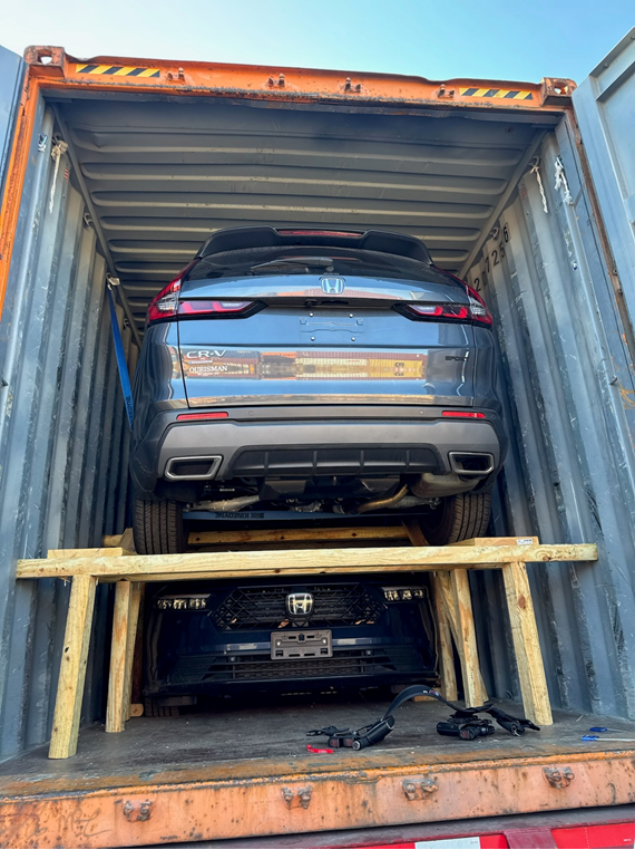
As part of the investigation, authorities executed a search warrant at an automobile storage facility in Decatur, Georgia. The location is believed to have played a key role in the syndicate’s logistics chain, potentially serving as a holding and transit point for stolen vehicles before they were distributed or exported.
According to prosecutors, the syndicate relied on advanced technological methods to carry out the thefts. The group primarily targeted newer vehicle models, including popular brands such as Honda and Acura, specifically models like Civics, CRVs, TLXs, and RDXs. Using electronic reprogramming devices, the suspects allegedly manipulated vehicle systems to accept blank key fobs, effectively bypassing factory-installed security features.
Once stolen, the vehicles were transported to various storage locations, including a parking garage in Southeast Washington, D.C. There, investigators say the cars were disguised through the swapping of license plates and tampering with Vehicle Identification Numbers (VINs), making them more difficult to trace.
Authorities further revealed that the suspects disabled onboard technologies such as GPS tracking and Bluetooth connectivity to evade detection. After these modifications, the vehicles were prepared for resale, with some reportedly shipped overseas to markets including Ghana.
The individuals charged in connection with the case include Jacob Hernandez, 29, of Los Angeles; Dustin Wetzel, 23, of Woodbridge, Virginia; James Young, 23, of Hyattsville, Maryland; Khobe David, 24, of Upper Marlboro, Maryland; and Chance Clark, 25, of Waldorf, Maryland. A sixth suspect remains at large, with identifying details currently sealed by the court.
All six defendants face conspiracy charges related to the possession, transportation, and sale of stolen motor vehicles. The investigation is being led by the Metropolitan Police Department, in collaboration with the Federal Bureau of Investigation Washington Field Office and the U.S. Attorney’s Office for the District of Columbia. Additional support has been provided by the Prince George’s County Police Department.
Although the case is being prosecuted in the United States, its connection to Ghana is expected to draw the attention of Ghanaian authorities and automotive industry stakeholders. The development comes amid ongoing concerns about the influx of stolen vehicles into West African markets, where weak verification systems and high demand for imported cars can create opportunities for illicit trade.
U.S. prosecutors emphasized that the indictment represents formal allegations only. All defendants are presumed innocent unless and until proven guilty in a court of law.

Aikines Anyomi

News
Food
Politics
Technology
About Us
Download Our Mobile App

