Energy Committee Praises NPA’s Transparency During Oversight Visit in Accra

The Chairman of the Parliamentary Committee on Energy, Emmanuel Kwasi Bedzrah, has commended the National Petroleum Authority (NPA) for its transparency and openness in engaging with Parliament, describing the collaboration as vital for effective governance and oversight.
According to him, such engagements play a critical role in strengthening parliamentary oversight and ensuring that regulatory institutions remain accountable and responsive to the needs of the country. He further praised the Authority for its consistent support to Parliament in the execution of its mandate.
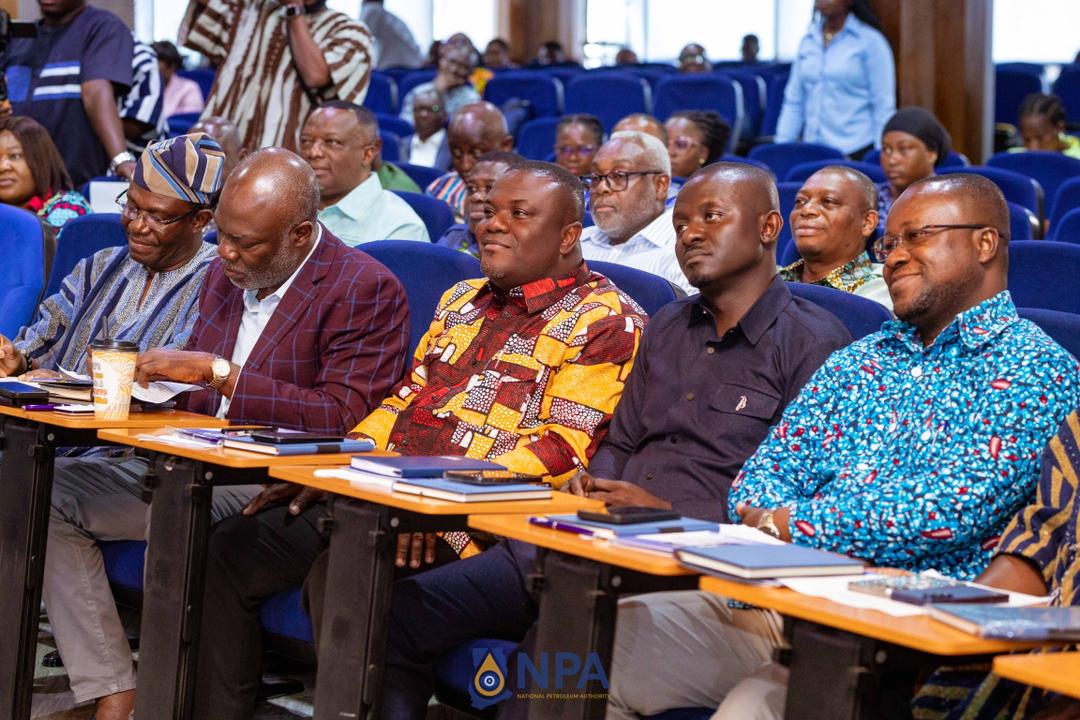
Mr. Bedzrah made these remarks on Wednesday during a monitoring visit to the NPA headquarters in Accra, where he led members of the Parliamentary Committee on Energy. The visit formed part of the committee’s constitutional responsibility to examine the activities of the Authority, particularly in areas such as regulatory processes, quality and price enforcement, industry health and safety standards, and consumer protection within the downstream petroleum sector.
In his welcome address, the Chief Executive of the NPA, Godwin Kudzo Tameklo, highlighted the central role of the downstream petroleum sector in the daily lives of Ghanaians. He emphasized that petroleum products are deeply embedded in almost every aspect of economic and social activity.
“Everything in our daily lives is connected to the petroleum downstream,” he stated. “Parliament, through the NPA Act of 2005, entrusted us with the sole responsibility of regulating this space. Your visit here today reflects the importance of that responsibility and the need for continued oversight.”
Mr. Tameklo explained that the Authority has maintained a consistent and constructive relationship with Parliament over the years, particularly in areas such as budget approvals and the development of regulatory policies that shape the sector. He noted that this collaboration has contributed to improved governance and operational efficiency within the industry.
Looking ahead, he revealed that a new legislative framework is currently under consideration. The proposed framework is expected to address the rapidly evolving nature of the petroleum industry and better position the Authority to support growth, innovation, and efficiency in the sector.
The NPA Chief Executive further outlined the broad scope of the Authority’s mandate, which spans the entire downstream petroleum value chain. From the importation of petroleum products to their distribution and retail, the NPA is responsible for ensuring that all industry players operate within a well-defined regulatory environment.
This includes licensing activities such as bunkering operations, the establishment of refineries, and the construction and management of filling stations. He stressed that compliance with these regulations is mandatory and non-negotiable.
“Operating without a licence is a clear violation of the law, and the Authority is committed to enforcing regulations with consistency, integrity, and fairness,” Mr. Tameklo stated.
He also highlighted consumer protection and fuel quality assurance as key priorities for the Authority. Central to this effort is the Fuel Marking Scheme, which is used to detect and prevent fuel adulteration across the supply chain. This initiative is supported by routine and unannounced inspections of filling stations, as well as continuous monitoring to ensure adherence to established standards.
On the issue of pricing, Mr. Tameklo explained that the Uniform Petroleum Pricing Policy plays a crucial role in maintaining fairness across the country. Under this system, the higher transportation costs associated with supplying fuel to northern regions are absorbed into a unified national pricing structure. This ensures that consumers, regardless of their location, have access to fuel at the same price.
The monitoring visit was further enriched by a series of detailed presentations delivered by directors of the Authority. These presentations provided committee members with deeper insights into the systems, strategies, and operational processes that underpin the regulation of Ghana’s downstream petroleum sector.

Aikines Anyomi

News
Food
Politics
Technology
About Us
Download Our Mobile App

