
Veep Opoku-Agyemang calls for more investment in addressing nutrition deficiencies
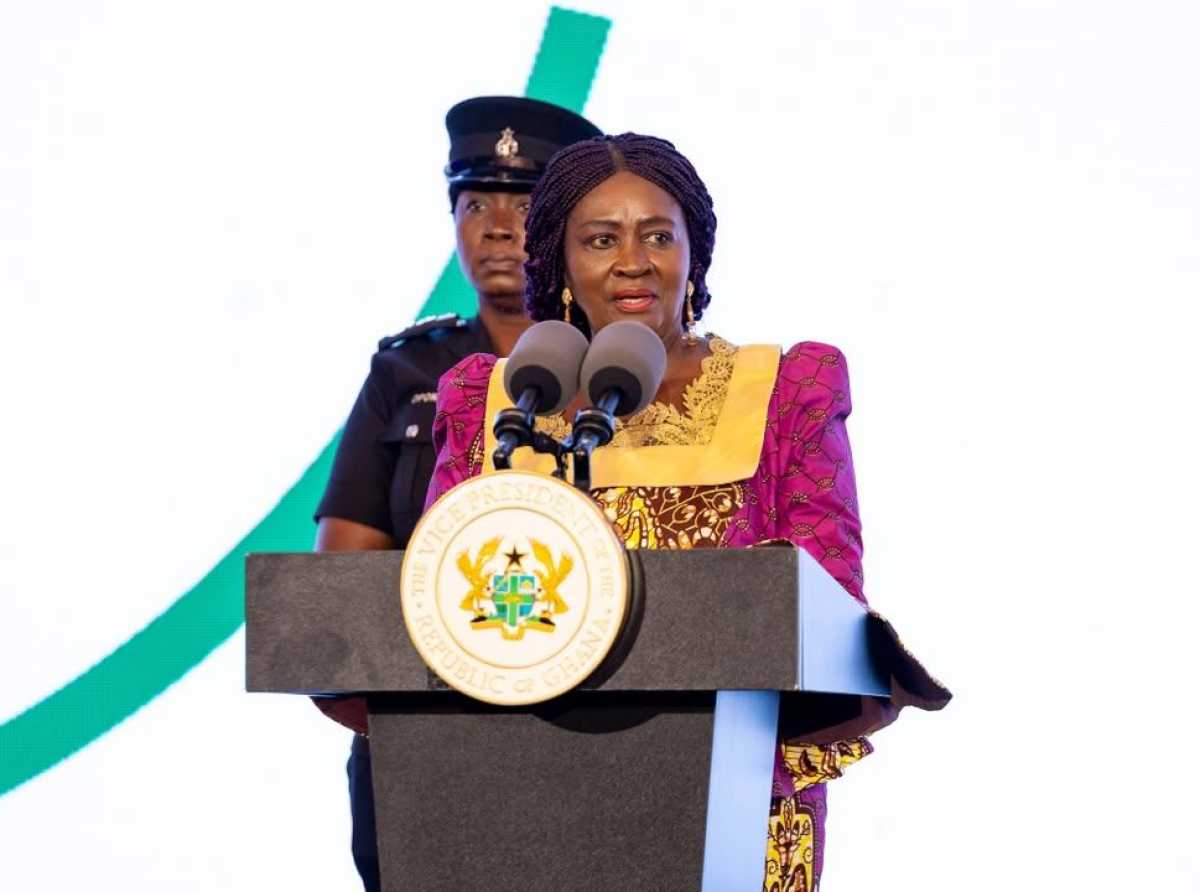
Vice President Professor Naana Jane Opoku-Agyemang has called for sustained investment and stronger collaboration to address malnutrition and micronutrient deficiencies, stressing that the challenge requires coordinated action across the health, education, agriculture and social protection sectors.
Speaking at the opening of the Global Micronutrient Forum in Accra on September 28, the Vice President said malnutrition remains a persistent global challenge, with effects that can extend from childhood into adulthood and influence the health and development of future generations.
She acknowledged the progress Ghana has made in improving nutrition but said significant challenges remain, particularly anaemia among women and adolescent girls, dietary diversity and breastfeeding.
According to Prof. Opoku-Agyemang, nutrition outcomes are influenced by several factors, including household incomes, food availability, school feeding programmes, information available to parents and access to healthcare.
She therefore called for integrated interventions involving government, the private sector, development partners and other countries to address the multiple factors contributing to malnutrition.
The Vice President highlighted Ghana’s school feeding programme as one of the initiatives contributing to the country’s nutrition efforts.
She said the programme currently reaches more than 4.5 million children, while efforts are being made to strengthen nutritional standards, improve caterer training and enhance monitoring.
Prof. Opoku-Agyemang also identified Ghana’s primary healthcare initiatives as an opportunity to strengthen preventive nutrition services, particularly interventions targeting mothers and children.
She said integrating nutrition into primary healthcare could help improve early prevention and address nutritional deficiencies before they develop into more serious health challenges.
The Vice President stressed the importance of both domestic financing and international support in building sustainable nutrition systems.
She noted that countries experiencing high levels of malnutrition often face other pressures, including fiscal constraints, climate shocks and overstretched health systems.
Prof. Opoku-Agyemang therefore called for increased financial resources, scientific expertise, innovation and international cooperation to support long-term nutrition interventions rather than relying primarily on short-term programmes.
She emphasised the need for stronger collaboration among governments, development partners, researchers, businesses and other stakeholders to develop sustainable solutions to malnutrition and micronutrient deficiencies.
The Vice President expressed Ghana’s appreciation for hosting the global nutrition dialogue and formally declared the Global Micronutrient Forum open.
The forum provides a platform for policymakers, scientists, development partners and other stakeholders to discuss strategies for improving nutrition outcomes and addressing micronutrient deficiencies globally.
The Vice President said Ghana was pleased to host the global conversation and formally declared the Global Micronutrient Forum open.

Aikines Anyomi

News
Food
Politics
Technology
About Us
Download Our Mobile App

