Ghana offers stable, attractive investment climate – Mahama woos investors
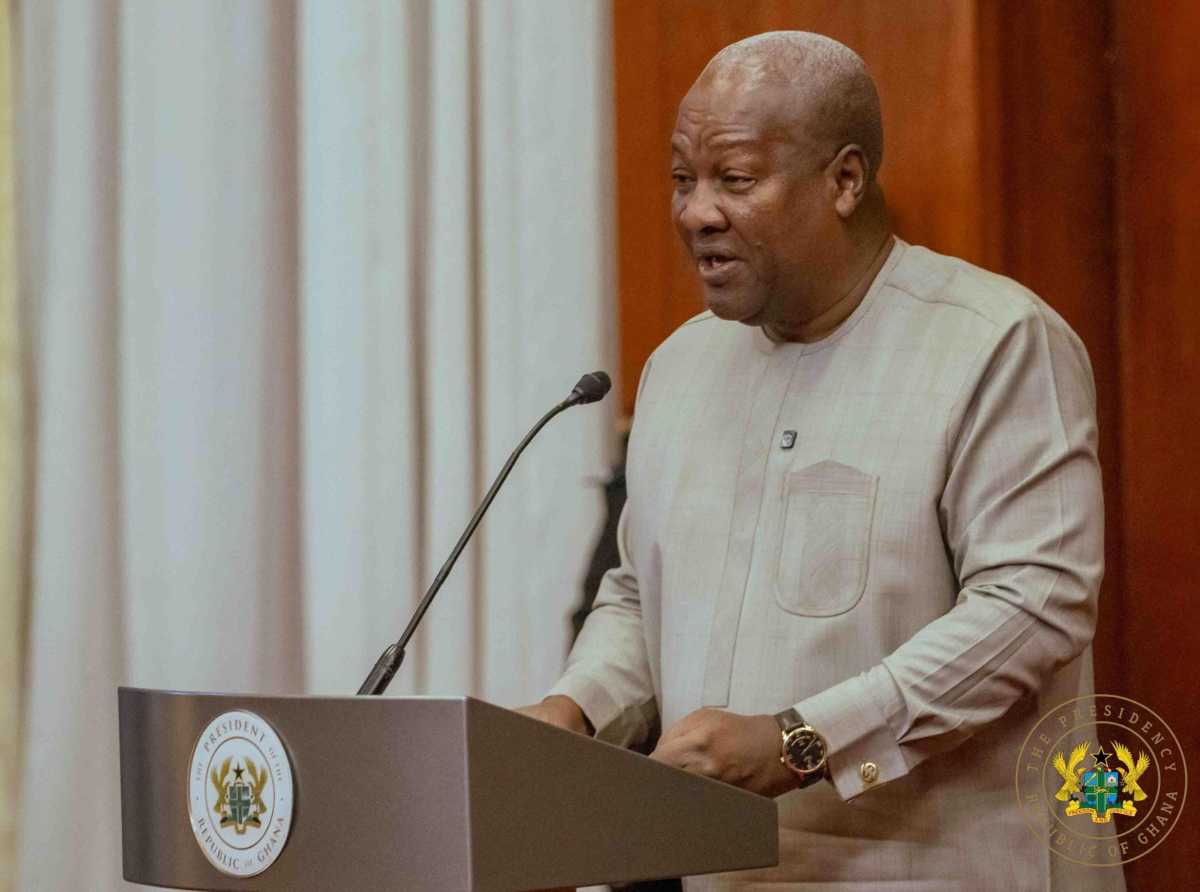
President John Dramani Mahama has urged local and international investors to invest in Ghana, describing the country as a stable and increasingly attractive business destination following improvements in key economic indicators, political stability and access to international markets.
He said Ghana had made significant progress in restoring macroeconomic stability after a period of economic difficulty, providing a stronger foundation for investment, industrial production and long-term business growth.
“I encourage you to invest in Ghana. You can do so with confidence because Ghana has long distinguished itself as one of Africa’s most stable and dependable countries,” President Mahama said.
The President was delivering the keynote address at the maiden Invest in Ghana Summit on Monday, November 16, 2026, where he outlined investment opportunities and government efforts to attract capital into productive sectors of the economy.
President Mahama pointed to declining inflation, stronger foreign exchange reserves and improvements in the country’s external balances as evidence of Ghana’s economic recovery.
According to him, inflation declined from 23.5 per cent in January 2025 to 5.5 per cent in October 2026.
He also disclosed that Ghana’s gross international reserves reached US$12.05 billion in September 2026, equivalent to 4.5 months of import cover.
The President further said the country recorded a trade surplus of US$8.86 billion during the first eight months of 2026, while public debt stood at 45 per cent of gross domestic product (GDP) as of July 2026.
On the performance of the cedi, he said the currency appreciated by 40.7 per cent against the US dollar in 2025 and remained approximately seven per cent stronger in September 2026 compared with the same period in 2025.
President Mahama also highlighted improvements in Ghana’s sovereign credit ratings, describing them as an indication of growing confidence in the country’s economic outlook.
He said S&P Global affirmed Ghana’s B- credit rating with a stable outlook, while Fitch Ratings upgraded the country from B- to B with a positive outlook.
He further noted that Moody’s raised Ghana’s long-term foreign and local currency issuer ratings to B3 from Caa1.
According to the President, these developments demonstrate that the economy is on a stronger footing and should give investors greater confidence when considering long-term business commitments.
Beyond the economic indicators, President Mahama identified Ghana’s democratic credentials as another important factor that makes the country attractive to investors.
He cited more than three decades of constitutional democracy, peaceful transfers of political power, respect for the rule of law and established institutions as important considerations for businesses seeking stable investment destinations.
He also urged investors to take advantage of Ghana’s position as host of the African Continental Free Trade Area (AfCFTA) Secretariat.
According to him, companies operating from Ghana could use the country as a gateway to a continental market of approximately 1.4 billion people, with a combined gross domestic product of about US$3.4 trillion.
The President also highlighted preferential trade arrangements with the United Kingdom and the European Union, alongside opportunities under China's preferential zero-tariff arrangements for African countries and the United States' African Growth and Opportunity Act (AGOA).
President Mahama said the government's investment drive was aimed at ensuring that foreign capital translated into tangible economic benefits, including employment creation, increased local production and stronger domestic supply chains.
He encouraged investors to engage Ghanaian businesses, visit potential project locations and use the summit to initiate feasibility studies, partnerships and other investment arrangements.
“The government I lead will continue to work with you to advance viable projects from discussion to implementation,” he said.
He added that the ultimate objective was to build businesses that would create jobs, expand Ghana's productive capacity and take more locally produced goods and services into international markets.

Aikines Anyomi

News
Food
Politics
Technology
About Us
Download Our Mobile App

