Gold remains Ghana’s biggest export; earning the country GH¢63.7bn in first quarter of 2026 - GSS
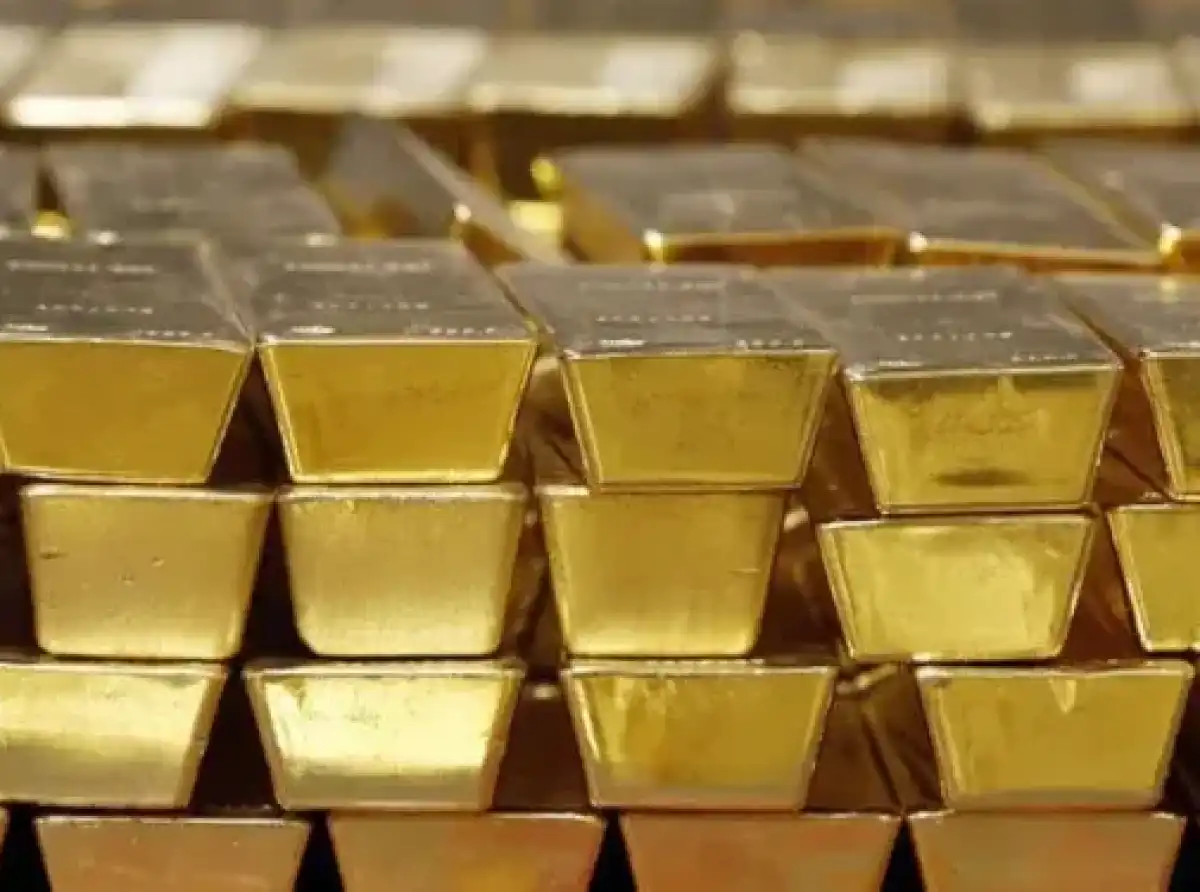
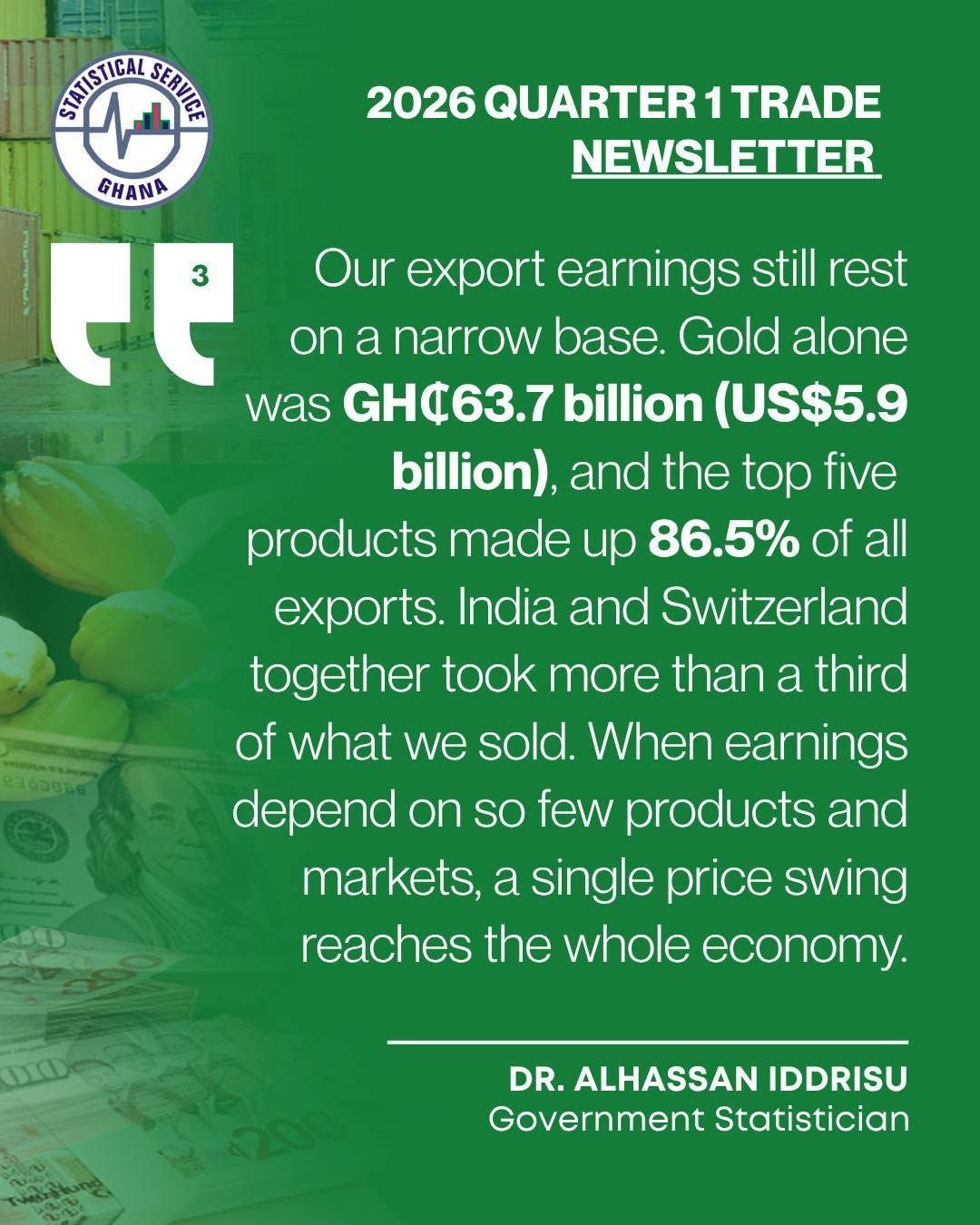
Gold remained Ghana’s leading export commodity in the first quarter of 2026, generating GH¢63.7 billion, equivalent to approximately US$5.9 billion, according to Government Statistician Dr Alhassan Iddrisu.
Dr Iddrisu said the strong performance of gold exports was a major factor behind Ghana’s significant trade surplus recorded during the first three months of the year.
He disclosed the figures while providing an overview of Ghana’s merchandise trade performance for the first quarter of 2026.
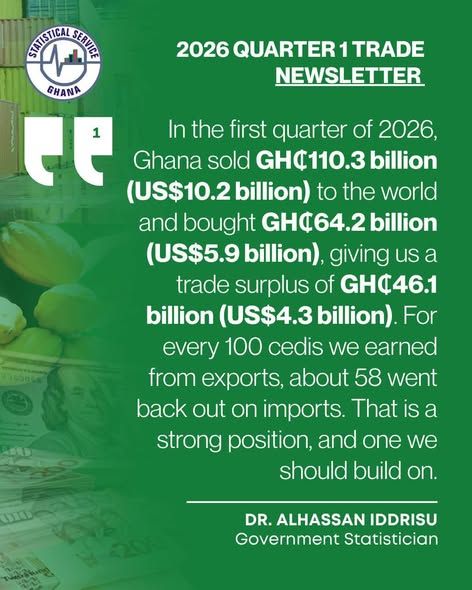
According to the Government Statistician, Ghana traded goods worth GH¢174.6 billion, or US$16.1 billion, with the rest of the world between January and March 2026.
The country recorded a GH¢46.1 billion (US$4.3 billion) trade surplus during the period.
Dr Iddrisu described the scale of trade as significant, noting that it amounted to an average of nearly GH¢2 billion in goods traded every day during the quarter.
“Ghana traded goods worth 174.6 billion Ghana cedis or 16.1 billion US dollars in just the first 3 months of 2026. That is the equivalent of almost 2 billion Ghana cedis worth of trade every single day,” he said.
Despite the sizeable trade surplus, Dr Iddrisu cautioned against interpreting the figures as evidence that Ghana exported substantially larger volumes of goods.
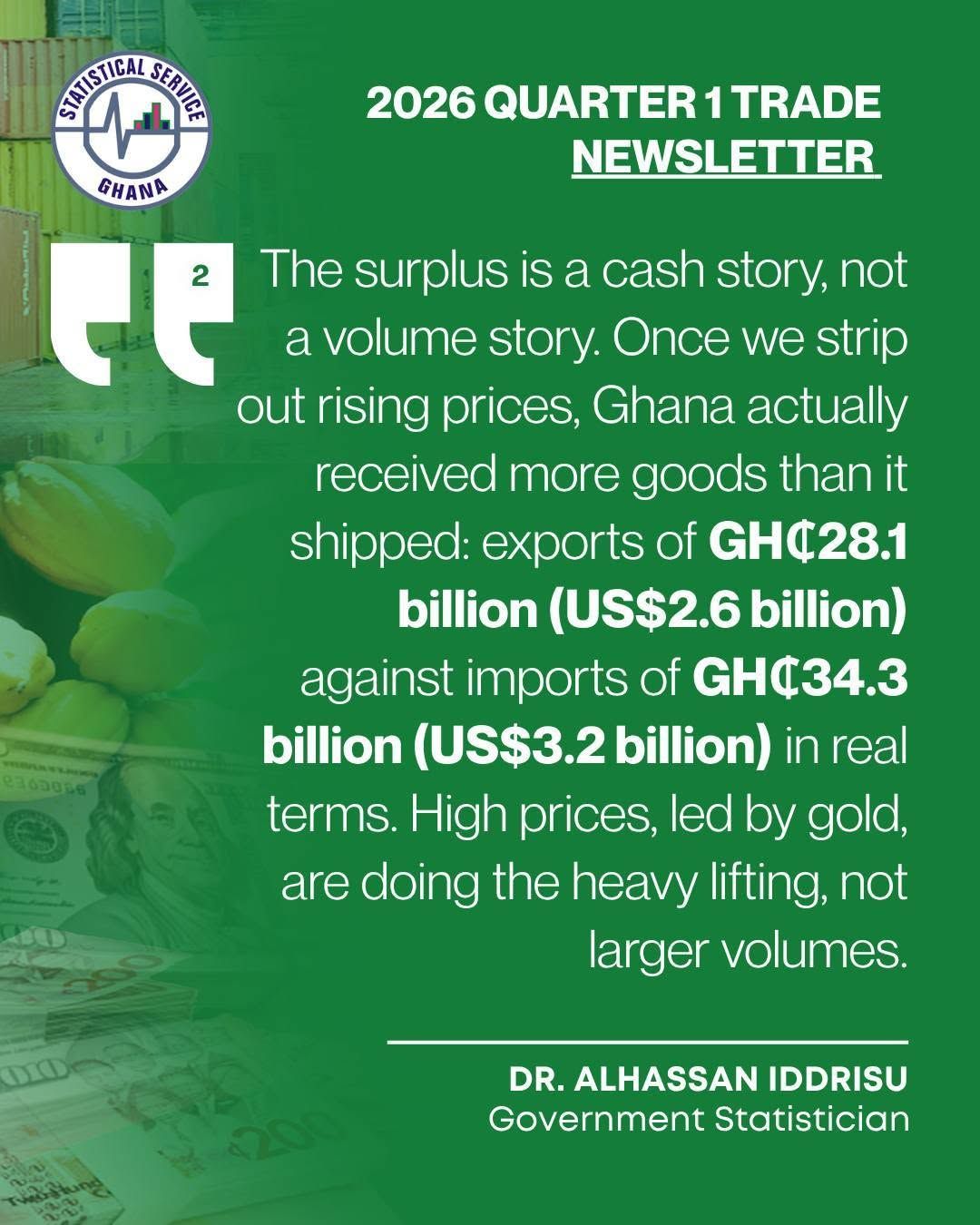
He explained that once the effects of price changes were removed using the Unit Value Index, the picture was different.
“When we adjust for price effect using the unit value index, the picture changes from a nominal surplus to a real trade deficit, reminding us that higher prices rather than higher export volumes explain much of the strong trade performance,” he stated.
This means that the value of Ghana’s exports increased significantly in nominal terms, but the improvement was not necessarily matched by a corresponding increase in the physical volume of goods exported.
Dr Iddrisu attributed a substantial portion of the increase in export prices during the quarter to gold.
“Much of the price gain in quarter one of 2026 came from gold,” he said.
The strong performance of gold therefore played a central role in boosting Ghana’s export earnings and widening the country’s nominal trade surplus.
Gold has remained a critical source of foreign exchange for Ghana, with developments in international gold prices having a significant impact on the value of the country’s exports.
The Government Statistician also reported an improvement in Ghana’s cocoa exports during the quarter.
The development provides some diversification within Ghana’s export earnings, although gold continued to dominate the country’s merchandise export performance.
The improvement in cocoa exports comes amid the continued importance of the commodity to Ghana’s agricultural economy and foreign exchange earnings.
Dr Iddrisu further disclosed that Asia remained Ghana’s largest trading partner during the first quarter of 2026.
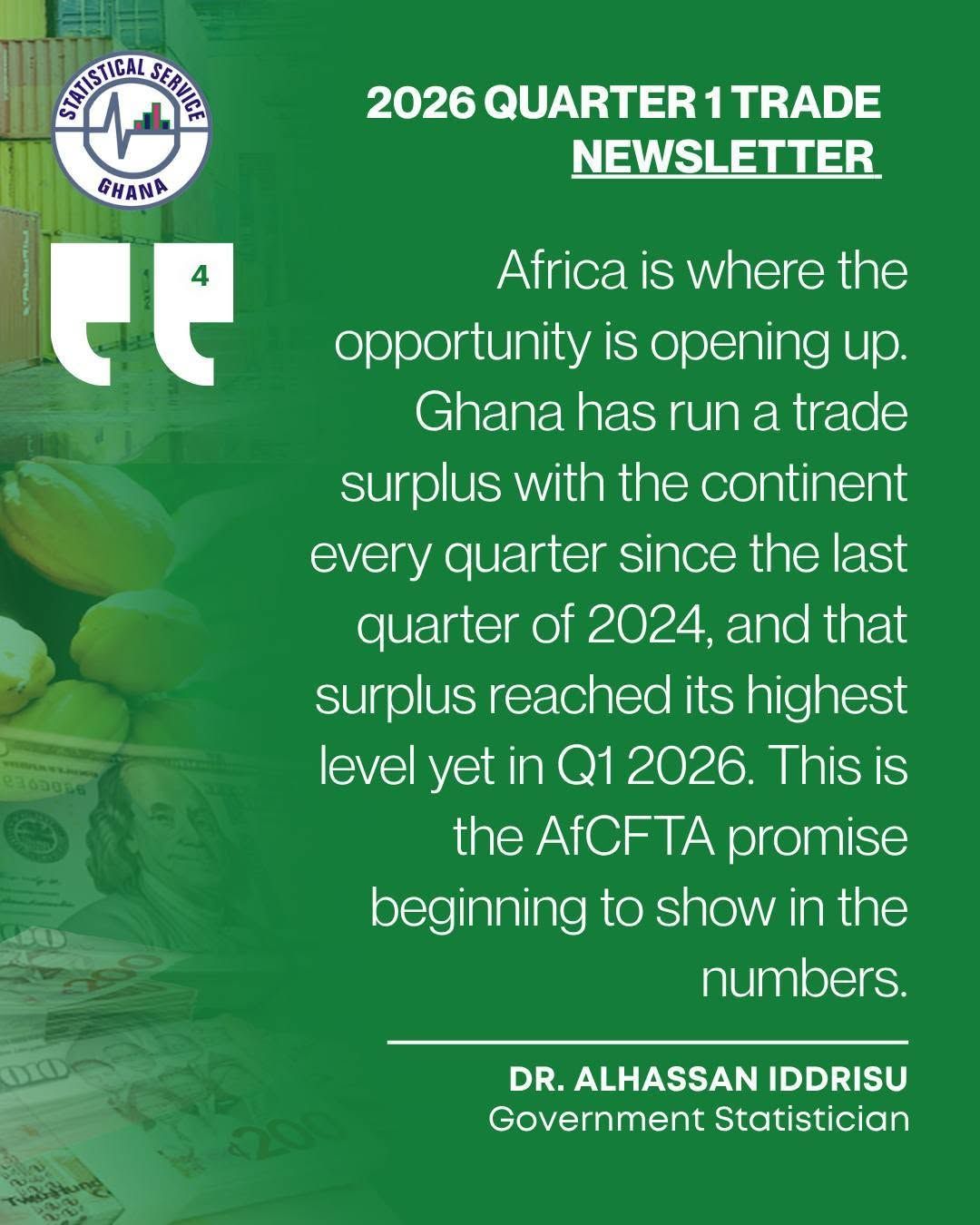
Trade with other African countries also recorded an improvement, indicating stronger commercial links within the continent.
The figures point to the continued importance of Asian markets and suppliers to Ghana’s international trade, while the increase in intra-African trade could support broader efforts to deepen regional economic integration.
The first-quarter figures present a mixed picture of Ghana’s external trade position.
On the one hand, the country recorded a substantial nominal trade surplus, supported largely by strong gold earnings and improved cocoa exports.
On the other hand, the adjustment for price effects suggests that the underlying volume of trade was less favourable than the headline figures indicate.
The distinction between nominal and real trade performance is particularly important for assessing whether Ghana’s export growth is being driven by increased production and volumes or by higher international commodity prices.
With gold accounting for much of the increase in export prices, Ghana’s trade performance remains closely linked to developments in global commodity markets.
The latest figures therefore reinforce the need for Ghana to expand and diversify its export base while increasing the production and export volumes of value-added goods.

Aikines Anyomi

News
Food
Politics
Technology
About Us
Download Our Mobile App

