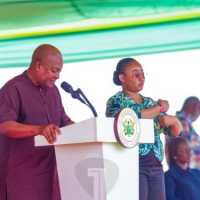
The Ministry of Finance is expected to write off approximately US$120 million of the Tema Oil Refinery’s (TOR) legacy debt as part of efforts to reduce the financial burden on the state-owned refinery.

The Ministry of Finance is expected to write off approximately US$120 million of the Tema Oil Refinery’s (TOR) legacy debt as part of efforts to reduce the financial burden on the state-owned refinery.
The Ghana Union of Traders’ Associations (GUTA) has urged the Ghana Revenue Authority (GRA) to adopt a measured and people-centred approach as it intensifies its nationwide Value Added Tax (VAT) compliance campaign.

The West African Regional Director of CUTS International, Appiah Kusi Adomako, has called for urgent measures to address inefficiencies in Ghana’s logistics system, warning that delays at the country’s ports are imposing significant costs on businesses.

CUTS International has called for a broader assessment of the factors contributing to the relatively high airfares charged by domestic airlines in Ghana.
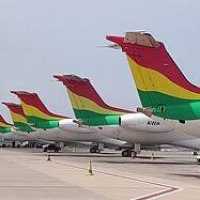
The Ghana Institute of Freight Forwarders (GIFF) has called on the government to urgently address prolonged delays in the clearance of cargo at Ghana’s airports, warning that the situation could undermine the efficiency and competitiveness of the country’s logistics sector.

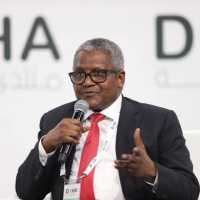
African business magnate Aliko Dangote has praised President John Dramani Mahama for what he described as a rapid turnaround of Ghana’s economy, attributing the improvement largely to renewed confidence in the country.
BOSTenergies Limited has clarified that the recent reduction in fuel export volumes to Burkina Faso and Mali is not due to an impending fuel shortage in Ghana.

The price of diesel at fuel stations could have reached about GH¢28 per litre if the government had not intervened to absorb part of the increase in international petroleum prices, National Petroleum Authority (NPA) Chief Executive Officer Godwin Edudzi Tameklo has said.
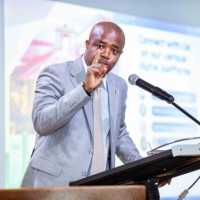
Finance Minister Dr Cassiel Ato Forson says the government’s efforts to reduce the cost of capital are beginning to ease financing conditions for Ghanaian businesses, citing falling Treasury bill rates.
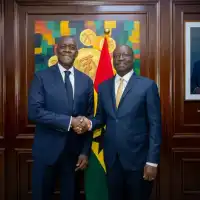
The Ghana Cocoa Board (COCOBOD) is expected to meet the Chamber of Cocoa Marketers Ghana next week to discuss concerns over an outstanding debt of GH¢4 billion owed to the Chamber’s members.

President John Dramani Mahama has cut the sod for the construction of the $1.3 billion Sentuo Airport Garden City Project, a mixed-use development expected to expand Accra’s residential, hospitality, commercial and leisure facilities.

President John Dramani Mahama has commissioned the third phase of the Zonda Tec Ghana Assembly Plant in Tema, describing the expansion as a significant milestone in Ghana’s industrial development and a testament to the potential of local manufacturing.
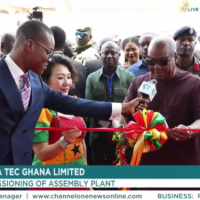
President John Dramani Mahama has described the growth of Zonda Tech Ghana Limited as a remarkable Ghanaian success story, citing the company’s transformation from a vehicle distributor into a major automotive assembly firm.