The National Anti-Illegal Mining Operations Secretariat (NAIMOS) has reaffirmed its commitment to intensifying the fight against illegal mining, insisting that efforts to remove illegal mining infrastructure from Ghana’s rivers will continue despite logistical difficulties and challenging operating conditions.
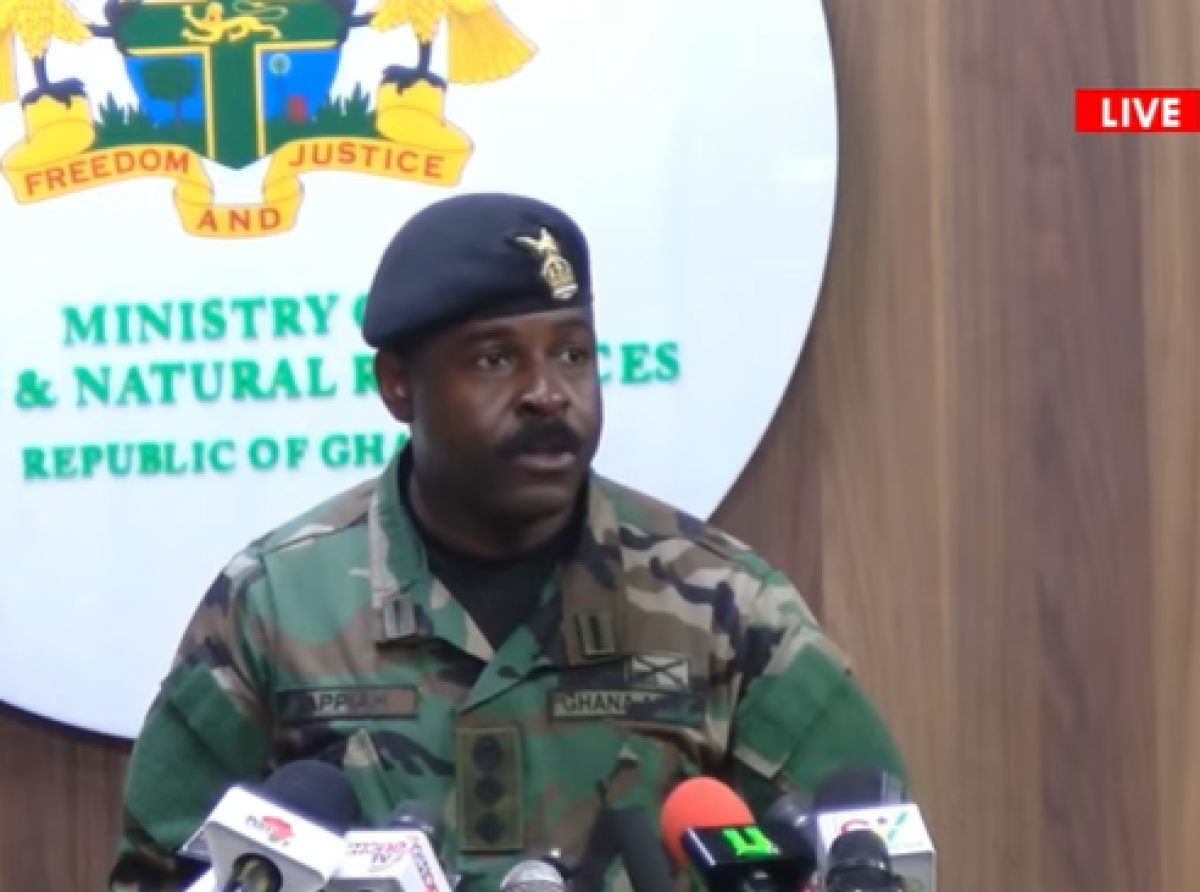
Colonel K.S. Appiah, Director of Operations at NAIMOS, described the campaign as a marathon that requires sustained enforcement efforts, warning that abandoning the operations while illegal mining equipment remains in water bodies would worsen environmental degradation.
Speaking to the media on Thursday, October 22, Colonel Appiah said the secretariat remained determined to dismantle structures and equipment used for illegal mining and protect the country’s rivers from further destruction.
“As has been mentioned on many occasions, the fight against illegal mining is a marathon, and we are poised to go through this race to ensure that we take out all illegal mining infrastructure on our river bodies,” he said.
Colonel Appiah acknowledged that removing illegal mining equipment from rivers presents significant operational challenges, particularly because of the size and weight of the machinery and the limited access to some mining sites.
He explained that task force personnel often struggle to transport makeshift mining platforms and chanfangs out of river bodies because some locations lack roads that can accommodate trucks and other heavy-duty vehicles.
As a result, personnel sometimes have to dismantle or burn the equipment to remove it from the affected areas.
“It is very difficult to move them out of the rivers because road access and access for trucks to the areas are almost impossible. So, we need to destroy and burn them, and later, in coordination with the GSDC, which has the capability to lift them from the river bodies,” he said.
The explanation highlights the logistical constraints confronting enforcement teams as they work to remove equipment used for illegal mining from difficult-to-access river locations.
Despite the challenges, Colonel Appiah maintained that NAIMOS would sustain its operations to dismantle illegal mining infrastructure and prevent further damage to Ghana’s water bodies.
He stressed that the continued presence of mining equipment in rivers poses a threat to environmental protection efforts, making persistent enforcement necessary.
The secretariat's position comes amid ongoing national efforts to combat illegal mining, commonly known as galamsey, and address its effects on rivers and other natural resources.
NAIMOS says it remains committed to pursuing the campaign despite the difficulties involved, emphasising that the removal of illegal mining infrastructure will require continued operations and coordination with relevant agencies.

Aikines Anyomi
News
Food
Politics
Technology
About Us
Download Our Mobile App

