Decades of conflict have stalled both public and private investments in Bawku - Mahama
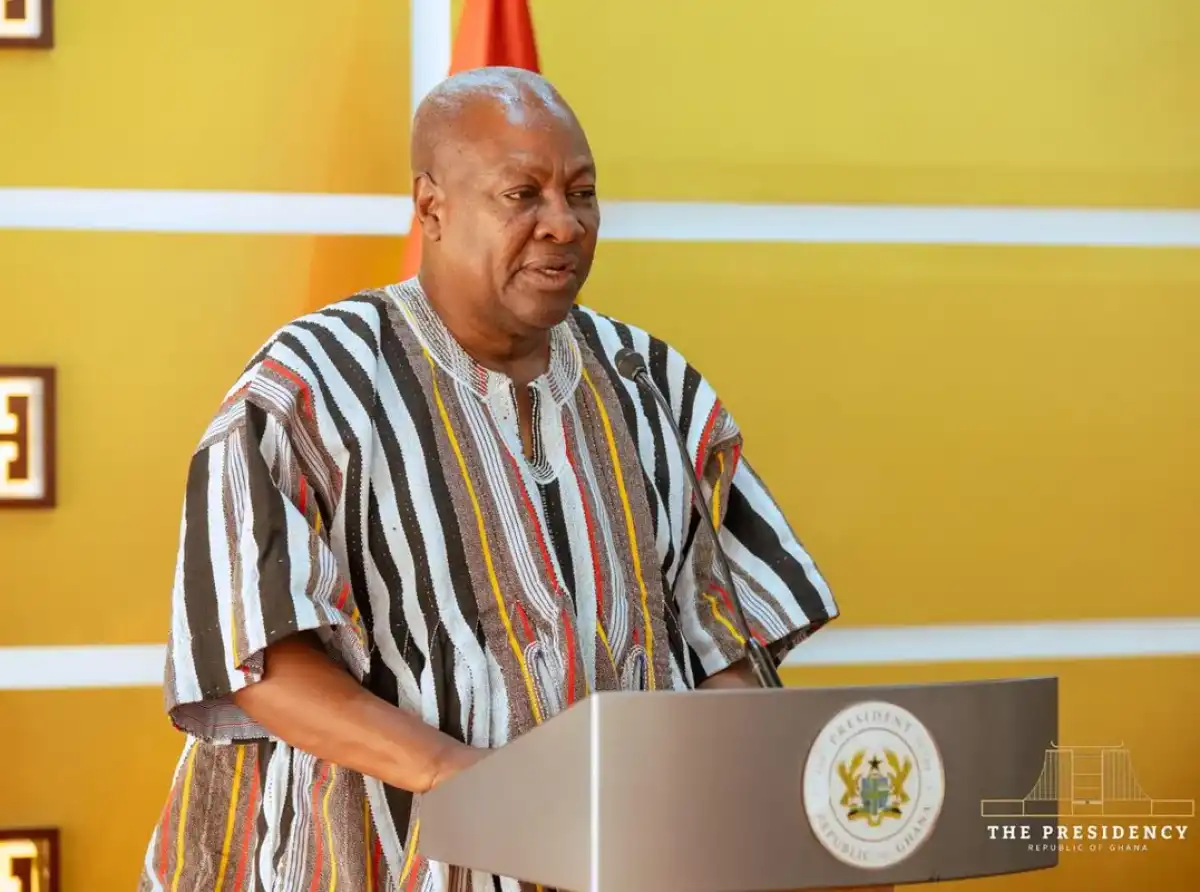
President John Dramani Mahama has inaugurated a five-member Bawku Revitalisation Committee to oversee a GH¢1 billion development fund aimed at restoring Bawku and surrounding communities to their former commercial, social and economic vitality.
The committee, chaired by Finance Minister Dr Cassiel Ato Forson, has been tasked with coordinating post-conflict reconstruction, rebuilding damaged public infrastructure and supporting the revival of economic activities in the Upper East Region.
The establishment of the fund follows President Mahama's endorsement of the Otumfuo Osei Tutu II mediation report on December 16, 2025. The report provided a roadmap for lasting peace, reconciliation and stability in the Bawku area.
At the inauguration ceremony, President Mahama expressed concern about the devastating impact of decades of chieftaincy and ethnic conflict on Bawku and neighbouring communities.
He said the prolonged unrest had not only resulted in loss of lives and livelihoods but had also severely affected investment and access to essential public services.
“Decades of conflict have stalled both public and private investments, damaged livelihoods, and forced essential service providers, including teachers, nurses, and doctors, to flee the area for their safety,” President Mahama stated.
According to the President, the disruption caused by the conflict has weakened local economic activity while making it difficult for communities to access critical services.
He said restoring Bawku would therefore require more than maintaining security and preventing further violence, stressing the need for deliberate economic and infrastructure interventions.
President Mahama said the allocation for the Bawku Revitalisation Fund had now been made, creating the financial foundation for the government to begin implementing its post-conflict development programme.
He noted that improvements in the security situation, including a significant reduction in sporadic shootings and attacks on civilians, had created an opportunity to shift attention towards sustainable economic recovery.
“The allocation for the Bawku Revitalisation Fund has now been made. With safety and security prevailing in Bawku and surrounding areas, this is the time to begin implementing the Fund,” he declared.
The President charged the committee to manage the fund with transparency, urgency and dedication, emphasising the need to ensure that the resources translate into tangible improvements for residents.
The fund is expected to support projects and interventions that can help rebuild damaged infrastructure, restore livelihoods and stimulate economic activity across Bawku and affected surrounding communities.
The committee brings together senior government officials, parliamentary representatives and traditional leadership.
In addition to Finance Minister and committee chairman Dr Cassiel Ato Forson, the members are:
- Mahama Ayariga, MP for Bawku Central and Minister-designate for Local Government, Chieftaincy and Religious Affairs;
- Akamugri Donatus Atanga, Upper East Regional Minister;
- Dr Thomas Anaba, MP for Garu; and
- Naba Abugri Cletus Akolwin, Paramount Chief of the Tempane Traditional Area.
The composition of the committee is expected to provide a combination of financial oversight, government coordination, parliamentary representation and traditional leadership in the implementation of the revitalisation programme.
Speaking on behalf of the committee and traditional leadership, Naba Abugri Cletus Akolwin expressed appreciation to President Mahama for establishing the fund and inaugurating the committee.
He pledged the team's commitment to ensuring that the resources are used effectively to deliver meaningful development to the people.
The Paramount Chief assured the nation that the committee would work to ensure that every cedi allocated to the programme contributes to development, social cohesion and prosperity in Bawku and neighbouring communities.
He also conveyed the support of the Bawku Naba for the initiative.
The inauguration marks an important shift in the government's approach to the Bawku crisis, with the focus moving from immediate security concerns towards long-term reconstruction and economic revitalisation.
President Mahama commended the security agencies for their efforts to restore law and order, noting the decline in sporadic violence and attacks on innocent residents.
The President said the improved security environment provided an opportunity to begin addressing the economic and social consequences of the conflict.
The GH¢1 billion intervention is therefore expected to serve as a major component of government's broader effort to rebuild confidence, encourage investment, restore essential services and create conditions for sustainable development in the area.
For Bawku, the success of the initiative will ultimately depend on the effective management of the fund, continued peace and cooperation among stakeholders, and the government's ability to translate financial commitments into visible projects and improved livelihoods.
The inauguration of the five-member committee signals the beginning of that process, as government seeks to transform improved security into lasting economic recovery and development for Bawku and surrounding communities.

Aikines Anyomi

News
Food
Politics
Technology
About Us
Download Our Mobile App

