‘Humiliating’ $100m US health compact was thrown out of Cabinet – Mahama
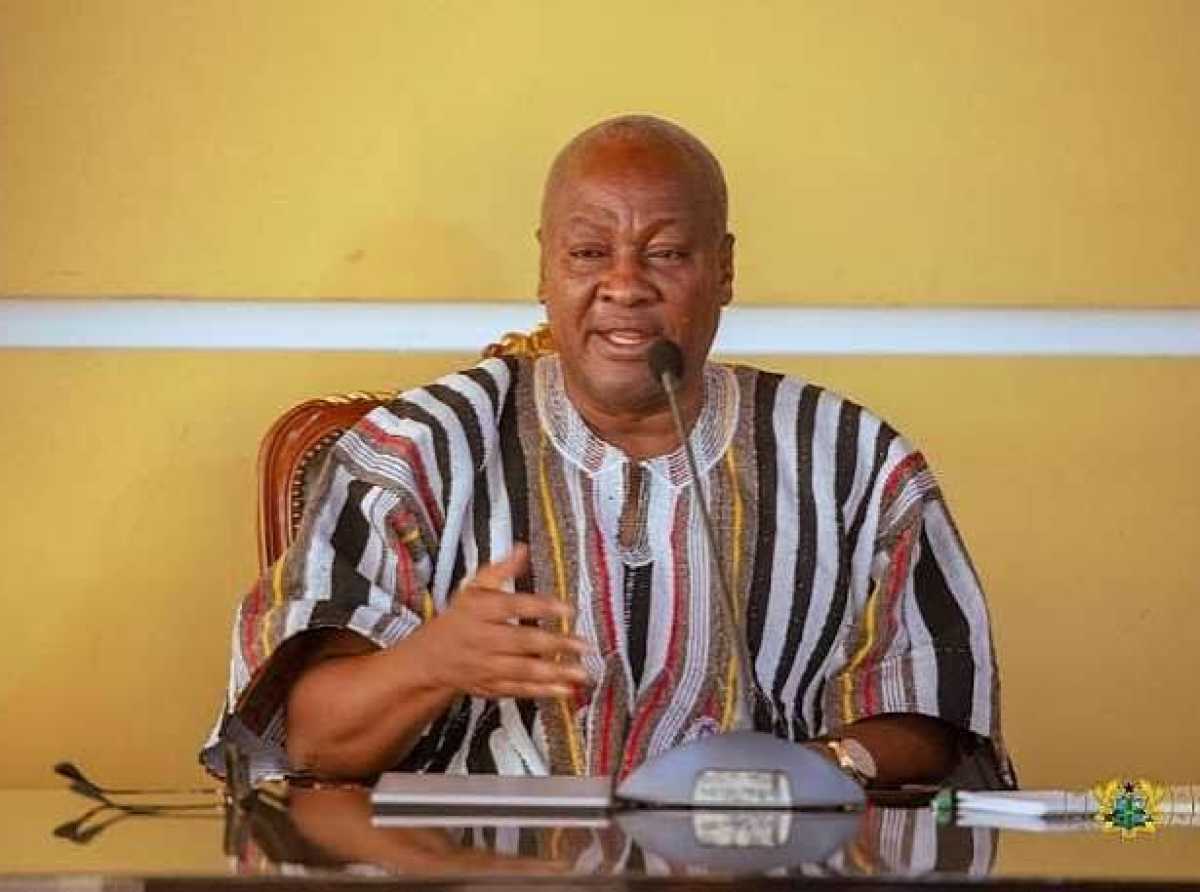
President John Dramani Mahama has defended Ghana’s decision to reject a proposed health compact with the United States, saying some of the conditions attached to the agreement were unacceptable and raised concerns over Ghana’s health data and regulatory authority.
The proposed compact was intended to replace some health funding previously provided through the United States Agency for International Development (USAID), following the restructuring of U.S. foreign aid programmes. Ghana rejected the agreement after the Ministry of Health reviewed the terms and presented its concerns to Cabinet.
Speaking at the Council on Foreign Relations in New York, President Mahama said the Ministry of Health prepared a Cabinet Information Paper after examining the proposed agreement and identified several provisions that the government found problematic.
According to the President, one of the provisions required Ghana to provide the United States with its pathogen profile, while another involved access to medical records.
It states that we shall give the United States our pathogen profile. It also says we should give our medical records. I mean, who takes another country’s medical records?”
Concerns over the sharing of sensitive health information were also raised during the negotiations earlier in the year. Ghanaian officials said the scope of the proposed data access went beyond what they considered acceptable safeguards for the protection of citizens’ health information.
President Mahama further disclosed that Ghana would have been required to provide counterpart funding under the proposed arrangement.
He also said the agreement contained a provision under which medicines and other medical products brought into Ghana through the programme would not be subject to inspection by the Food and Drugs Authority (FDA).
Describing the conditions as unacceptable, President Mahama said Cabinet rejected the compact shortly after the Ministry of Health presented its assessment.
It was humiliating. And so it was the compact that was thrown out in record time in our Cabinet. I’ve never seen anything thrown out as fast as that.”
The President said the Health Minister was subsequently instructed to communicate Ghana’s decision to the U.S. Ambassador.
Earlier reporting on the negotiations indicated that the proposed agreement would have provided Ghana with about US$109 million in U.S. health assistance over five years, while Ghana would also have been expected to contribute counterpart funding.
The proposed arrangement formed part of the United States’ broader “America First Global Health Strategy”, which seeks to increase recipient countries’ contributions to their health systems while reducing reliance on U.S. aid.
Ghana’s rejection has also coincided with President Mahama’s wider advocacy for greater health financing independence in Africa. At a high-level Accra Reset event in New York, he launched a report calling for reforms to global health governance and reduced dependence on external funding.
The U.S. has maintained that it remains interested in strengthening its bilateral relationship with Ghana, although it has declined to publicly disclose details of bilateral health negotiations.

Aikines Anyomi
News
Food
Politics
Technology
About Us
Download Our Mobile App

