
Interior Minister inaugurates 13-member committee of inquiry into rising building collapse incidents
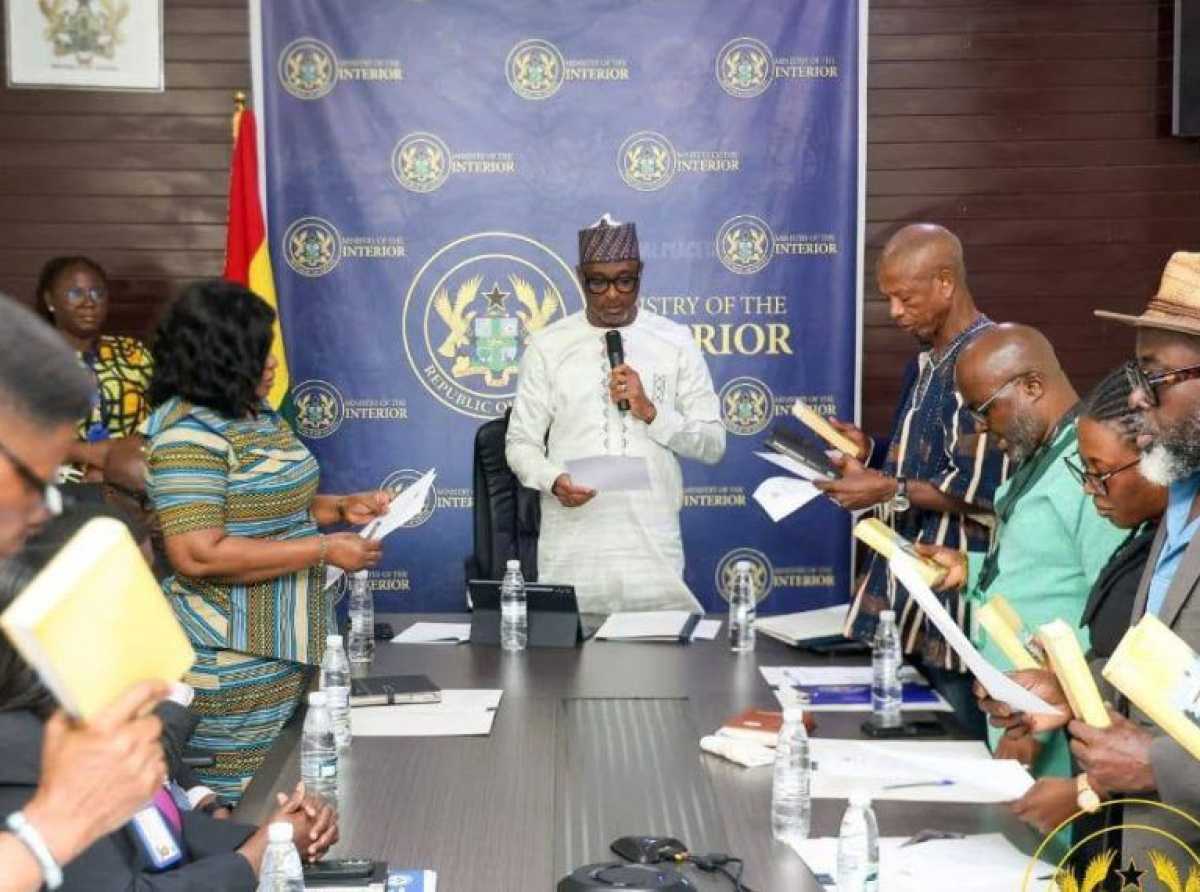
The Minister for the Interior, Muntaka Mohammed Mubarak, has officially inaugurated a 13-member Committee of Inquiry tasked with investigating recent building collapse incidents across Ghana and recommending measures to strengthen safety standards within the country's construction sector.
The committee, established under the Ministry of the Interior, has been mandated to conduct a comprehensive assessment of the factors contributing to building failures and propose practical reforms aimed at preventing future disasters. The initiative comes amid growing concerns over the increasing number of structural failures that have resulted in the loss of lives, injuries, and significant property damage in various parts of the country.
Speaking during the inauguration ceremony, Mr. Mubarak emphasized that building collapses should not be viewed merely as isolated structural defects. According to him, these incidents often stem from deeper systemic challenges, including poor planning practices, inadequate regulatory enforcement, professional negligence, and institutional weaknesses within the construction industry.
He noted that a thorough and objective investigation is necessary to identify the root causes of building failures and ensure that corrective measures are implemented to safeguard citizens and improve confidence in Ghana's built environment.
The committee has been tasked with examining a wide range of factors that may contribute to structural failures. These include structural and design deficiencies, the use of substandard construction materials, construction malpractice, non-compliance with approved building standards, environmental conditions, climate-related impacts, human error, and weaknesses within regulatory and oversight institutions.
The inquiry will also assess the effectiveness of existing building regulations and enforcement mechanisms, while identifying gaps that may allow unsafe construction practices to persist.
Mr. Mubarak urged committee members to carry out their duties with professionalism, integrity, impartiality, and independence. He encouraged them to rely on evidence-based findings and provide practical recommendations capable of strengthening regulatory oversight, improving compliance monitoring, enhancing enforcement actions, and promoting safer construction practices nationwide.
The Interior Minister further called on state agencies, professional associations, engineers, architects, developers, contractors, property owners, and the general public to cooperate fully with the committee throughout its work.
He stressed that ensuring the safety of buildings and infrastructure is a collective responsibility that requires active participation from all stakeholders.
"Ensuring the safety of our built environment is a shared responsibility, and there must be no room for impunity where public safety is concerned," he stated.
Chairman of the Committee, Brigadier General B. F. Kusi, expressed gratitude for the trust placed in the members and assured the government and the public of their commitment to delivering a detailed and objective report.
He indicated that the committee's findings and recommendations would serve as a blueprint for improving building safety standards, strengthening accountability within the construction sector, and preventing similar incidents in the future.
The committee is expected to engage relevant stakeholders, review past building collapse cases, and identify sustainable solutions that will help create a safer and more resilient built environment across Ghana.

Aikines Anyomi

News
Food
Politics
Technology
About Us
Download Our Mobile App

