
Mahama’s mineral agenda could help break poverty cycle – Asantehene
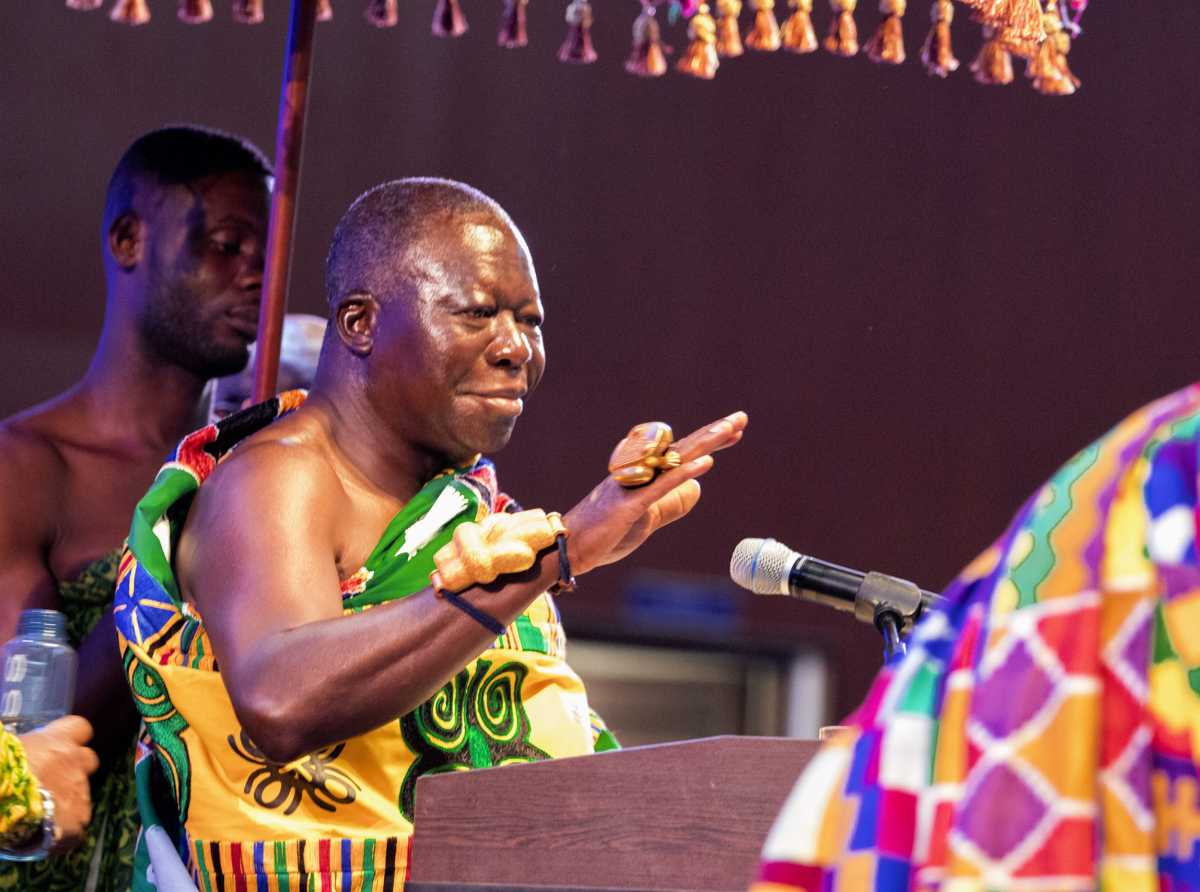
The Asantehene, Otumfuo Osei Tutu II, has endorsed President John Dramani Mahama’s reset agenda, describing the government’s push to process Ghana’s mineral resources locally as an important step towards economic transformation.
The Asantehene said the policy direction, which seeks to move Ghana away from exporting raw minerals towards domestic processing and value addition, remained relevant despite controversies surrounding the Ghana Gold Board (GoldBod).
Speaking on behalf of Otumfuo Osei Tutu II at the Mining in Motion Conference on Monday, October 19, Nana Okyere Kusi Ntrama, the Essumejahene, said the government’s approach to mineral governance could help Ghana break the cycle of poverty by retaining more economic value from its natural resources.
Nana Okyere Kusi Ntrama noted that President Mahama’s reset agenda, announced shortly after he assumed office, places greater control over the country’s mineral wealth and the development of local processing capacity at the centre of its economic ambitions.
He said Ghana’s long-term development depended not only on the minerals it extracted but also on the extent to which those resources were processed locally to create jobs, support industries and generate additional economic benefits.
The emphasis on value addition reflects a longstanding national aspiration to use natural resources as a foundation for industrialisation rather than relying primarily on exports of raw materials.
“Over the past year, the controls of the new agenda have become whatever we make of the minerals in the ground and the government’s mineral policies. Regardless of the controversies surrounding the Gold Board, there should be no doubt that the nature of the President’s reset agenda takes us right back to the very foundation of our republic, when Dr. Kwame Nkrumah sought to harness our minerals and move to establish a gold refinery in Tarkwa,” he said.
The Asantehene’s endorsement comes amid controversies surrounding GoldBod, the institution at the centre of the government’s gold-sector reforms.
Through his representative, he maintained that the broader objective of improving mineral governance and increasing local processing should remain a priority despite the debate surrounding the institution.
The remarks distinguish the wider ambition of retaining more value from Ghana’s mineral resources from the controversies associated with the implementation of specific policies.
Nana Okyere Kusi Ntrama also drew parallels between the government’s current approach and the industrialisation vision of Ghana’s first President, Dr. Kwame Nkrumah.
He recalled Nkrumah’s efforts to harness the country’s mineral wealth and establish domestic refining capacity, arguing that Ghana’s current mineral policy offered an opportunity to build on that legacy.
The approach seeks to strengthen local value addition and ensure that a greater share of the economic benefits generated by Ghana’s natural resources remains within the country.
If effectively implemented, increased domestic processing could support industrial development and create opportunities across related sectors. The extent of those benefits, however, will depend on the development of local processing capacity and the effective implementation of mineral-sector policies.

Aikines Anyomi

News
Food
Politics
Technology
About Us
Download Our Mobile App

