
Vice President engages Kayayei association on challenges facing head porters
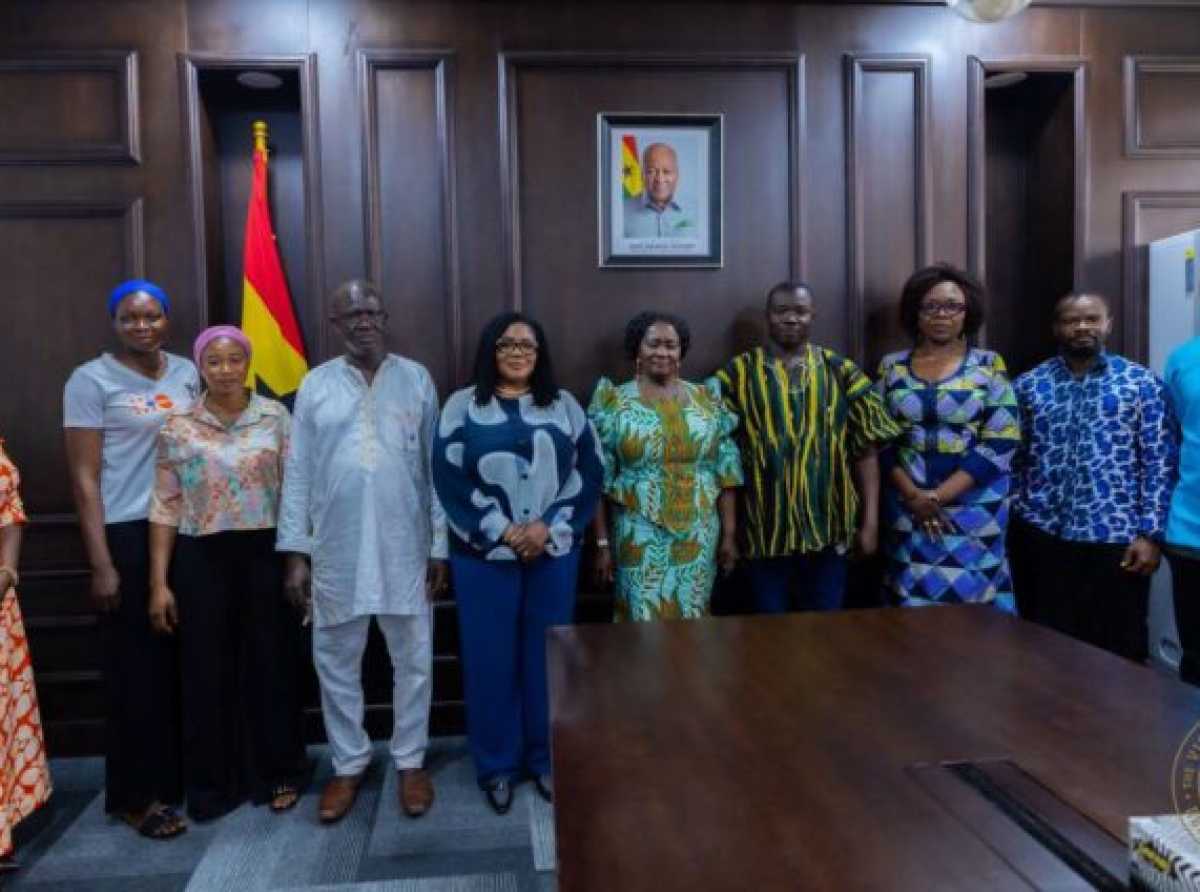
Vice President Professor Jane Naana Opoku-Agyemang has engaged the Kayayei Association on measures to address the challenges confronting head porters and improve their livelihoods and welfare.
The Vice President held discussions with a delegation from the association on Monday, August 10, 2026, as part of efforts to develop a more comprehensive response to the social and economic challenges facing kayayei in Ghana.
The delegation was led by the Minister for Gender, Children and Social Protection, Agnes Naa Momo Lartey.
The meeting focused on several concerns affecting head porters, including exploitation, limited access to skills training, inadequate opportunities to establish sustainable businesses and the welfare and protection of women and children living within kayayei communities.
Professor Opoku-Agyemang said the kayayei phenomenon should not be treated as an isolated social problem but must be understood within the wider context of migration, inequality and development.
According to her, people move from their communities to urban centres because of a combination of factors that push them away from their places of origin and factors that attract them to cities.
She described these as “push” and “pull” factors and stressed that government interventions must address the conditions that make women vulnerable after migrating to urban centres.
The Vice President said sustainable solutions would require more than short-term assistance, noting that interventions must address the economic and social circumstances that contribute to the migration of young women into head-porting activities.
Professor Opoku-Agyemang acknowledged the importance of skills development programmes for kayayei but cautioned that training alone would not adequately address their challenges.
She said interventions must be designed around the aspirations, circumstances and needs of the women themselves.
According to the Vice President, skills training should have a clear purpose and must be supported with the necessary tools, access to capital and opportunities for beneficiaries to establish and grow sustainable businesses.
She stressed that without such support, beneficiaries could acquire skills without having the resources or market opportunities required to translate those skills into meaningful economic independence.
The welfare of children living within kayayei communities was also highlighted during the engagement.
Professor Opoku-Agyemang expressed concern about the circumstances in which some children within these communities live and stressed that their welfare must form a central part of any long-term intervention.
She called for stronger measures to protect women and children from exploitation and other vulnerabilities while creating opportunities that would allow women engaged in head-porting activities to improve their economic circumstances.
The Vice President's position suggests a broader approach in which livelihood interventions are combined with social protection, child welfare and measures aimed at reducing vulnerability.
Professor Opoku-Agyemang commended the Ministry for Gender, Children and Social Protection and the Kayayei Association for maintaining dialogue on the challenges facing head porters.
She reaffirmed the government's commitment to developing a more holistic response to the kayayei situation.
The approach, she said, would focus on creating economic opportunities, strengthening protection mechanisms and supporting vulnerable women and children to realise their full potential.
The engagement forms part of broader efforts to tackle the underlying causes of vulnerability among head porters and ensure that interventions provide lasting solutions rather than temporary relief.
For many kayayei, sustainable access to skills, financing, business opportunities and social protection remains critical to breaking the cycle of economic vulnerability associated with informal head-porting work.
The government is therefore expected to continue engaging stakeholders, including the Kayayei Association, to shape interventions that respond directly to the needs and aspirations of affected women and their families.

Aikines Anyomi

News
Food
Politics
Technology
About Us
Download Our Mobile App

