The Controller and Accountant-General has transferred GH¢6.1 million to the Ghana Medical Trust Fund, popularly known as “Mahama Cares,” following salary deductions from President John Dramani Mahama and his political appointees.

The Controller and Accountant-General has transferred GH¢6.1 million to the Ghana Medical Trust Fund, popularly known as “Mahama Cares,” following salary deductions from President John Dramani Mahama and his political appointees.
Deputy Attorney-General Justice Srem Sai has dismissed allegations by former Attorney-General Godfred Yeboah Dame that former National Food Buffer Stock Company CEO Abdul-Wahab Hanan was denied access to legal counsel following his re-arrest by the Economic and Organised Crime Office (EOCO).

The Government of Ghana has expressed appreciation to the authorities of the United Arab Emirates (UAE) for supporting Ghanaian nationals affected by the recent Middle East conflict.

Government spokesperson and Member of Parliament for Abura-Asebu-Kwamankese, Felix Kwakye Ofosu, has cautioned journalists and media organisations against sacrificing credibility for sensational headlines, warning that misinformation and disinformation now pose serious threats to Ghana’s democracy and national stability.

The Vice President of Ghana, Naana Jane Opoku-Agyemang, has called for urgent and coordinated reforms to address Africa’s growing challenge of retaining trained health professionals, warning that the continent risks losing critical human capital despite heavy investments in training.
Speaking at the Second Africa Health Workforce Investment Forum held in Accra on May 6, 2026, the Vice President highlighted a key paradox confronting African health systems: the ability to train large numbers of health workers, but the inability to keep them within domestic healthcare structures.
Framing the issue as both simple and urgent, Prof. Opoku-Agyemang challenged policymakers and stakeholders to confront the root causes of the problem.
“What makes it so easy for us to use scarce resources to train, and what makes it so difficult for us to retain the people we have trained?” she asked.
She emphasised that retention must now be treated as a central development priority rather than a secondary policy concern.
According to the Vice President, Africa’s health workforce plays a crucial role beyond healthcare delivery, serving as a foundation for economic growth, human capital development, and national resilience.
She stressed that effective deployment, sustainable employment, and dignified working conditions must form the core of policy interventions aimed at strengthening the sector.
Health outcomes, she noted, are directly tied to productivity, economic stability, and even national security, making investment in human resources for health essential to long-term development goals, including those outlined in the African Union’s Agenda 2063.
While acknowledging significant progress across Africa over the past two decades—such as improved life expectancy and expanded access to healthcare services—the Vice President warned that these gains remain fragile.
Without a stable, motivated, and adequately supported workforce, she cautioned, many of these achievements could be reversed.
Her remarks come amid increasing concern over the migration of African health professionals to developed countries, a trend often referred to as “brain drain.” Better salaries, improved working conditions, and access to advanced facilities abroad continue to attract skilled personnel away from local health systems.
This trend, she noted, creates critical gaps in service delivery and places additional strain on already overstretched healthcare systems across the continent.
Prof. Opoku-Agyemang urged stakeholders—including governments, development partners, and labour organisations—to focus on practical, sustainable solutions that go beyond training.
She called for policies that ensure:
The forum brought together policymakers, health experts, development partners, and labour stakeholders from across Africa to explore strategies for strengthening the health workforce and improving service delivery.
Discussions are expected to shape future policy directions aimed at building resilient health systems capable of meeting the continent’s growing healthcare demands.

Fourteen leading civil society organisations in Ghana have applied to the Supreme Court of Ghana seeking permission to join a high-profile constitutional case challenging aspects of the country’s anti-corruption legal framework, specifically the Office of the Special Prosecutor Act, 2017 (Act 959).
.jpg)
Legal tensions have intensified following the re-arrest of former National Food and Buffer Stock Company (NAFCO) Chief Executive, Hanan Abdul-Wahab, and his wife, Faiza Seidu Wuni, shortly after they were discharged by the High Court on May 5.

The Executive Secretary to President John Dramani Mahama, Callistus Mahama, has issued a strong caution against early political maneuvering ahead of the 2028 general elections, urging both government officials and party members to remain focused on governance.

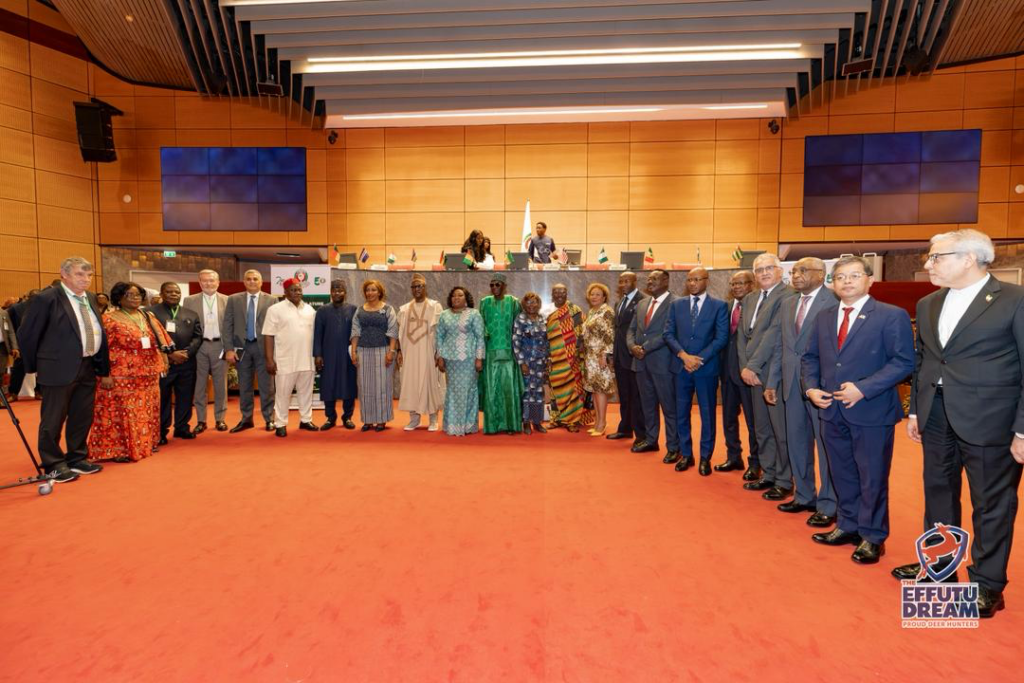
The Minority Leader of Parliament, Alexander Afenyo-Markin, has called for urgent and coordinated regional action in response to escalating security threats, xenophobic violence, and persistent barriers to free movement across West Africa.
Speaking under Rule 71 of Parliament’s procedures—reserved for matters of urgent public interest—Afenyo-Markin, who also serves as a member of the ECOWAS Parliament, described the current situation as “a moment of profound moral reckoning” for the region.
The lawmaker highlighted a deadly attack that occurred on February 14, 2026, in Titao, northern Burkina Faso. According to his account, Ghanaian tomato traders traveling through the region were ambushed by militants linked to Jama’at Nasr al-Islam wal Muslimin.
He recounted that the attackers reportedly separated men from women, executed the men, and set their vehicle ablaze. Several West African nationals were killed in the incident, while survivors were forced to bury the victims locally due to ongoing insecurity that prevented authorities from accessing the area.
The victims, many of whom were key players in regional agricultural supply chains, were later mourned at Techiman Central Market in Ghana. Afenyo-Markin warned that the tragedy underscores broader structural risks, particularly as major food trade routes pass through volatile conflict zones such as the Liptako-Gourma region, where extremist activity remains high.
He also raised alarm over a major military offensive in Mali on April 25, 2026, described as the largest since 2012. The attacks reportedly targeted multiple cities and resulted in significant casualties, including the killing of the country’s defence minister.
In response to the deteriorating security situation, Ghana has suspended the movement of traders along the Mali corridor, a key route for regional commerce.
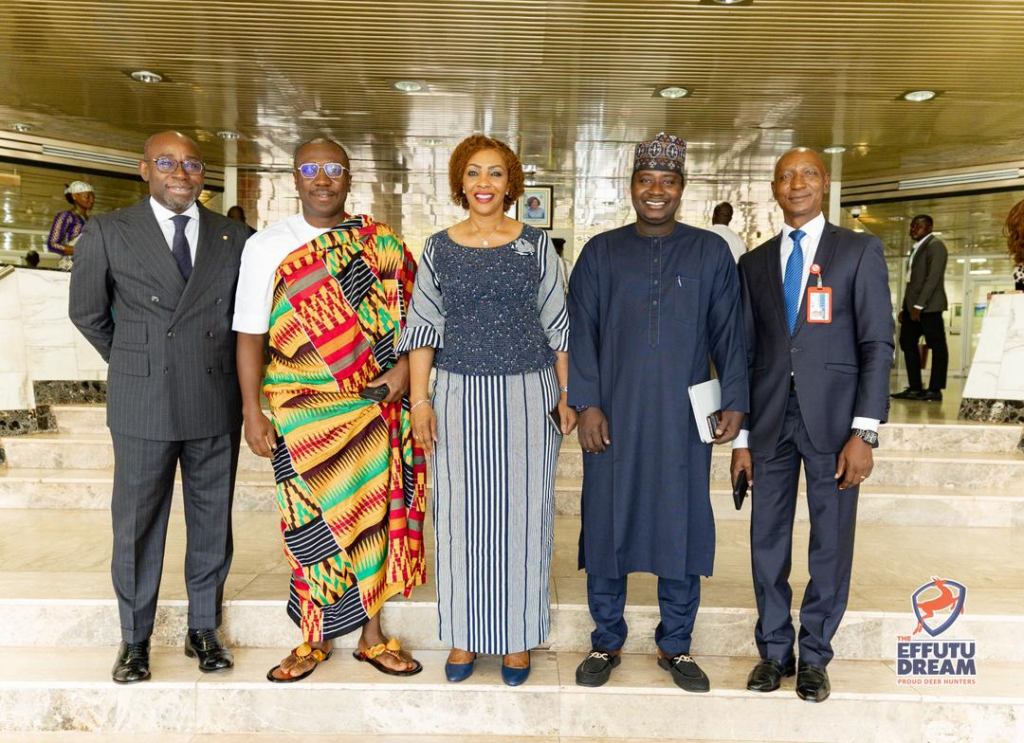
Afenyo-Markin stressed the need for Economic Community of West African States (ECOWAS) to establish a civilian protection framework specifically designed to safeguard traders and workers operating in high-risk areas.
Beyond the Sahel, the Minority Leader condemned increasing xenophobic attacks in South Africa. He noted that African migrants—including Ghanaians, Nigerians, Zimbabweans, and Ethiopians—have faced violence, looting, and displacement in several provinces.
Fatalities have been confirmed, including Nigerian nationals, while widely circulated videos show assaults on foreign nationals and destruction of property.
Although he acknowledged statements by South African President Cyril Ramaphosa condemning xenophobia and calling for calm, Afenyo-Markin insisted that stronger, concrete actions are required.
“Words do not arrest perpetrators,” he said, urging authorities to prioritise investigations, arrests, and prosecutions to restore confidence and protect lives.
Turning attention to regional integration, Afenyo-Markin criticised ECOWAS for failing to fully implement its 1979 Protocol on the Free Movement of Persons. While the policy guarantees visa-free travel within member states, he argued that citizens continue to face harassment, extortion, and illegal checkpoints across borders.
“These barriers amount to a de facto tax on poverty,” he stated, highlighting how such practices undermine economic opportunity and regional unity.
He also expressed concern over the slow pace of ratification of the African Union Free Movement Protocol, adopted in 2018. According to him, the lack of progress contradicts the ambitions of the African Continental Free Trade Area (AfCFTA), which seeks to boost intra-African trade.
He argued that trade liberalisation cannot succeed without the free movement of people and urged Ghana—host of the AfCFTA Secretariat—to accelerate ratification ahead of its 2027 target.
To address these interconnected challenges, Afenyo-Markin proposed a five-point plan, including:
“The safety of our people must never be a matter open to negotiation,” he concluded.

The Linda Ocloo, Greater Accra Regional Minister, has issued a public apology following backlash over comments in a viral video where she appeared to suggest that postings to northern Ghana could be interpreted as a form of punishment.
.jpg)
The Government of Ghana has taken a significant step toward strengthening the country’s energy sector by signing a major term sheet agreement with Eni Ghana E&P, Vitol Upstream Ghana Limited, and the Ghana National Petroleum Corporation to expand domestic gas production under the Offshore Cape Three Points (OCTP) project.
The agreement was signed on behalf of the government by John Abdulai Jinapor, alongside Cassiel Ato Forson, marking a coordinated effort between the energy and finance sectors to accelerate strategic investments in the country’s petroleum industry.
This term sheet sets out the commercial framework for the development of new gas infrastructure under the OCTP Non-Associated Gas (NAG) Upgrade Project. It builds on a Memorandum of Intent signed in September 2025, which committed all parties to collaborate on long-term initiatives aimed at boosting Ghana’s gas production capacity and improving energy reliability.
Under the expansion plan, gas output from the OCTP project is projected to increase significantly—reaching up to 350 million standard cubic feet per day by 2028. This increase will be driven by the development of the Gye Nyame field, a key offshore resource, as well as the installation of critical infrastructure, including a booster compressor and a new non-associated gas system on the project’s Floating Production Storage and Offloading (FPSO) vessel.
The OCTP project has already played a vital role in Ghana’s energy mix, supplying gas for power generation and supporting industrial growth. The planned upgrade is expected to further enhance energy security by ensuring a more stable and reliable supply of domestic gas. It will also help reduce Ghana’s reliance on imported fuels, which have historically exposed the country to global price volatility.
In addition to strengthening power generation, the increased gas supply is expected to support expanding industrial demand and improve energy access for households. Analysts believe the project could also contribute to economic growth by creating jobs and encouraging further investment in the upstream petroleum sector.
Speaking after the signing ceremony, Mr. Jinapor described the agreement as a major milestone in Ghana’s energy development agenda.
“Today’s signing sends a strong signal that Ghana’s upstream petroleum sector remains open, stable and ready for investment,” he stated.
He further emphasized the government’s commitment to maintaining a transparent and investor-friendly environment while ensuring that Ghana’s natural resources are managed responsibly and deliver long-term benefits to citizens.
The agreement underscores Ghana’s broader strategy to position itself as a leading energy hub in West Africa, leveraging its natural gas resources to drive sustainable development and economic resilience.

The Ghana Armed Forces has commenced early-stage works on the long-anticipated Accra–Kumasi Expressway, marking a significant step toward the delivery of one of Ghana’s most ambitious road infrastructure projects.

The Western Regional Minister, Joseph Nelson, has strongly condemned recent incidents of attacks on firefighters, describing them as “troubling” and a direct threat to public safety.