
Minority criticises gov't for $300m World Bank loan, says country returning to debt market after IMF exit
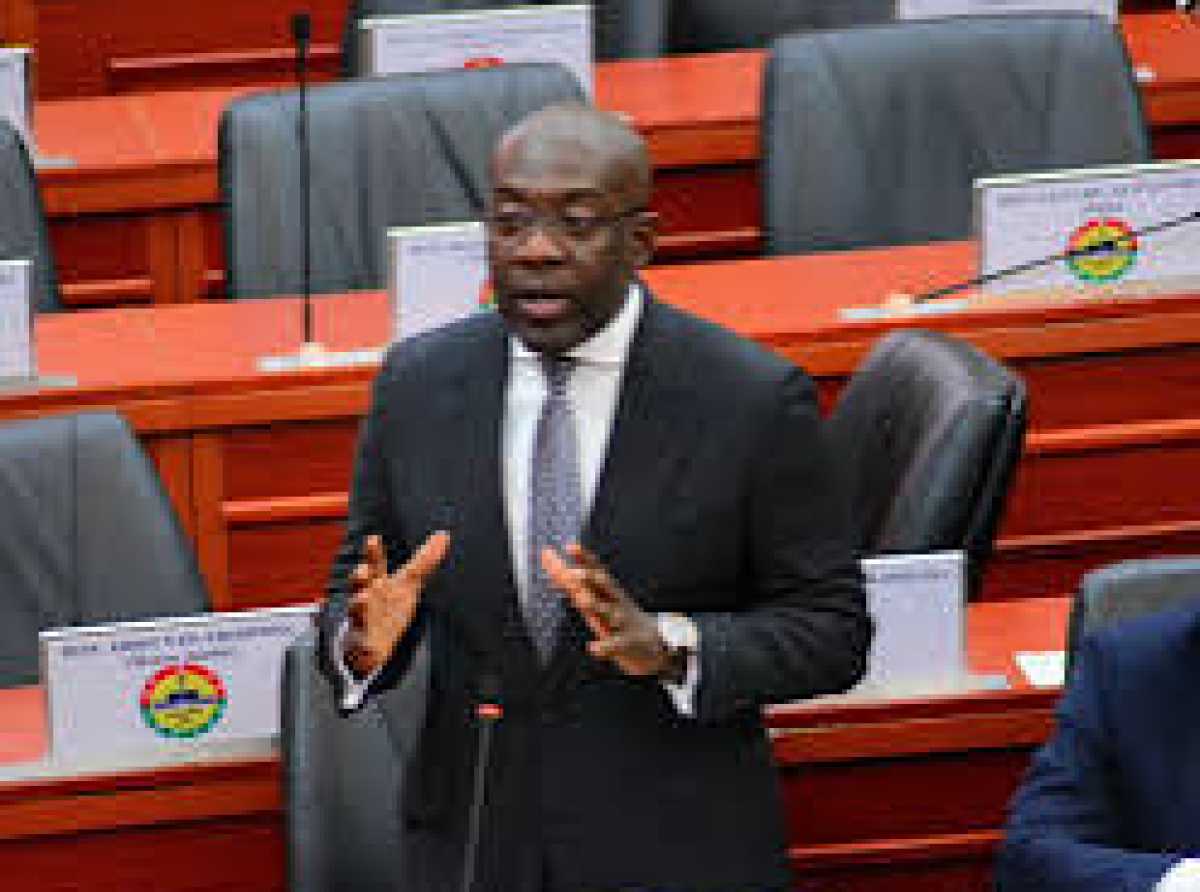
The Minority in Parliament has criticised the government's decision to secure a US$300 million World Bank loan to finance the Secondary Education Transformation for Access, Relevance and Results for Jobs (STARR-J) Project, arguing that the move exposes growing fiscal challenges less than a year after Ghana exited the International Monetary Fund (IMF) programme.
According to the caucus, the loan demonstrates the government's inability to generate sufficient domestic revenue to finance key national priorities, forcing it to return to the debt market for major development projects.
Contributing to the debate on the loan agreement in Parliament on Tuesday, July 21, Deputy Ranking Member on the Finance Committee, Dr. Gideon Boako, argued that the government's revenue mobilisation efforts have fallen short of expectations.
He maintained that the renewed reliance on external borrowing raises concerns about the country's fiscal management following the successful completion of Ghana's IMF-supported programme.
We just exited the IMF Programme and for less than a year, we have begun to see Government resort to the debt market to finance critical investment in this country."
Dr. Boako attributed the borrowing to what he described as weak financial management and inadequate domestic revenue mobilisation.
It is happening because the Finance Ministry and the managers of finances in this country are doing little to nothing to ensure that we are able to raise the needed revenue to finance critical investment in the country."
He further claimed that government had recorded significant revenue underperformance over the past year.
If you look at the fiscal revenue from last year, there have been huge revenue underperformance on the part of government," he stated.
Ranking Member on Parliament's Economy and Development Committee, Kojo Oppong Nkrumah, also criticised the government's fiscal management, alleging that increasing quasi-fiscal spending by state-owned enterprises is placing additional pressure on public finances.
According to him, resources that could have been used to finance priority government programmes are being diverted elsewhere.
You are finding what the IMF warned about, the quasi-fiscal expenses. Look from the various state-owned enterprises, they are now embarking on quasi-fiscal expenses, spending the money on other things."
He argued that these financial pressures have compelled the government to seek additional borrowing.
"It is that reason for which at the central treasury, they can't find resources to pay for some of these priorities and they have gone back to the debt market," he added.
Despite the Minority's objections, Parliament approved the US$300 million credit facility on Tuesday.
The financing agreement is between the Government of Ghana, represented by the Ministry of Finance, and the International Development Association (IDA) of the World Bank Group.
The facility will finance the Secondary Education Transformation for Access, Relevance and Results for Jobs (STARR-J) Project, which forms part of the government's strategy to improve access to quality secondary education.
The STARR-J Project is expected to fund several major interventions within Ghana's secondary education sector, including:
- Construction of 10 new secondary schools.
- Expansion of school infrastructure to eliminate the double-track system.
- Upgrading of 37 Senior High Technical Schools (SHTSs).
- Improving equitable access to quality secondary education.
- Enhancing the relevance of secondary education to meet labour market demands.
Government has argued that the investment is critical to improving educational outcomes while expanding opportunities for students across the country.
The debate over the loan underscores the continuing political divide over Ghana's economic management following the completion of the IMF Extended Credit Facility programme.
While the government maintains that the financing will support long-term human capital development and address infrastructure deficits in the education sector, the Minority insists that stronger domestic revenue mobilisation should reduce reliance on external borrowing for such investments.
The approval of the facility now paves the way for implementation of the STARR-J Project as the government intensifies efforts to improve secondary education infrastructure and phase out the double-track system under the Free SHS programme.

Aikines Anyomi

News
Food
Politics
Technology
About Us
Download Our Mobile App

