President John Dramani Mahama is expected to cut the sod in the coming weeks for the construction of three 160-bed Regional Referral Hospitals in the Oti, Savannah and Western North Regions.

President John Dramani Mahama is expected to cut the sod in the coming weeks for the construction of three 160-bed Regional Referral Hospitals in the Oti, Savannah and Western North Regions.
Ghana and the City of Columbus, Ohio, have signed a Memorandum of Understanding (MoU) to establish the Ghana-Columbus Nursing Partnership Programme, aimed at strengthening nursing education, workforce development and legal employment pathways for Ghanaian nurses in the United States.

The government has launched a five-year Presidential Initiative on Maternal Health Emergency Response (PRIMER) to reduce preventable maternal deaths and improve emergency care for pregnant women across Ghana.

The Ga Mantse, His Royal Majesty Nii Tackie Teiko Tsuru II, has pledged the full support of the Ga State to the Ghana Medical Trust Fund (GMTF), describing the initiative as a transformative national intervention that has the potential to improve access to specialised healthcare and save the lives of thousands of Ghanaians.

The Minister for Gender, Children and Social Protection, Dr. Agnes Naa Momo Lartey, has assured families of children injured in the tragic road accident on the Dzorwulu-Accra Mall stretch that the government will fully support their recovery, including paying for all medical expenses.

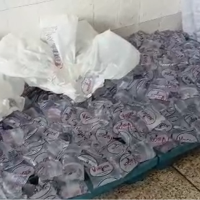
The Food and Drugs Authority (FDA) has shut down 44 food manufacturing facilities, including sachet water producers and cold stores, as part of a nationwide enforcement exercise aimed at strengthening compliance with Ghana's food safety regulations.

The Food and Drugs Authority (FDA) has shut down Virgen Natural Mineral Water, a sachet water manufacturing facility located at Ashongman in the Ga East Municipality, for operating without the required regulatory licence.
President John Dramani Mahama will host an Extraordinary Session of the African Union (AU) Assembly of Heads of State and Government in Accra as African leaders convene to strengthen healthcare systems and accelerate progress toward Universal Health Coverage (UHC) across the continent.
_thumbnail.jpg)
The Greater Accra Regional Health Directorate of the Ghana Health Service has launched a new digital maternal health intervention, PROMPTS, also known as "Nurse Mary."

The government has announced plans to enroll at least 1,000 nurses annually into specialist nursing programmes over the next three years as part of efforts to strengthen Ghana's healthcare system and improve the management of non-communicable diseases (NCDs).
_thumbnail.jpg)
Construction of the ultra-modern Cardiology Centre at the Tamale Teaching Hospital (TTH) remains on course for completion by the end of August, with contractors assuring the Ghana Medical Trust Fund (GMTF) that work is progressing according to schedule despite the demanding pace of construction.
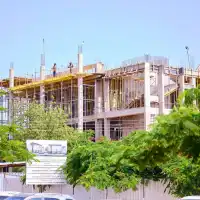
Construction work on the long-delayed La General Hospital is showing visible signs of progress nearly three months after President John Dramani Mahama pledged to revive and complete the project, raising fresh hopes among residents that the much-needed healthcare facility will finally be delivered.
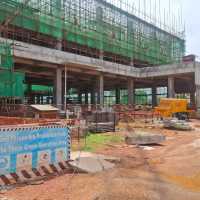
The Head of Corporate Communication at the National Health Insurance Authority (NHIA), Faustina Dery, has credited the ongoing transformation of the National Health Insurance Scheme (NHIS) to reforms introduced by the Authority’s Chief Executive Officer, Dr. Victor Bampoe.
_thumbnail.jpg)