
Tano North MP criticises Government for using loans to fund Free SHS
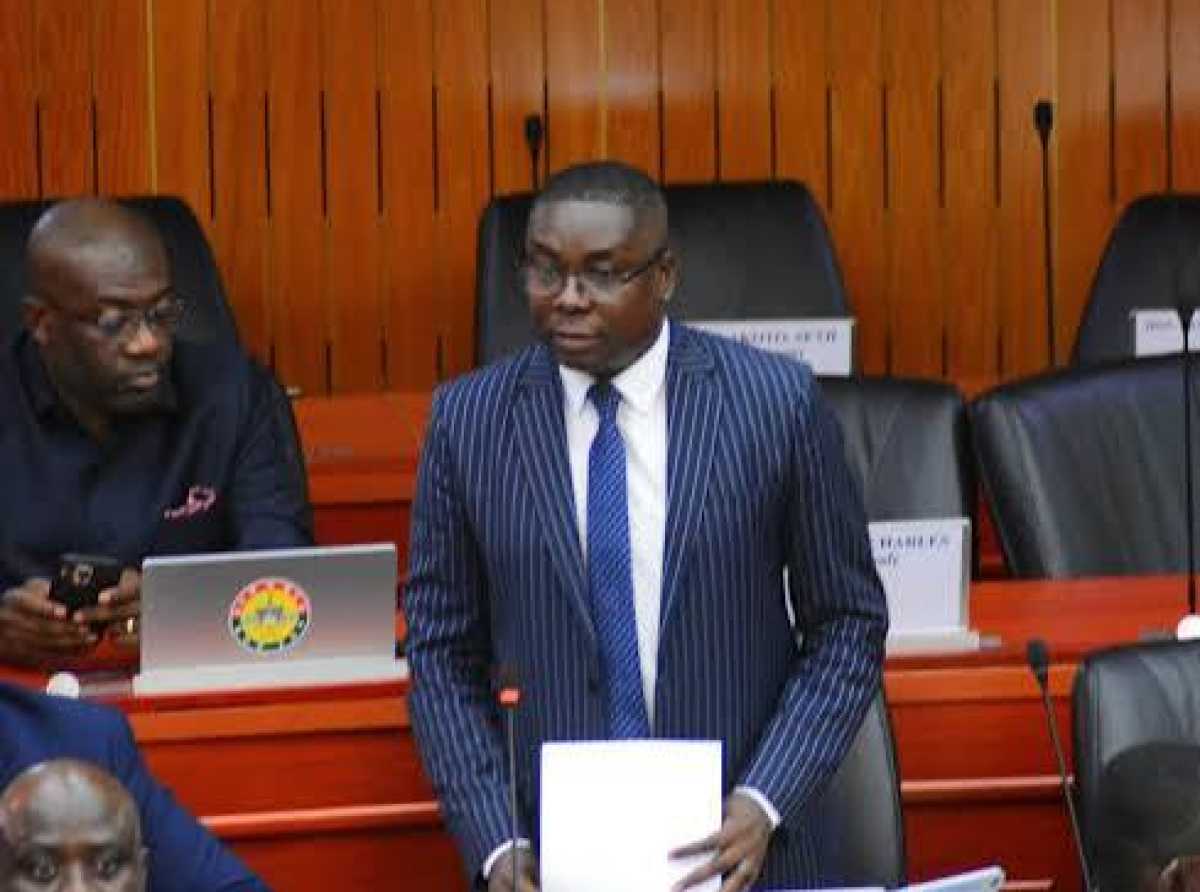
The Deputy Ranking Member on Parliament's Finance Committee and Member of Parliament for Tano North, Dr Gideon Boako, has argued that Ghana's Free Senior High School (Free SHS) programme should continue to be financed through domestic revenue rather than external borrowing.
Speaking during parliamentary proceedings on Tuesday, Dr Boako said education should remain a top national priority and urged the government to strengthen revenue mobilisation instead of relying on loans to finance key education programmes.
His comments came after Parliament approved a US$300 million International Development Association (IDA) credit facility from the World Bank to support the Secondary Education Transformation for Access, Relevance and Results for Jobs (STARR-J) Project, which aims to improve secondary education infrastructure, eliminate the double-track system, construct 10 new schools and upgrade 37 Senior High Technical Schools (SHTSs).
Dr Boako questioned why the government had opted to borrow to support investments linked to the Free SHS programme instead of financing them from locally generated revenue.
"We want to ask the Finance Minister what government is doing and why we are not able to raise revenue to support education but we have to go and borrow to finance Free SHS," he said.
According to him, successive governments should demonstrate their commitment to education by ensuring that adequate domestic resources are allocated to sustain Ghana's flagship secondary education programme.
The Tano North legislator contrasted the current financing approach with that of the previous administration, arguing that the introduction of Free SHS was achieved without resorting to external borrowing specifically for the programme.
"The Free SHS that was introduced by the erstwhile administration didn't resort to borrowing to finance it. The Ghanaian people want to see the government prioritising education and thereby prioritising Free SHS," Dr Boako stated.
He maintained that improving domestic revenue collection remains the most sustainable long-term strategy for funding education and other essential public services.
Dr Boako argued that persistent revenue underperformance is limiting the government's fiscal space and increasing its dependence on borrowing.
Citing first-quarter fiscal data for 2026, he highlighted shortfalls across several major revenue sources.
According to him:
- Value Added Tax (VAT) collections were about 6% below target.
- National Health Insurance Scheme (NHIS) Levy revenue fell 29.9% below target.
- GETFund revenue also recorded a 29.9% shortfall.
- Crude oil receipts were 37% below target.
- Excise tax collections fell 23% short.
- Import duties underperformed by 14%.
"When these happen, all that the government needs to do is to cut expenditure and when it is unable to use revenue for such critical expenditure, the government will have to resort to borrowing," he explained
Dr Boako further argued that the government's weak revenue performance has already resulted in significant reductions in public expenditure.
He stated that during the first quarter of 2026, government revenue fell below expectations, forcing corresponding spending cuts.
"In quarter one alone of 2026, government revenue fell short by 4.5% and by so doing government had to reduce expenditure by 29%," he said.
He also cited fiscal data for 2025, claiming that revenue and expenditure both declined.
According to him:
- Government revenue fell short by 2.2%.
- Overall government expenditure declined by 13%.
- Capital expenditure fell by 13.8%.
Dr Boako warned that continued revenue weaknesses could affect the implementation of development projects and place additional pressure on public finances.
The Deputy Ranking Member urged the Ministry of Finance to intensify efforts to improve domestic revenue collection to reduce dependence on external borrowing.
He argued that stronger revenue mobilisation would enable government to finance critical sectors such as education, infrastructure and healthcare without significantly increasing the country's debt burden.
His remarks add to the ongoing parliamentary debate over the financing of Ghana's education sector following approval of the US$300 million World Bank facility for the STARR-J Project, which the government says will improve access to quality secondary education and help eliminate the double-track system.

Aikines Anyomi
News
Food
Politics
Technology
About Us
Download Our Mobile App

