
Cocoa farmers spared another blow as gov’t rejects price cut despite global slump – COCOBOD
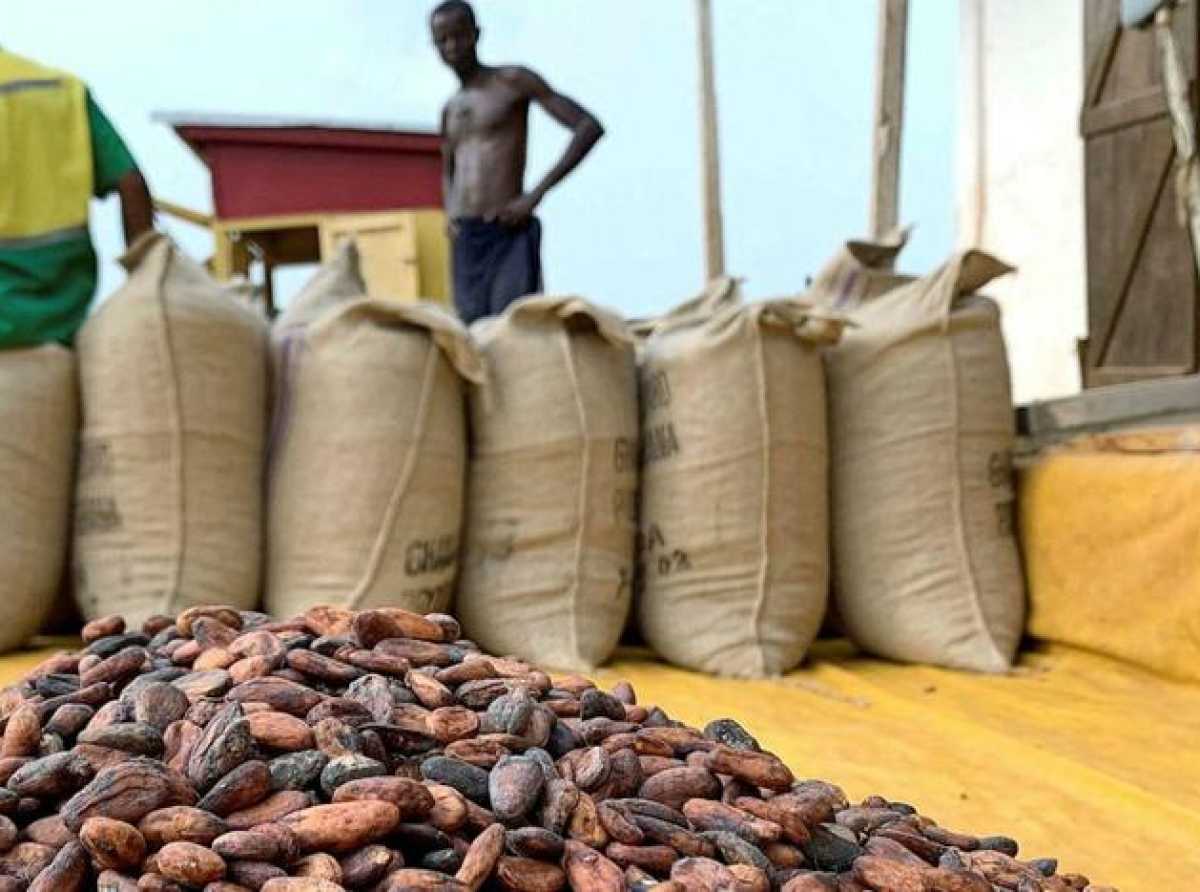
Cocoa farmers across Ghana have been spared a potential reduction in income after the government and the Ghana Cocoa Board (COCOBOD) decided to maintain the current producer price despite declining international cocoa prices.
The decision, according to COCOBOD's Head of Public Affairs, Jerome Sam, was influenced primarily by concerns over the welfare and livelihoods of cocoa farmers, many of whom have faced significant economic challenges in recent years.
Speaking on Joy News’ PM Express on Monday, Mr. Sam explained that while international market conditions would ordinarily have justified a downward adjustment in producer prices, government opted to prioritize farmer protection over strict market considerations.
According to Mr. Sam, authorities considered the financial difficulties already facing cocoa farmers and concluded that maintaining the current producer price was necessary to prevent further hardship.
He noted that cocoa farming remains the primary source of income for thousands of households across Ghana and that any reduction in farm-gate prices could have serious implications for rural livelihoods.
“What basically went into the price being unchanged, government took into consideration the income levels of the ordinary farmer,” he said.
He stressed that the decision reflects the government's commitment to cushioning farmers from additional economic pressures while preserving confidence within the cocoa sector.
Mr. Sam revealed that if Ghana had strictly followed international market trends, cocoa farmers would likely have faced another price reduction this season.
He pointed out that neighbouring Côte d’Ivoire operates a pricing mechanism that allows producer prices to be adjusted upward or downward depending on prevailing global market conditions.
However, Ghana deliberately chose a different approach.
“If we are to consider what is prevailing on the international market, then of course the price would have gone down again,” he explained.
“The farmer has already been hit, so we need to make sure that the prices remain unchanged.”
The decision is expected to provide some financial stability for farmers as they complete the current cocoa season.
Mr. Sam noted that producer price announcements follow a long-established pricing structure within Ghana's cocoa industry.
Typically, COCOBOD announces a producer price at the beginning of the cocoa season, while a review may also be conducted during the light crop season.
Under normal circumstances, the producer price set at the start of the season often remains unchanged until the end of that production cycle.
“This is a conventional thing, and it has been a practice all this while,” he said.
However, he acknowledged that the current season has been exceptional due to unusual market developments and industry challenges that emerged over the past year.
The COCOBOD spokesperson recalled that government and industry stakeholders were compelled to review cocoa prices earlier this year in response to evolving market conditions.
That intervention, announced in February, generated extensive discussion among farmers, industry players, and market analysts regarding the future direction of cocoa pricing policy.
Mr. Sam explained that the review was part of broader efforts to protect an industry that remains one of Ghana's most important economic sectors.
Cocoa continues to serve as a major source of export revenue, foreign exchange earnings, and employment for millions of people across the country.
While emphasizing the need to support farmers, Mr. Sam noted that authorities must also ensure the long-term sustainability of the cocoa industry.
He explained that maintaining producer prices requires careful consideration of market realities, production costs, and the financial health of the cocoa sector.
Government's objective, he said, is to strike a balance between safeguarding farmer incomes and ensuring that the industry remains viable and competitive.
“Inasmuch as we are protecting the farmer, we are also ensuring a sustainable sector,” he stated.
Mr. Sam indicated that discussions regarding future pricing decisions will continue as authorities assess developments in the global cocoa market.
Any changes or policy adjustments, he said, will be communicated to stakeholders after the current season concludes.
For now, cocoa farmers can continue operating under the existing producer price structure without fear of an immediate reduction in earnings.
The decision is likely to be welcomed by farming communities, many of whom have faced rising production costs, climate-related challenges, and market uncertainties over recent years.
As Ghana seeks to maintain its position as one of the world's leading cocoa producers, policymakers say protecting farmer livelihoods remains central to ensuring the long-term success and sustainability of the sector.

Aikines Anyomi

News
Food
Politics
Technology
About Us
Download Our Mobile App

