Presidents Mahama and Ouattara reaffirm commitment to strengthen cocoa alliance
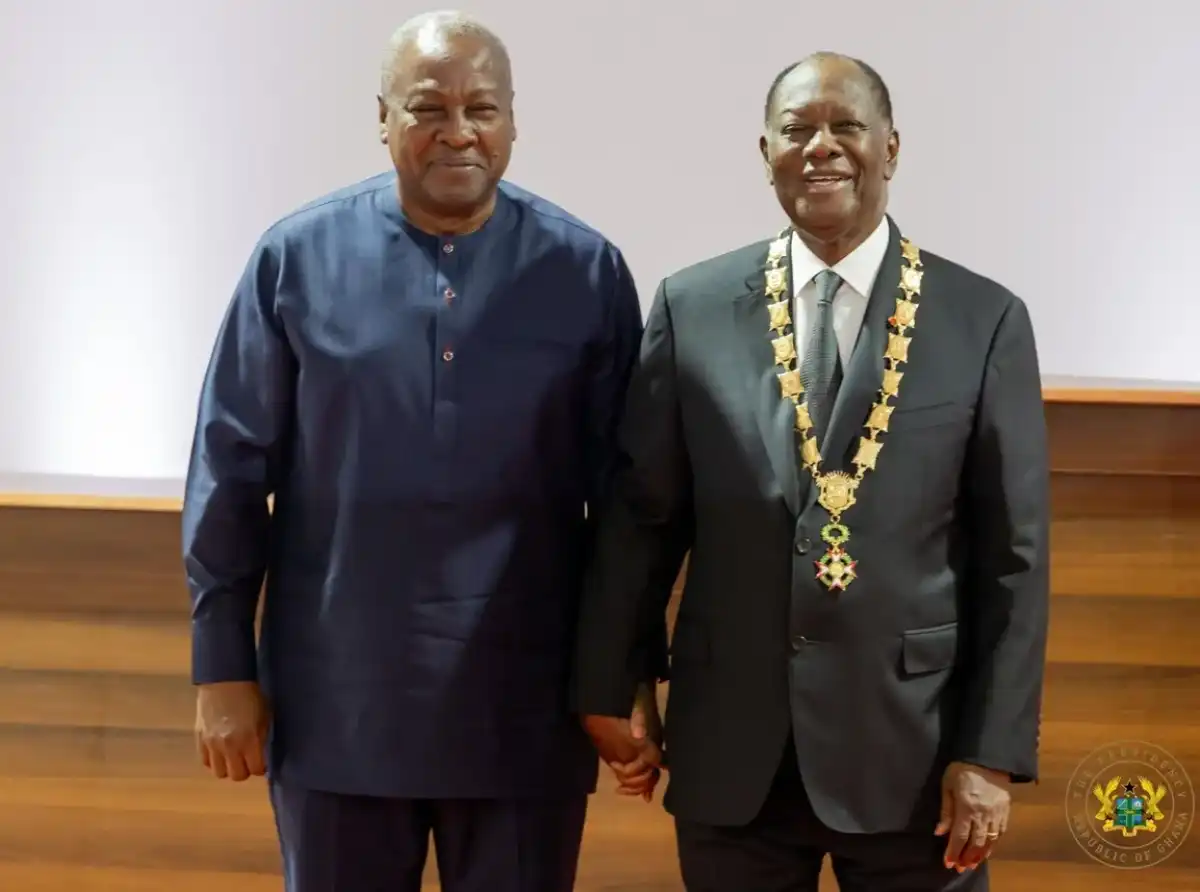
President John Dramani Mahama has returned to Accra following a significant bilateral engagement with Alassane Ouattara in Abidjan, where both leaders reaffirmed their commitment to securing a sustainable and prosperous future for the cocoa industry.
The high-level meeting took place during the Côte d’Ivoire-Ghana Summit on the Future of the Cocoa Economy, bringing together officials and stakeholders from the world's two largest cocoa-producing nations. The summit concluded with the signing of a landmark Joint Declaration that seeks to strengthen cooperation in cocoa pricing, sustainability, environmental protection, research, and industrial development.
Expressing satisfaction with the work of the Joint Technical Committee, Presidents Mahama and Ouattara emphasized that cocoa farmers must remain at the centre of all policy decisions affecting the industry.
Together, Ghana and Côte d’Ivoire account for nearly 60 percent of global cocoa production, making their collaboration crucial to shaping the future of the international cocoa market. The two leaders stressed that their countries carry a special responsibility to ensure cocoa farmers receive fair compensation for their labour and benefit more directly from the value generated by the global chocolate industry.
The summit highlighted the need for greater economic justice within the cocoa value chain, where African producers continue to earn a relatively small share of the profits despite supplying most of the world's cocoa beans.
One of the major outcomes of the summit was the renewed commitment to the Living Income Differential (LID), a pricing mechanism introduced to guarantee additional income for cocoa farmers.
The two countries agreed to strengthen cooperation on producer pricing policies and harmonise cocoa marketing strategies. By coordinating price announcements and market interventions, Ghana and Côte d’Ivoire aim to protect farmers from fluctuations in international commodity markets and improve income stability for cocoa-growing communities.
Leaders believe that closer coordination will help strengthen their bargaining power while reducing vulnerabilities caused by unpredictable global cocoa prices.
Environmental sustainability emerged as another major focus of discussions. Both presidents expressed concern over the growing threat posed by illegal mining activities, which continue to contaminate rivers, lakes, and critical water bodies relied upon by farming communities.
The leaders agreed to implement a joint strategy aimed at reducing illegal mining operations, restoring degraded ecosystems, and protecting shared water resources. The initiative will also support broader climate adaptation efforts as changing weather patterns increasingly threaten agricultural productivity across West Africa.
Officials noted that environmental degradation and climate change remain significant risks to long-term cocoa production and food security in the region.
Recognising the devastating impact of the Cocoa Swollen Shoot Virus Disease (CSSVD), both countries pledged to deepen collaboration between their agricultural and scientific research institutions.
The disease has affected thousands of cocoa farms across West Africa, reducing yields and threatening farmer incomes. Enhanced research partnerships will focus on developing disease-resistant cocoa varieties, improving farm management practices, and accelerating solutions to emerging pest and disease challenges.
The leaders described scientific innovation as essential to ensuring the long-term sustainability of the cocoa sector.
A central pillar of the new agreement is the ambition to move beyond the export of raw cocoa beans and increase local value addition.
President Mahama and President Ouattara committed to expanding domestic cocoa processing industries, encouraging investment in chocolate manufacturing, and promoting the consumption of cocoa products across Africa.
The strategy seeks to create jobs, increase export revenues, and enable African countries to capture a larger share of the global cocoa-chocolate value chain.
Currently, Africa produces approximately 80 percent of the world's cocoa beans but receives only a small fraction of the profits generated by the global chocolate industry.
The summit also explored the expansion of the existing cocoa alliance to include other African cocoa-producing nations.
According to the Joint Declaration, broadening membership would strengthen Africa's collective negotiating power in international markets and enhance cooperation on pricing, sustainability standards, research, and trade.
The leaders believe a united African cocoa bloc could significantly improve the continent's influence within the global cocoa economy and help secure better outcomes for millions of farmer
The Joint Declaration adopted in Abidjan on June 16, 2026, outlines several strategic commitments:
- Implementation of a common framework for determining producer prices and strengthening market intelligence systems.
- Reinforcement of fair remuneration policies for cocoa farmers through coordinated pricing mechanisms.
- Recognition of the Côte d’Ivoire-Ghana Cocoa Initiative (CIGCI) and the African Regional Standards for Sustainable Cocoa (ARS-1000) as critical tools for cocoa traceability and sustainability.
- Enhanced cooperation between national research institutions to combat Cocoa Swollen Shoot Virus Disease and other agricultural threats.
- Increased local processing of cocoa and expansion of intra-African trade in finished cocoa products.
- Expansion of the cocoa alliance to include additional African producer countries and improve Africa's participation in the global cocoa-chocolate value chain.
The agreement marks a major step toward transforming the cocoa sector from a raw commodity export industry into a value-driven economic engine capable of delivering greater prosperity for farmers and stronger economic growth for producing nations.

Aikines Anyomi

News
Food
Politics
Technology
About Us
Download Our Mobile App

