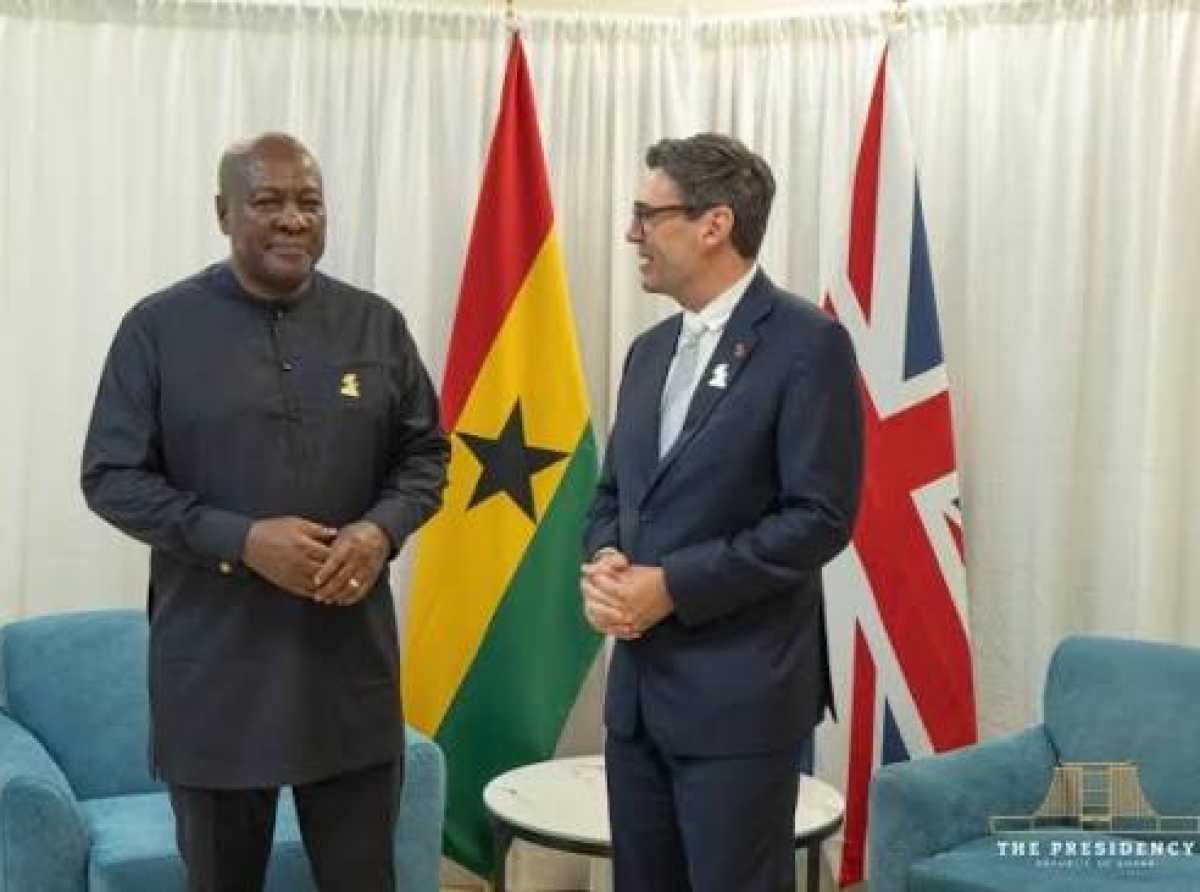
The United Kingdom is open to discussions about a formal apology for its role in the transatlantic slave trade, with British High Commissioner to Ghana saying the country is prepared to engage in an honest and respectful dialogue with affected parties.
The High Commissioner said listening to calls for a formal apology on behalf of the British state would form an important part of the process, adding that UK Prime Minister had indicated his openness to such discussions.
In a reflection on Ghana and Britain's shared history, the diplomat said both countries could not change the past but had a responsibility to confront it honestly and build a modern partnership based on dignity and mutual respect.
The comments follow the Commonwealth Heads of Government Meeting (CHOGM), where leaders agreed that the time had come for a meaningful, truthful and respectful conversation about the transatlantic trafficking of enslaved Africans and its historical consequences.
According to the High Commissioner, Commonwealth leaders welcomed the UK Government's commitment to engage in a structured, inclusive and good-faith dialogue with affected parties.
The discussions are expected to address the transatlantic slave trade and its historical harms, while allowing those most affected to help shape the process.
The diplomat said the UK was approaching the dialogue seriously and respectfully, stressing that its outcome should not be predetermined.
“A dialogue of this importance must allow those most affected to help shape it. Its outcome should not be predetermined, but neither should the depth or difficulty of the conversation be underestimated,” the High Commissioner said.
The diplomat added that the first responsibility was to listen.
The UK Prime Minister has previously expressed his “sorrow and regret for the pain and suffering of so many millions of people” and acknowledged that the history of slavery continues to shape the world.
The High Commissioner acknowledged Ghana's leadership in keeping international attention on the transatlantic slave trade and its consequences.
The diplomat said Ghana's perspectives had helped shape the wider Commonwealth conversation, bringing renewed attention to difficult but important questions about historical injustice.
The UK Prime Minister also met President John Dramani Mahama during CHOGM to outline the proposed dialogue and welcome Ghana's support.
The High Commissioner described the planned engagement as an important step towards addressing the historical relationship between Britain and affected communities.
Reflecting on the human consequences of the slave trade, the High Commissioner recalled attending a performance of The Darkest Chapter, a play by Ghanaian playwright Latif Abubakar, at the National Theatre.
The production traces the history of the transatlantic slave trade through decolonisation and Ghana's independence.
The diplomat said one line from the play had remained particularly memorable: “before diplomacy, before policy, before resolutions, there were human beings”.
The High Commissioner said any discussion of the slave trade must begin with the millions of people forcibly taken from their homes, separated from their families and communities, and subjected to exploitation and suffering.
The diplomat described the transatlantic slave trade as a brutal violation of human dignity, noting that its consequences continue to affect descendants and societies today.
The High Commissioner also reflected on the complex historical relationship between Ghana and the United Kingdom through the Asante Ewer, an artefact seen at the British Museum.
According to the diplomat, the object tells a story that connects medieval England, trans-Saharan trade, Asante ceremonial life and the violence and pillage associated with the Anglo-Asante wars.
The High Commissioner said historical objects often carry different meanings for different communities and require careful consideration of the experiences and histories they represent.
The diplomat also recalled standing with the Duke of Edinburgh at the Kwame Nkrumah Memorial Park the previous year, where they viewed a photograph of Queen Elizabeth II dancing with Ghana's first President, Kwame Nkrumah, during her 1961 visit to Accra.
The photograph, the High Commissioner said, captured a moment when the relationship between the two countries was being reshaped following Ghana's independence in 1957.
The High Commissioner said Ghana and the United Kingdom now relate to each other as sovereign partners, with ties extending beyond their shared history into education, culture, business, security and economic development.
The diplomat argued that the strength of the modern relationship should allow both countries to discuss painful historical experiences while making room for honest disagreement.
With Ghana approaching the 70th anniversary of its independence in 2027, the High Commissioner said the UK should participate in national reflections on Ghana's journey from colonial rule to independence with humility, openness and respect.
The diplomat concluded that the dialogue agreed at CHOGM would not be easy and would involve strongly held views, but maintained that the bilateral relationship was mature enough to confront difficult history and work towards a shared future founded on dignity and equity.

Aikines Anyomi
News
Food
Politics
Technology
About Us
Download Our Mobile App

