Poultry imports to decline as Government’s 'Nkoko Nkitinkiti initiative gains momentum – John Dumelo
The Deputy Minister for Food and Agriculture, John Dumelo, has expressed optimism that Ghana's dependence on imported poultry products will decline significantly as the government's flagship poultry initiative, Nkoko Nkitinkiti, gains momentum across the country.
Speaking at the launch of the 6th edition of Ghana Poultry Day in Accra, Mr. Dumelo revealed that Ghana currently produces only about five to six percent of its poultry consumption needs, making imports the dominant source of poultry products on the local market.
According to him, the Nkoko Nkitinkiti programme was introduced to boost domestic poultry production, improve food security, create employment opportunities, and reduce the country's growing poultry import bill.
"We know our consumption patterns, and currently we only produce about five to six percent of what we consume when it comes to poultry products. That is why we launched the Nkoko Nkitinkiti project to ensure there are enough poultry products in the country. Once the programme fully takes off, poultry imports will reduce drastically," he stated.
Mr. Dumelo disclosed that the first phase of bird distribution under the programme has been successfully completed, with preparations underway for the rollout of the second phase nationwide.
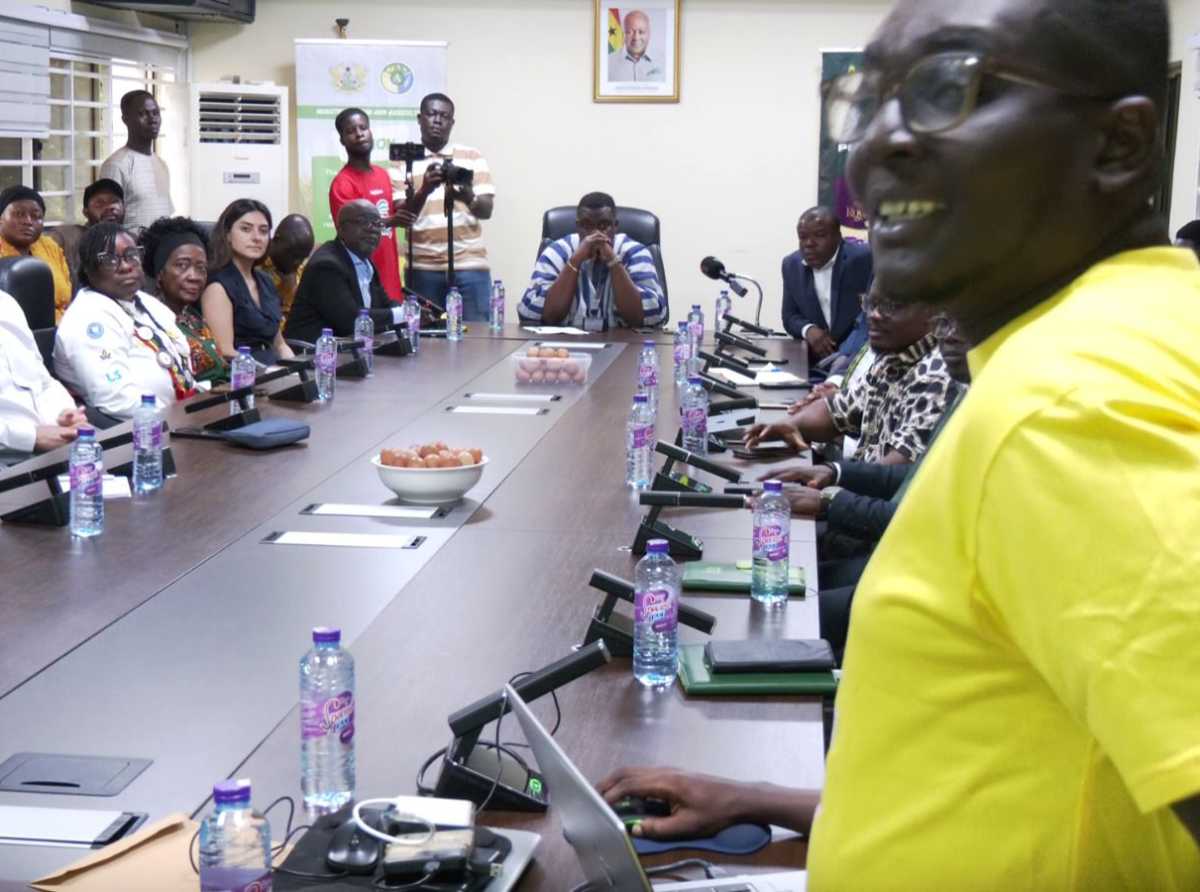
The remarks were made during the official launch of the 2026 Ghana Poultry Day celebration, scheduled for July 1 at the Forecourt of the State House in Accra.
Organised annually by Agrihouse Foundation, Ghana Poultry Day has become a major platform for promoting local poultry production, encouraging consumption of locally produced chicken, and fostering collaboration among stakeholders across the poultry value chain.
This year's event is themed, "Stepping Up to Feed Ghana Through Ghana's Poultry Value Chain," highlighting the need for stronger partnerships to improve food security, increase local production, and reduce dependence on imports.
The event will feature stakeholder dialogues, poultry exhibitions, business networking sessions, consumer education campaigns, marketplace engagements, and media interactions aimed at strengthening the poultry sector.
A major attraction will be a chef's activation and cooking competition designed to showcase innovative local poultry dishes and encourage greater patronage of Ghanaian-produced chicken.
Speaking at the launch, Alberta Nana Akyaa Akosa, Executive Chairperson of Agrihouse Foundation, noted that beneficiaries of last year's intervention, which distributed more than 5,000 day-old chicks, are already recording positive results and building sustainable poultry enterprises.
She called on corporate organisations, development partners, agribusinesses, and industry stakeholders to support the initiative through sponsorships, partnerships, and public awareness campaigns.
Also addressing participants, Bright Demordzi, National Coordinator of the Feed Ghana Programme, reaffirmed government's commitment to transforming the poultry industry through increased production, stronger value chain linkages, and strategic support for farmers.
"We remain committed to sustaining the momentum, increasing local production, and working closely with all stakeholders to build a resilient, competitive, and self-reliant poultry industry for Ghana," he said.
Industry experts continue to identify poultry production as one of the key sectors capable of creating thousands of jobs while contributing significantly to national food security, economic growth, and agricultural transformation.
With initiatives such as Nkoko Nkitinkiti, the Feed Ghana Programme, and Ghana Poultry Day, stakeholders remain hopeful that Ghana can gradually achieve greater self-sufficiency in poultry production and reduce its dependence on imported poultry products.

Aikines Anyomi

News
Food
Politics
Technology
About Us
Download Our Mobile App

