Former TOR MD and Goldman Sachs investment banker convicted of foreign bribery, money laundering
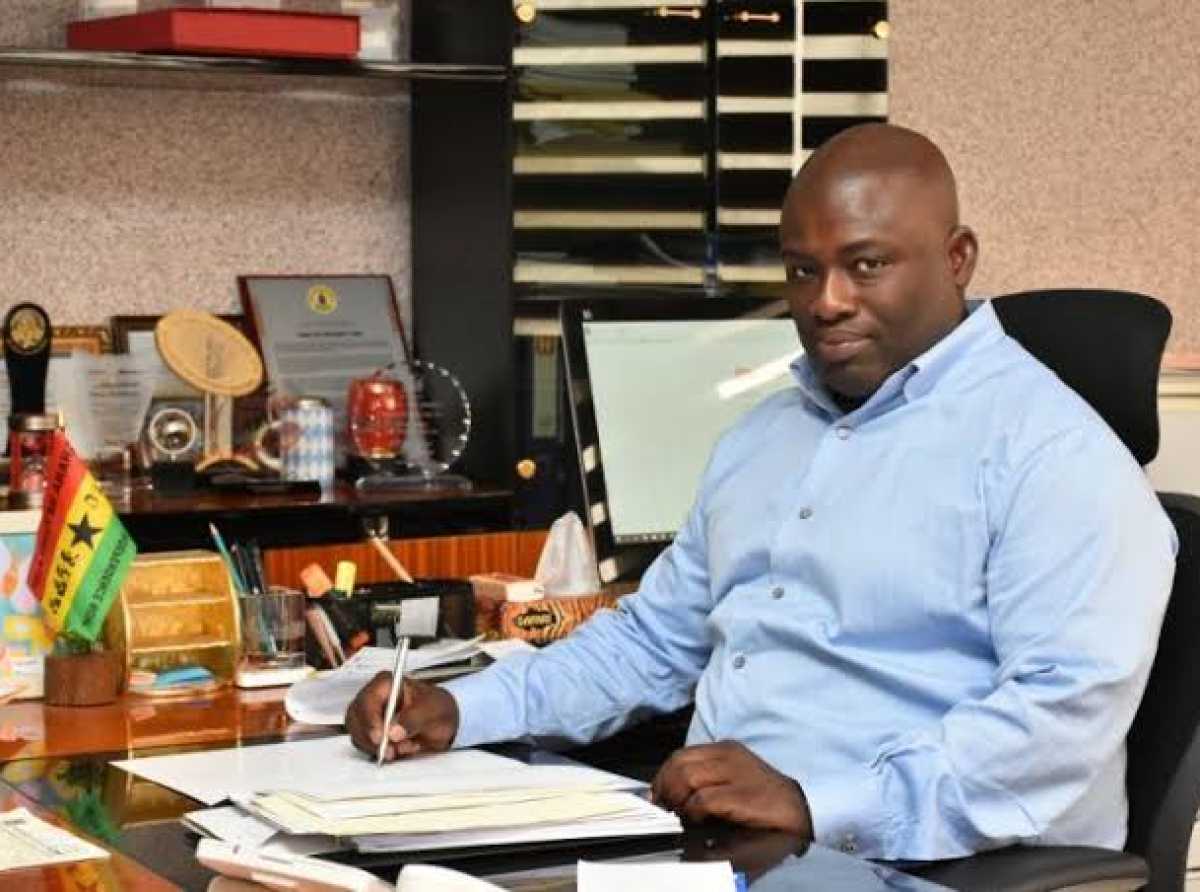
Ghanaian-American investment banker Asante Kwaku Berko has been convicted by a federal jury in Brooklyn, United States, on charges linked to a multimillion-dollar corruption scheme involving the development and financing of a power plant in Ghana.
Berko, a dual citizen of Ghana and the United States, was found guilty on all counts in an indictment charging him with conspiracy to violate the Foreign Corrupt Practices Act (FCPA), substantive FCPA violations and conspiracy to commit money laundering.
The verdict followed a nine-day trial before United States District Judge Diane Gujarati.
Berko has been remanded in custody pending sentencing and faces a maximum sentence of up to 30 years in prison.
The verdict was announced by Joseph Nocella Jr., United States Attorney for the Eastern District of New York; A. Tysen Duva, Assistant Attorney General of the U.S. Department of Justice's Criminal Division; and James C. Barnacle Jr., Assistant Director in Charge of the FBI's New York Field Office.
According to evidence presented at trial, Berko and his co-conspirators conspired to pay more than $1 million in bribes to multiple Ghanaian government officials to secure the approval and successful implementation of a major power plant project.
The project involved Aksa Enerji Uretim A.S. (Aksa), a Turkish energy company and client of Goldman Sachs, where Berko previously served as an Executive Director in the Investment Banking Division.
Beginning in December 2014, Berko was responsible for securing and managing a transaction between the Government of Ghana and Aksa for the construction and financing of a power plant.
The project was being pursued at a time when Ghana was facing a severe energy crisis and was expected to generate hundreds of millions of dollars in profits.
US prosecutors said Berko and his associates used their relationships with senior Ghanaian officials to help Aksa secure the contract to build and operate the power plant.
Evidence presented in court showed that, in April 2015, Berko and his co-conspirators discussed paying $1 million to Ghana's then Minister of Power to facilitate key approvals required for the project.
An additional $250,000 payment was allegedly discussed for the minister's senior adviser.
Prosecutors further alleged that bribes were provided to five Ghanaian officials during an all-expenses-paid trip to Turkey to inspect equipment connected to the proposed power plant.
The project was subsequently ratified by the Ghanaian Parliament in July 2015.
Following the parliamentary approval, prosecutors said Berko and his co-conspirators exchanged emails discussing additional payments.
In August 2015, they allegedly discussed $250,000 in bribes to various individuals, including approximately $46,000 paid to members of Ghana's Parliament who had ratified the agreement between Aksa and the Ghanaian government.
The prosecution said Berko personally made the $46,000 payment.
US prosecutors said Berko and his co-conspirators went to considerable lengths to conceal the alleged bribery scheme.
The evidence showed that payments were allegedly routed through shell companies, sham invoices, nominee bank-account holders and cash withdrawals.
The money was moved through both US and foreign bank accounts in an effort to disguise the true nature and recipients of the payments.
Berko also allegedly used his personal email account rather than his Goldman Sachs business account to communicate with co-conspirators about the transaction and the alleged bribes.
Prosecutors said he also misled Goldman Sachs' compliance team, which was responsible for reviewing and vetting the transaction.
Goldman Sachs eventually withdrew from the power plant deal because of corruption concerns.
US Attorney Joseph Nocella described the conviction as an important development in the fight against international corruption.
“Today’s verdict marks another significant victory in this Office’s longstanding commitment to rooting out corruption,” Nocella said.
He accused Berko of exploiting his access to senior foreign government officials and his position at a major American investment bank to personally benefit from the scheme.
Assistant Attorney General A. Tysen Duva said the case demonstrated the US government's determination to prosecute individuals who undermine fair international competition through corruption.
According to Duva, Berko used his position at a major American investment bank to facilitate bribes to Ghanaian officials in order to help Aksa secure the power plant project.
He warned that individuals who corrupt foreign governments and undermine fair competition would face prosecution under US law.
FBI Assistant Director in Charge James C. Barnacle Jr. also welcomed the conviction, highlighting cooperation between US and international law enforcement agencies.
The FBI acknowledged assistance from the United Kingdom, including the UK's National Central Bureau for INTERPOL, as well as the US Embassy in London, the Department of Justice's Office of International Affairs and the US Marshals Service.
The cooperation played a role in securing Berko's arrest and extradition to the United States.
US authorities said the case demonstrates the importance of international partnerships in investigating financial crimes and protecting the integrity of the global financial system.
The conviction is likely to renew scrutiny of the circumstances surrounding the Ghana-Aksa power project and the role of individuals involved in its approval.
The allegations presented at the US trial span several levels of Ghana's public administration and include claims involving senior government officials and members of Parliament.
The case was prosecuted by the Business and Securities Fraud Section of the US Attorney's Office for the Eastern District of New York and the Criminal Division's Fraud Section.
Berko will remain in custody pending sentencing, where he faces a maximum potential sentence of 30 years in prison.

Aikines Anyomi
News
Food
Politics
Technology
About Us
Download Our Mobile App

