
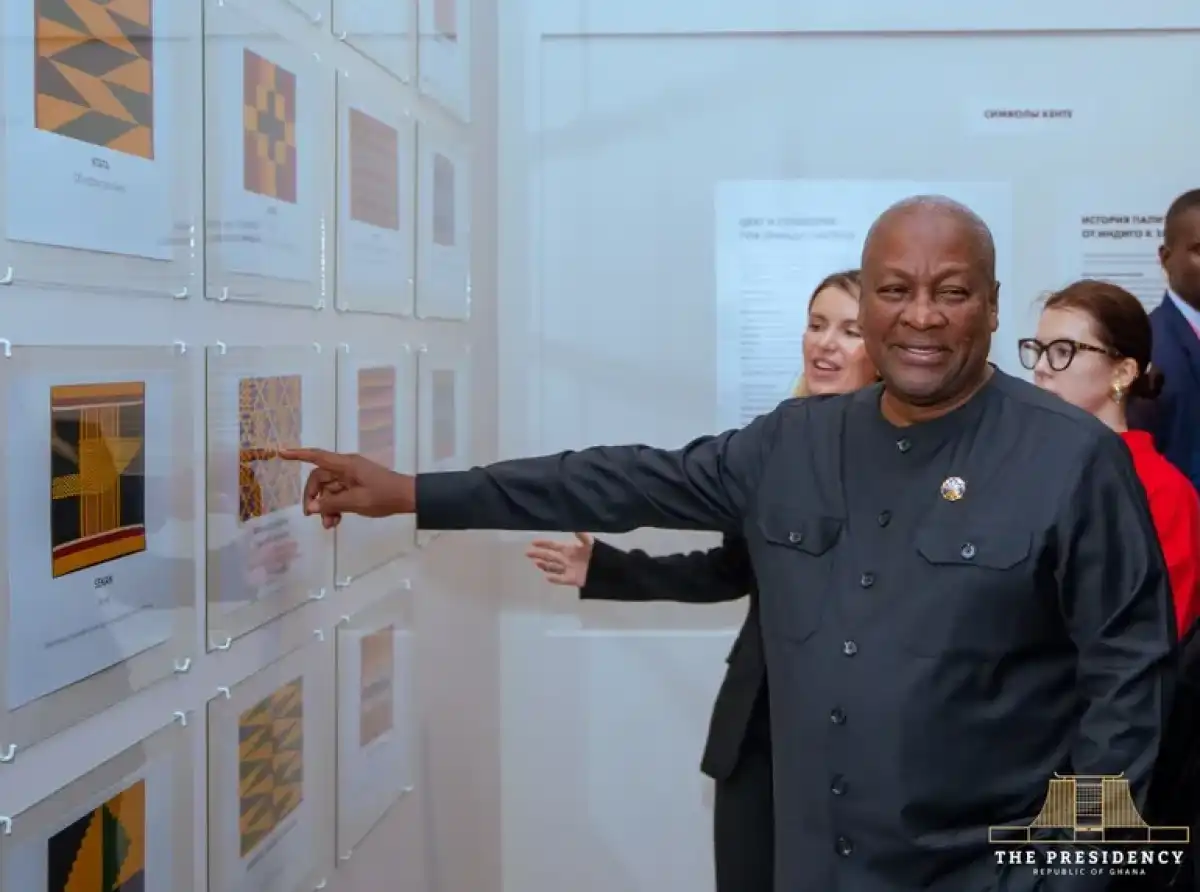
President John Dramani Mahama has said he is not offended by criticism of his administration, insisting that public complaints and feedback help him identify governance challenges and hold his ministers accountable.
Speaking during an engagement with the Ghanaian community in Moscow, the President said he welcomes criticism, including comments from citizens who believe his government is leading the country in the wrong direction.
According to him, public feedback provides an opportunity to identify shortcomings in government operations, seek explanations from responsible officials and take corrective action where necessary.
“I don’t mind if people tell me I am leading the country in the wrong direction because I am trying to do my best. Criticism helps me to do better. So when people criticise me and say this is not right, I am not offended,” he said.
President Mahama explained that he regularly comes across complaints in the media and uses them to engage ministers responsible for the sectors concerned.
He said such reports sometimes prompt him to contact his appointees directly to ask for explanations about developments within their respective ministries and agencies.
The President recounted that he listens to the explanations provided by ministers but also challenges them to address problems brought to his attention by citizens.
He said he tells them to “sit up” when public complaints reveal issues requiring urgent attention.
“You better sit up because I have seen this and that, and it helps me to be a better leader,” he said, describing how public criticism influences his engagement with government officials.
The President also urged Ghanaians who use social media to express their frustrations not to assume that their concerns go unnoticed by the Presidency.
He specifically mentioned TikTok and other digital platforms, saying he pays attention to the complaints and conversations circulating online.
“So all your TikToks and things, don’t think I don’t see them. I see them,” President Mahama said.
He described social media as an important source of real-time information that allows the government to become aware of problems affecting communities and respond more quickly.
To demonstrate how online complaints can influence government action, President Mahama recounted an incident involving a bridge in the Ashanti Region that had reportedly been washed away following illegal mining activities.
He said he came across a social media post highlighting the situation and immediately forwarded the complaint to the minister responsible, asking that the matter be investigated.
According to the President, the minister subsequently visited the affected location and reported that a blocked channel was contributing to the problem.
An excavator was then deployed to clear the channel and restore the flow of water.
“That is how you solve some of these things,” he said.
President Mahama added that the growing influence of digital media presents an opportunity for government because it enables citizens to report challenges as they happen and provides officials with information that may otherwise take longer to reach them.
“The new media is an advantage because it gives us information in real time,” he added.
His remarks in Moscow underline his position that criticism should be treated as a tool for improving governance rather than a personal attack, while also signalling that complaints raised online can trigger direct engagement with ministers and government agencies.

Aikines Anyomi

News
Food
Politics
Technology
About Us
Download Our Mobile App

