Mahama renews advocacy for UN reform to grant Africa permanent representation on Security Council
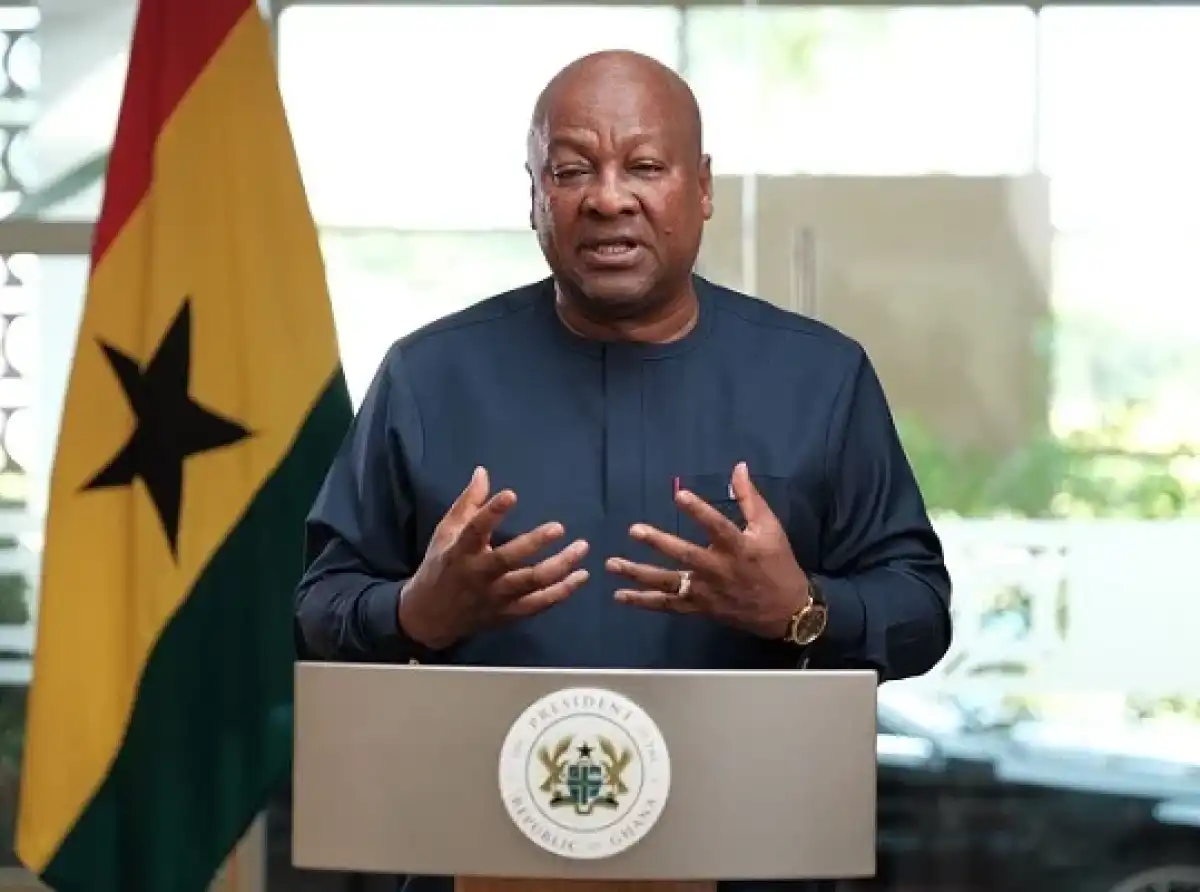
President John Dramani Mahama has renewed Ghana’s call for comprehensive reform of the United Nations, urging the international community to grant Africa permanent representation on the United Nations Security Council.
Speaking at Chatham House in London, President Mahama described Africa’s continued exclusion from permanent membership on the Security Council as a historical injustice that undermines the credibility and legitimacy of the global governance system.
Delivering a presentation on "Navigating a Changing Global Order: Ghana’s Strategic Priorities," the President argued that global institutions must evolve to reflect contemporary realities rather than the power structures established after World War II in 1945.
According to him, the international system cannot maintain its legitimacy while significant portions of the world's population remain underrepresented in key decision-making bodies.
“Africa, with 54 member states at the United Nations and a population projected to constitute nearly one quarter of humanity by 2050, continues to be excluded from permanent representation on the United Nations Security Council,” he stated.
“This is not merely a procedural anomaly; it is a historical injustice and a structural imbalance that undermines the credibility of the multilateral system itself.”
President Mahama reaffirmed Ghana’s commitment to advocating for equitable representation for Africa on the Security Council as part of broader reforms of the United Nations system.
The President noted that while the post-1945 international order helped establish important principles governing relations among nations, today's geopolitical realities require reforms that better reflect the changing global landscape.
He highlighted key principles enshrined in the UN Charter, including sovereign equality, territorial integrity, peaceful settlement of disputes, non-interference and collective responsibility for peace and development.
According to him, these principles played a crucial role in helping former colonies such as Ghana achieve independence and assert their sovereignty on the global stage.
However, he warned that many of these ideals are increasingly under strain.
“Today, many of these norms are under threat. We increasingly witness a selective application of international law, the erosion of multilateral consensus, and the growing tendency for strategic competition to take precedence over collective responsibility,” he said.
President Mahama pointed to ongoing conflicts around the world, unmet climate financing commitments and declining development assistance as signs that the international system is facing significant challenges.
He noted that while technological advancements have made the world more interconnected than ever before, political divisions continue to deepen.
“The world is becoming increasingly technologically interconnected and yet politically fragmented,” he observed.
For countries in the Global South, he said the key challenge is no longer whether the global order is changing but how nations can navigate the transition effectively.
“The question is how to navigate this transition with resilience, strategic clarity and sovereign confidence,” he stated.
President Mahama said Ghana’s response to the evolving global environment is anchored on four major strategic priorities:
- Reforming global governance institutions.
- Leading and strengthening African integration.
- Building balanced and mutually beneficial international partnerships.
- Enhancing sovereign control over Ghana’s national development agenda.
He stressed that Ghana’s approach to global affairs is not based on isolation or passivity but on active engagement aimed at advancing national interests while contributing to a more equitable international order.
The President's remarks reinforce Ghana’s longstanding support for Africa’s demand for permanent representation on the UN Security Council, a position championed by the African Union and reflected in the Ezulwini Consensus, which calls for greater African participation in global decision-making.

Aikines Anyomi

News
Food
Politics
Technology
About Us
Download Our Mobile App

