
Post-flood mitigation task force demolishes unauthorised structures along the banks of Tesa Dam and Legon Boundary Road
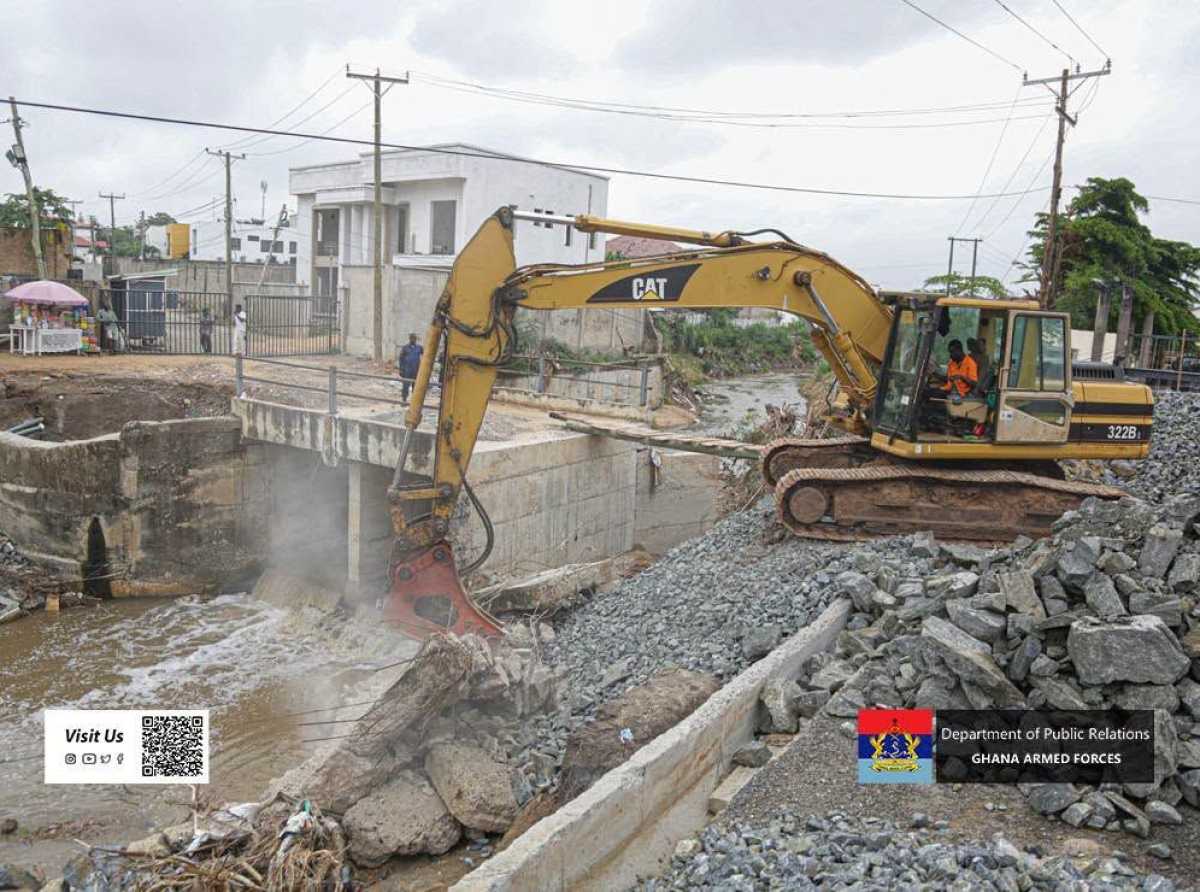
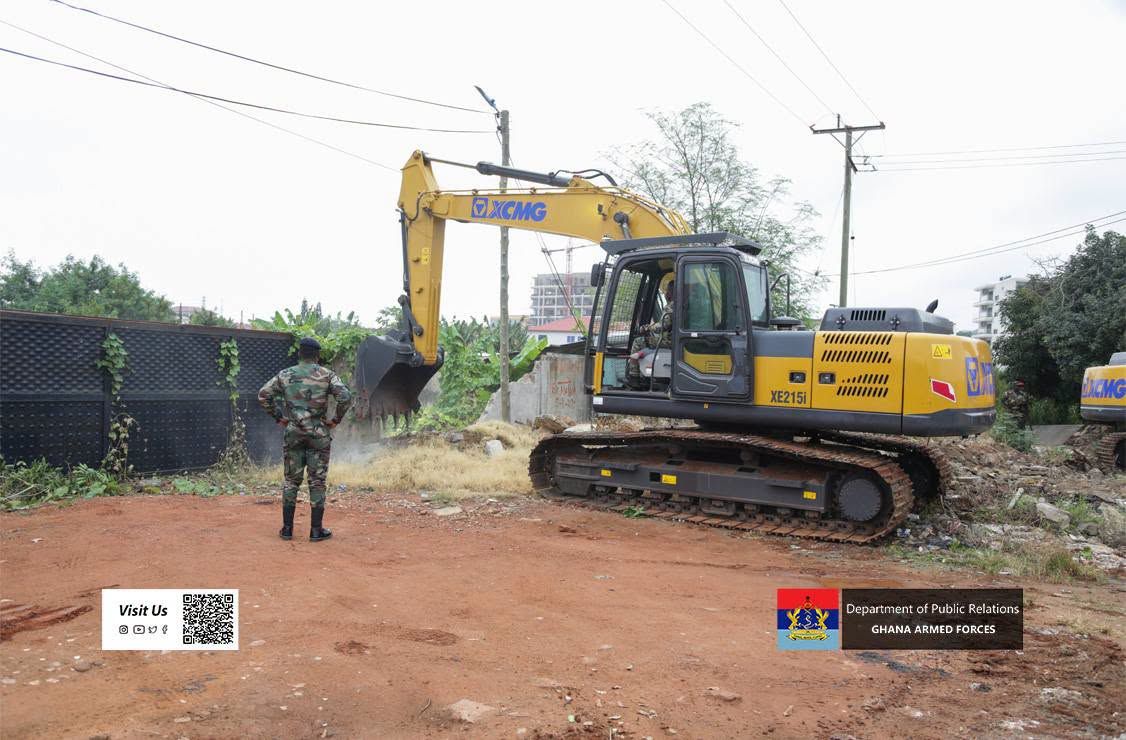
The government's Post-Flood Mitigation Task Force has begun demolishing unauthorized structures built along the banks of the Tesa Dam and the Legon Boundary Road as part of a broader effort to reduce flooding in the Greater Accra Region.
The demolition exercise, which commenced on Friday, July 24, 2026, follows a series of post-flood assessment visits conducted after the devastating June 29 floods that affected several communities across Greater Accra, causing widespread damage to homes, businesses, and public infrastructure.
Authorities say the operation forms part of a long-term strategy to restore waterways, improve drainage systems, and prevent a recurrence of destructive flooding during the rainy season.
Speaking in an interview, the Minister for Works, Housing and Water Resources, Gilbert Adjei, said the demolition exercise is necessary to address the growing problem of unauthorized developments that obstruct the natural flow of floodwaters.
According to the Minister, investigations into recent flooding incidents have shown that illegal construction on wetlands, waterways, and other unauthorized locations, coupled with indiscriminate waste disposal, has significantly contributed to flooding in many parts of the capital.
He revealed that President John Dramani Mahama has directed the immediate removal of structures that impede the natural passage of floodwaters and ordered the desilting of drains and dredging of waterways to increase their capacity and improve drainage.
The intervention is expected to reduce flood risks, particularly in flood-prone areas such as the Motorway corridor and the East Legon catchment.
Mr. Adjei indicated that the demolition campaign will continue throughout the year as part of the government's broader flood prevention strategy.
He expressed confidence that sustained enforcement against illegal developments, together with improvements to drainage infrastructure, will significantly reduce the impact of seasonal flooding in the capital.
Government officials have repeatedly urged residents to avoid building on waterways and wetlands, warning that such developments not only violate planning regulations but also endanger lives and property.
The Commanding Officer of the 48 Engineer Regiment, Lieutenant Colonel Frank Osei Amponsah, disclosed that affected residents were given a three-week notice to vacate the structures before demolition commenced.
According to him, the advance notice was intended to allow occupants sufficient time to relocate their belongings and make alternative arrangements before the enforcement exercise began.
Authorities say the operation is being conducted in accordance with existing laws governing unauthorized developments and public safety.
Meanwhile, the Ministry of Finance has transferred GH¢350 million from the Contingency Fund to support emergency flood relief operations and long-term mitigation measures following the recent floods.
The release of the funds follows a directive from President John Dramani Mahama instructing Finance Minister Dr. Cassiel Ato Forson to mobilize resources for immediate humanitarian assistance and flood prevention initiatives.
In compliance with Article 177 of the 1992 Constitution, the Finance Minister first obtained approval from Parliament through its Finance Committee before authorizing the withdrawal from the Contingency Fund.
Following parliamentary approval, the Controller and Accountant-General transferred the full GH¢350 million into a dedicated National Disaster Management Committee account established at the Bank of Ghana.
According to the Ministry of Finance, the allocated funds will support both emergency response efforts and long-term flood control measures.
Out of the total amount, GH¢200 million has been earmarked for immediate relief assistance to flood victims and affected communities, including humanitarian support and emergency interventions.
The remaining GH¢150 million will finance flood mitigation projects, including drainage improvements, desilting of major drains, dredging of waterways, and other engineering works aimed at reducing the frequency and severity of flooding across vulnerable communities.
Government says the funding demonstrates its commitment to responding swiftly to the flood emergency while investing in sustainable infrastructure to minimize future disasters.
The demolition exercise and the release of emergency funding form part of a broader national flood response strategy designed to improve disaster preparedness and protect lives and property.
Officials say restoring waterways, removing unauthorized structures, improving drainage infrastructure, and strengthening emergency response systems remain central to the government's efforts to reduce the devastating effects of flooding, particularly in densely populated urban areas that continue to face recurring flood risks during the rainy season.

Aikines Anyomi

News
Food
Politics
Technology
About Us
Download Our Mobile App

