
Speaker Bagbin calls for stronger Parliament-Academia-Civil Society partnership on economic governance
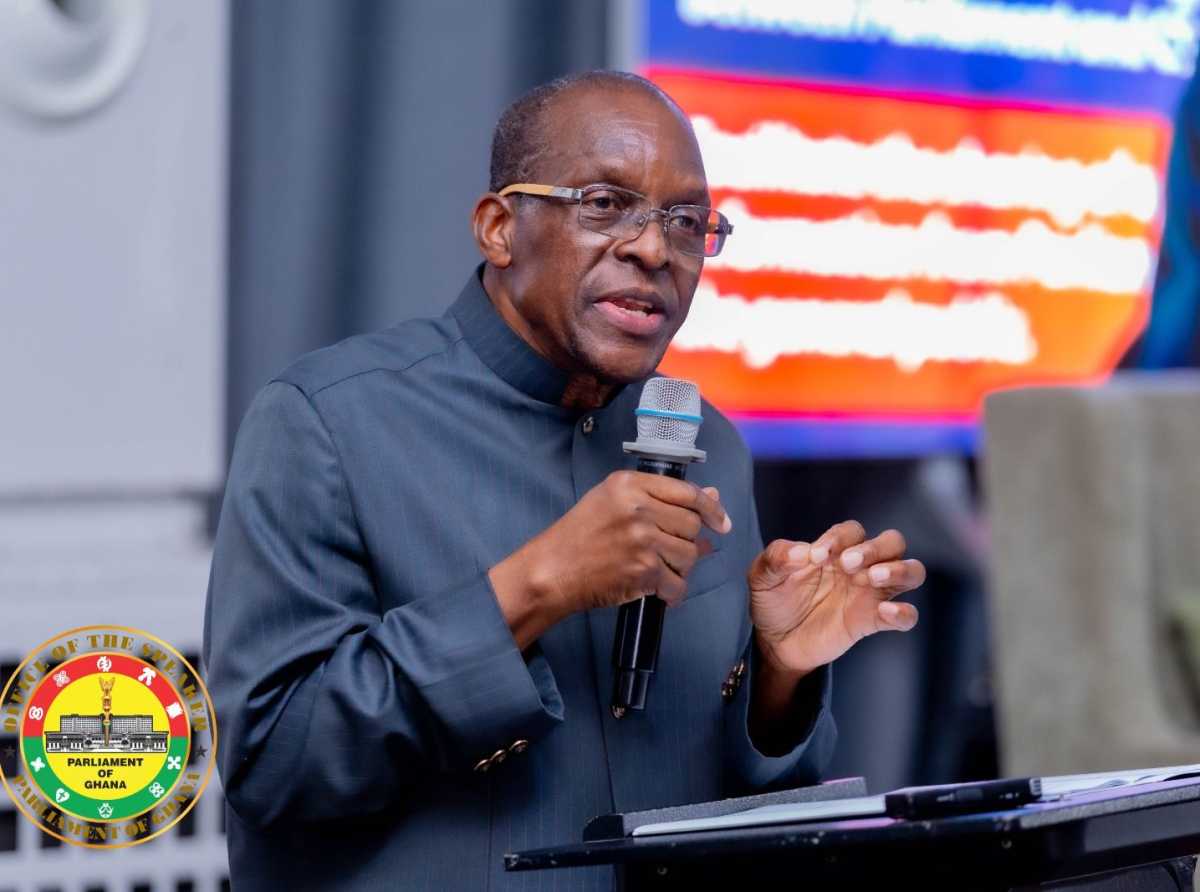
Speaker of Parliament, Rt. Hon. Alban Sumana Kingsford Bagbin, has called for a stronger and more institutionalised partnership between Parliament, academia and civil society organisations (CSOs) to improve economic governance, strengthen public financial management and enhance legislative oversight in Ghana.
Speaking at the launch of the maiden Information-Sharing Session between Academia, Civil Society Organisations and Committees of Parliament in Accra on Tuesday, July 29, the Speaker stressed that Parliament must increasingly rely on evidence-based research and citizen engagement to make informed decisions on national development.
The event brought together Members of Parliament, representatives of the World Bank, the United Kingdom Foreign, Commonwealth and Development Office (FCDO), the Institute of Statistical, Social and Economic Research (ISSER), academics, civil society leaders, diplomats and journalists to promote stronger collaboration in shaping public policy.
Addressing participants, Rt. Hon. Bagbin said Parliament's constitutional responsibilities of making laws, approving public expenditure and holding the Executive accountable require continuous support from researchers and civil society organisations.
"Parliament cannot be the solo police of our purse," he declared, emphasising that effective oversight of public resources depends on informed debate backed by credible research and active citizen participation.
According to him, while Parliament provides democratic oversight, academic institutions generate the evidence needed to understand complex national issues, and civil society organisations play a critical role in representing citizens' concerns and monitoring government performance.
He noted that despite the complementary roles of these institutions, collaboration has often been fragmented, resulting in valuable research and policy recommendations failing to influence legislative decision-making.
The Speaker said the information-sharing session marked an important step toward closing the gap between research, public advocacy and parliamentary work.
He observed that the initiative comes at a critical period as Parliament deliberates on the 2026 Mid-Year Fiscal Policy Review, making evidence-based engagement particularly important.
Rt. Hon. Bagbin warned that Parliament must remain vigilant in exercising its oversight responsibilities over public finances.
"As a Parliament, we only have to doze off for a second and government goes on a shopping spree at the expense of the fundamentals of life," he cautioned.
Using a vivid analogy, he added that "an untrained guard dog is a danger to even its master," underscoring the importance of equipping Parliament with the knowledge and tools needed for effective scrutiny of government policies and spending.
The Speaker highlighted several reforms aimed at making Parliament more transparent, accountable and accessible to citizens.
He cited the development of Ghana's Open Parliament Plan, the establishment of a multi-stakeholder Parliamentary Open Government Steering Committee, the introduction of an electronic petitions platform, live broadcasts of parliamentary proceedings and the annual Open Parliament Week as key initiatives promoting citizen engagement.
He also pointed to the restructuring of Parliament's former Public Affairs Department into specialised directorates, including the Citizens' Bureau, Media Relations Directorate, Public Engagement Directorate, Visitors' Centre and Broadcasting Directorate.
According to him, these reforms demonstrate Parliament's commitment to strengthening democratic participation and ensuring that citizens remain at the centre of governance.
Rt. Hon. Bagbin paid special tribute to Parliament's Citizens' Bureau, describing it as an essential bridge between Parliament and the Ghanaian people.
He said the Bureau ensures that the experiences, expectations and aspirations of citizens continue to shape parliamentary work regardless of changes in political leadership.
"Institutions must endure beyond leaders," he stated, adding that while governments and parliamentary leadership may change over time, the relationship between Parliament and citizens must remain strong and consistent.
The Speaker urged parliamentary committees—particularly the Committee on Economy and Development, the Budget Committee and the Committee on Independent Constitutional Bodies—to treat the engagement as the beginning of a long-term institutional partnership rather than a one-time event.
He also encouraged universities, research institutions and civil society organisations to continue producing timely, objective and policy-oriented research that can support Parliament's work while holding public institutions accountable.
According to him, stronger collaboration between lawmakers, researchers and civil society will ultimately improve policymaking, enhance transparency and promote sound economic governance.
He commended the Citizens' Bureau for organising the programme and expressed appreciation to ISSER, the World Bank, the UK Foreign, Commonwealth and Development Office, and all participating institutions for supporting the initiative.
The Speaker expressed confidence that the partnership would grow into a permanent platform for knowledge-sharing and evidence-based policymaking, helping Parliament make better-informed decisions that serve the interests of present and future generations.

Aikines Anyomi

News
Food
Politics
Technology
About Us
Download Our Mobile App

