Speaker Bagbin commissions two 6-unit classroom blocks, gifts over 16,000 school uniforms to basic schools in Nadowli-Kaleo
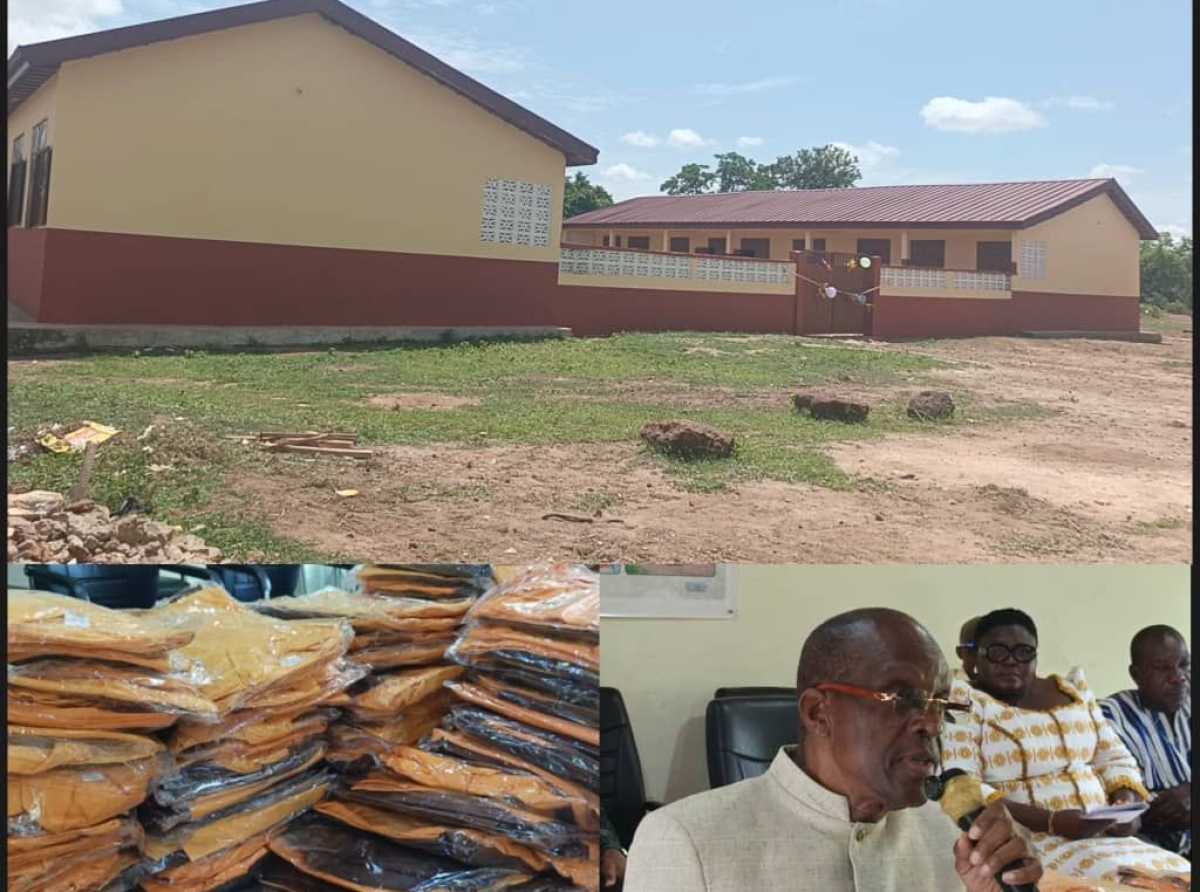
Speaker of Parliament, Alban Sumana Kingsford Bagbin, has facilitated the provision of 16,584 school uniforms for pupils in the Nadowli-Kaleo District of the Upper West Region, describing the initiative as a significant step towards improving educational outcomes, promoting discipline, and ensuring equal opportunities for learners.
The intervention, secured through the support of the Ghana Education Trust Fund, was announced during a ceremony held on Monday, June 8, 2026. The Speaker also commissioned two newly completed six-unit classroom blocks with ancillary facilities at Naro and Guree to improve teaching and learning conditions in the district.
The distribution will benefit 7,884 boys and 8,700 girls across 151 basic schools within the Nadowli-Kaleo District.
Speaking at the event, Bagbin emphasised the importance of school uniforms in creating a conducive learning environment. He noted that uniforms help minimise socioeconomic differences among pupils by reducing visible distinctions based on clothing, thereby fostering a greater sense of equality and inclusion.
“School uniforms reduce social distinctions among learners and create a sense of equality in the classroom. When all children are dressed alike, they are less likely to be judged based on their economic background,” he said.
The Speaker explained that uniforms also contribute to discipline, responsible behaviour and a stronger sense of belonging among students. According to him, a common dress code encourages respect for educational institutions and helps create a more focused academic environment.
Bagbin further expressed concern about what he described as declining standards of professional appearance among some educators, recalling a time when teachers served as role models through their dress and conduct.
“In the past, teachers served as role models through their neat appearance and conduct. Pupils naturally emulated them,” he stated.
He also cited studies suggesting that uniforms can reduce distractions associated with fashion competition and social pressure, enabling students to concentrate more effectively on their studies.
“When students become overly concerned about how they look compared to their peers, it can create feelings of superiority or inferiority that distract them from learning,” he added.
The Speaker lamented the sight of pupils attending school in worn-out or ill-fitting uniforms, describing it as a challenge that affects both educational dignity and community pride.
“The sight of unkempt children wearing torn uniforms to school is not only an eyesore but a dent on the reputation of parents and those of us entrusted with leadership,” he remarked.
Member of Parliament for Nadowli-Kaleo, Anthony Sumah Mwinkaara, praised the intervention, describing it as timely and impactful. He said the support would ease the burden on families, improve attendance, and help keep more children in school.
Meanwhile, the District Chief Executive, Mary Haruna, called for renewed efforts to improve educational standards in the district, particularly the performance of students in the Basic Education Certificate Examination (BECE).
“We must confront the fallen standards of education in this district, especially our BECE results. Improving education will require the collective effort of government, parents, teachers, traditional authorities, and the community,” she stated.
The intervention forms part of broader efforts to improve access to quality education and strengthen educational infrastructure in the Upper West Region.

Aikines Anyomi

News
Food
Politics
Technology
About Us
Download Our Mobile App

