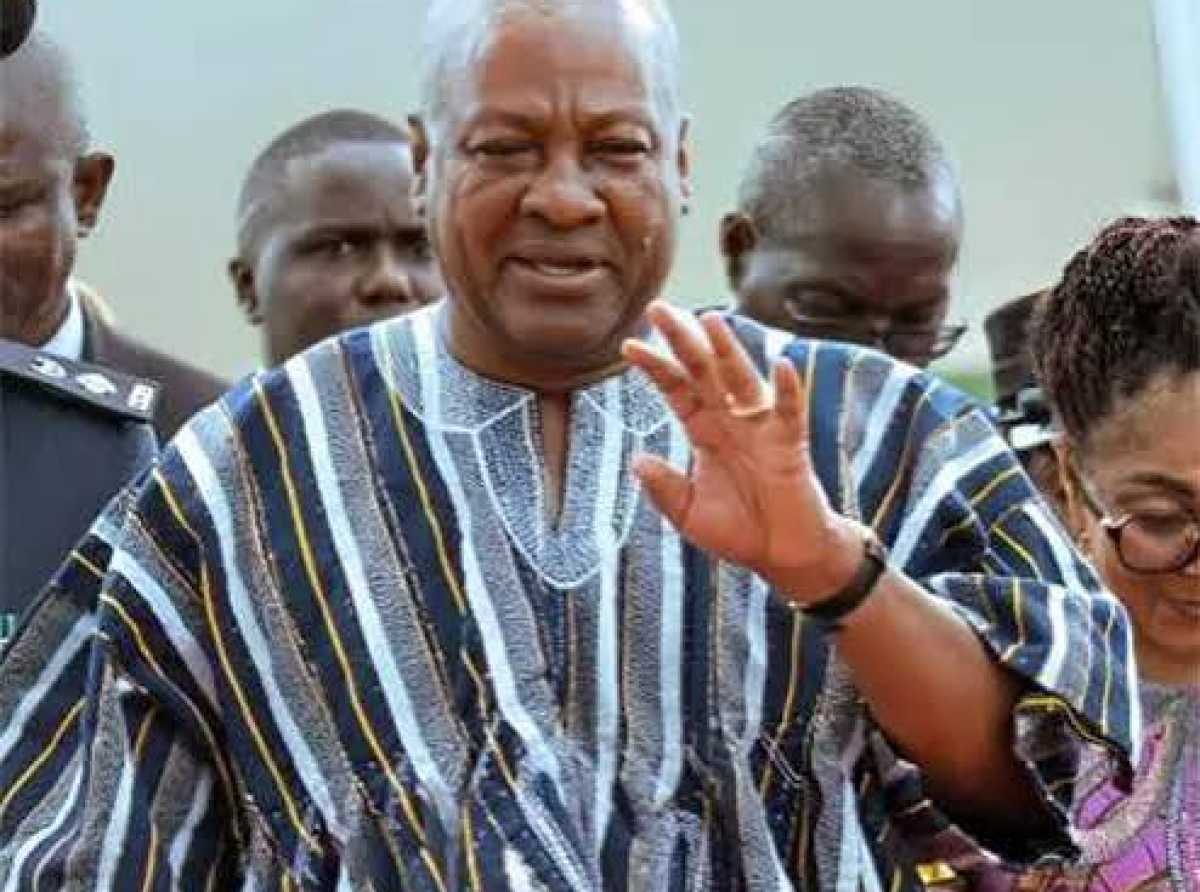
President John Dramani Mahama has said the ongoing US-Iran conflict must come to an end for Ghana to fully benefit from its improving economic conditions and translate macroeconomic gains into lower costs of doing business.
Speaking at the US-Ghana Presidential Roundtable in New York, President Mahama highlighted Ghana’s recent economic performance, noting that the economy grew by 6% in 2025 and recorded year-on-year growth of 6.4% in the first quarter of 2026.
He also pointed to the significant decline in inflation, although he noted that the rate had recently risen to 5%.
President Mahama said the continuing conflict involving the United States and Iran presents a challenge to the global economic environment and expressed hope that the situation would be resolved quickly.
“Of course, everybody knows what’s happening in Iran. We’re praying that that conflict comes to an end early. I’m sure that the US itself is feeling the pinch of that war,” he said.
The President stressed that macroeconomic stability should ultimately translate into tangible benefits for businesses and investors.
“These gains matter, but stability is not an end in itself. We start stability so businesses can plan with greater certainty. Investors can decide with greater confidence and productive enterprises can grow,” President Mahama said.
According to him, the next phase of Ghana’s economic programme must focus on ensuring that the gains from stabilisation are reflected in the cost of capital and other operating expenses faced by businesses.
He said interest rates must decline and access to long-term financing must improve to enable businesses to expand their operations, increase production and create jobs.
“The gains we have made must now begin to show in the cost of doing business. Interest rates must come down. Long-term financing must become more available,” he said.
President Mahama further called for increased investment in productive sectors of the economy, including agriculture, manufacturing, energy, infrastructure and technology.
“More capital must also flow into agriculture, manufacturing, energy, infrastructure, technology, and other productive activities,” he added.
The President’s remarks come as his administration seeks to move Ghana’s economy beyond macroeconomic stabilisation towards stronger private-sector investment, expanded production and job creation.

Aikines Anyomi

News
Food
Politics
Technology
About Us
Download Our Mobile App

