
Bossman Asare resigned voluntarily, government didn’t pressure him – Kwakye Ofosu
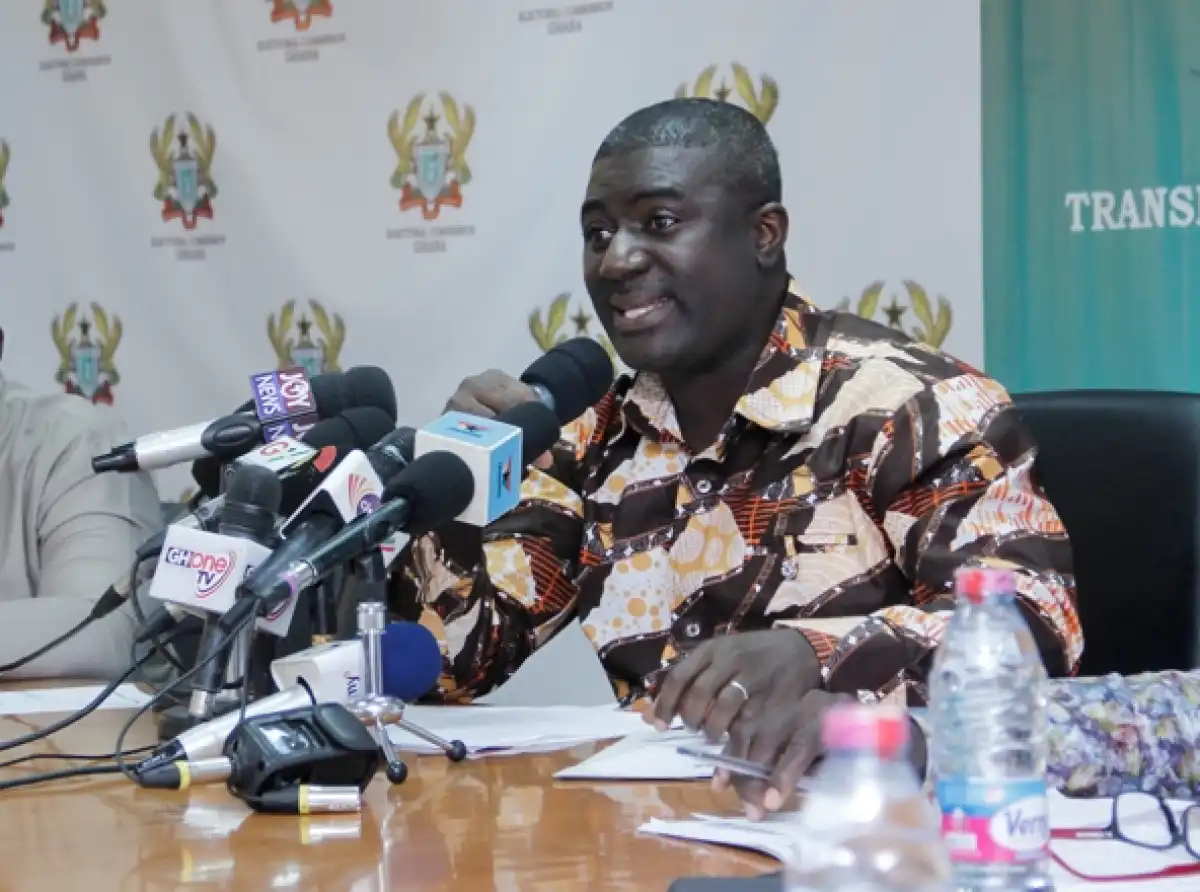
Minister of State in charge of Government Communications, Felix Kwakye Ofosu, has firmly dismissed claims that the government influenced the resignation of Electoral Commission (EC) Deputy Chairperson for Corporate Affairs, Dr Bossman Asare, insisting that the decision was entirely voluntary and made without any political pressure.
His comments come amid growing speculation following the announcement that Dr Asare will step down from his position at the Electoral Commission, effective July 31, 2026.
Speaking on Citi FM on Monday, June 15, Mr Kwakye Ofosu maintained that the constitutional processes governing the removal of Electoral Commission officials were never invoked, making allegations of government interference unfounded.
According to the Minister, suggestions that the Mahama administration orchestrated or influenced Dr Asare’s resignation are not supported by facts.
He explained that the Constitution clearly outlines the procedure for removing members of the Electoral Commission and emphasized that no such process was initiated in Dr Asare’s case.
“First of all, there is no basis for giving any assurance because nothing of that sort has happened. The process for removing a member of the Commission is clearly spelt out by law,” Mr Kwakye Ofosu stated.
He stressed that the resignation was initiated solely by Dr Asare and communicated directly to President John Dramani Mahama through a formal letter.
“Dr Bossman Asare himself, of his own volition, wrote to the President indicating his desire to leave at the appointed date, and that is what happened,” he added.
The Minister noted that Electoral Commission officials enjoy constitutional protections designed to preserve the independence of the institution.
Under Ghana’s Constitution, the removal of commissioners requires a clearly defined legal process, including investigations and recommendations by constitutionally mandated bodies.
Mr Kwakye Ofosu pointed out that previous cases involving Electoral Commission officials have followed these established procedures, reinforcing the principle of institutional independence.
He argued that the absence of any such process in Dr Asare’s case demonstrates that his resignation was neither forced nor politically motivated.
Dr Bossman Asare, who has served as Deputy Chairperson of the Electoral Commission in charge of Corporate Affairs, is expected to officially leave office on July 31, 2026.
His resignation was publicly confirmed during the Government Accountability Series, where government officials disclosed that the President had been formally notified of his decision.
Dr Asare reportedly indicated his intention to return to academia and continue his professional work at the University of Ghana after leaving the Electoral Commission.
During his tenure, he played a significant role in public communication, electoral education, stakeholder engagement, and the implementation of electoral policies.
With Dr Asare preparing to leave office, government says consultations have already begun to identify a suitable replacement.
Mr Kwakye Ofosu assured the public that the appointment process will strictly adhere to constitutional and statutory requirements governing appointments to the Electoral Commission.
The process is expected to involve consultations with relevant constitutional bodies before a formal appointment is announced.
Government officials have indicated that a separate process is also underway to fill vacancies created by recent changes within the Commission's leadership structure.
Dr Asare’s resignation comes at a time when the Electoral Commission remains a key institution in Ghana’s democratic governance framework.
Political analysts say the transition will be closely monitored by stakeholders, particularly as the Commission continues to oversee electoral reforms, voter registration activities, and preparations for future elections.
While public debate continues over the circumstances surrounding his departure, government maintains that the resignation was a personal decision made independently by the outgoing Deputy Chairperson.
For now, attention is shifting toward the appointment of a successor and the Electoral Commission’s ability to maintain continuity in its operations during the transition period.

Aikines Anyomi

News
Food
Politics
Technology
About Us
Download Our Mobile App

