
Mahama explains Ghana’s rejection of US health compact over medical records, FDA concerns
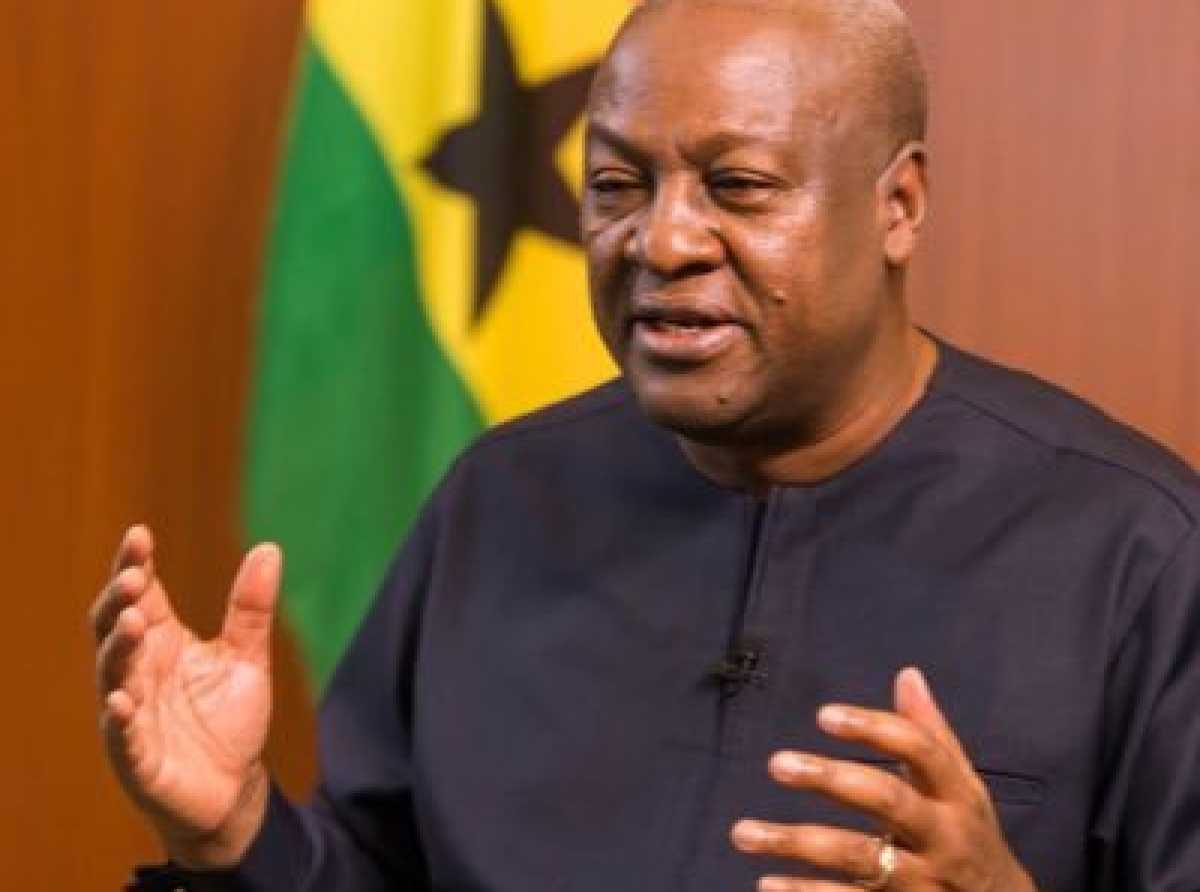
President John Dramani Mahama has explained Ghana’s decision to reject a proposed health compact with the United States, saying several conditions contained in the agreement raised concerns over health data, financing obligations and Ghana’s regulatory authority.
The proposed compact was intended to replace some health funding previously provided through the United States Agency for International Development (USAID) following the restructuring of US foreign assistance.
Speaking at the Council on Foreign Relations in New York, President Mahama said the Ministry of Health reviewed the proposal before submitting it to Cabinet, where officials identified several provisions they considered unacceptable.
According to the President, one of the provisions required Ghana to provide the United States with its pathogen profile as well as medical records.
It states that we shall give the United States our pathogen profile. It also says we should give our medical records. I mean, who takes another country's medical records?”
President Mahama said the proposed agreement also required Ghana to commit a specified amount of counterpart funding towards the programme.
He further raised concerns over provisions which, according to him, would have prevented Ghana’s Food and Drugs Authority (FDA) from inspecting medicines and other medical products supplied under the arrangement.
The President said the combination of the conditions contributed to Cabinet’s decision to reject the compact.
It was humiliating,” he said, adding that the agreement was rejected “in record time” after being considered by Cabinet.
I’ve never seen anything thrown out as fast as that,” he added.
Mr Mahama said the Minister of Health was subsequently directed to communicate Ghana’s decision to the US Ambassador.
The rejection comes amid President Mahama’s broader push for greater domestic financing and production capacity in Ghana’s health sector.
The President has argued that disruptions to external health assistance demonstrate the risks associated with heavy dependence on foreign funding and has used the Accra Reset initiative to advocate stronger domestic and regional capacity in health financing, pharmaceutical production and research.
At a high-level Accra Reset event in New York, Mr Mahama launched A Sovereign Future for Health, a report containing proposals for reforming global health governance and strengthening health systems across the Global South. The Presidency said the initiative is intended to promote greater self-reliance and reduce structural dependence on external aid.
Mr Mahama has also said Ghana’s health reset should include greater support for domestic pharmaceutical companies to manufacture essential medicines, vaccines and other critical health products locally.
The President has stressed that the push for greater health self-reliance is not intended to isolate Ghana from international partners.
Instead, he has advocated what he describes as more equal and sustainable partnerships in which international cooperation complements stronger domestic capabilities.
The proposed compact has also triggered discussion in Ghana over the protection of medical information and the authority of domestic regulators.
The Chairman of Parliament’s Select Committee on Health, Dr Mark Kurt Nawane, has said Ghana must retain control over medical records shared with international partners and establish clearly what information is being requested before agreeing to data-sharing arrangements.
Dr Nawane has also questioned any arrangement that would limit the FDA’s ability to inspect medicines and health products entering Ghana, arguing that imported products should remain subject to Ghana’s regulatory requirements.
Ghana’s decision comes as several African countries negotiate new bilateral health arrangements with the United States following changes to American foreign assistance. The Associated Press has reported that countries including Zimbabwe, Namibia, Ghana, Zambia and South Africa have raised concerns about aspects of the new arrangements, particularly provisions relating to health data.
For Ghana, the government’s position is that continued international health cooperation should be accompanied by stronger domestic capacity to finance, regulate and deliver essential health services.

Aikines Anyomi

News
Food
Politics
Technology
About Us
Download Our Mobile App

