World leaders converge in Accra for high-level reparatory justice conference
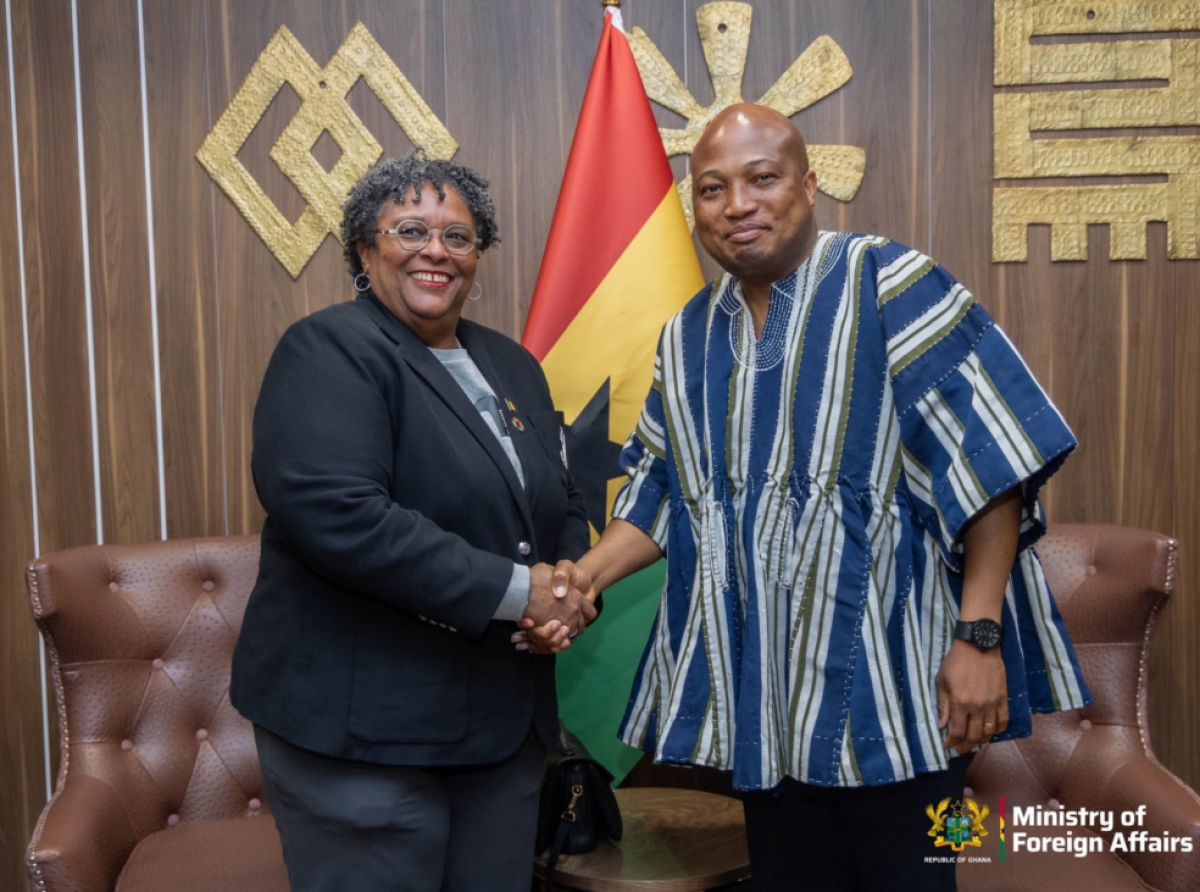
Accra has emerged as the focal point of an important international dialogue on historical justice as delegates from more than 80 countries gather in Ghana for the Next Steps Conference on Reparatory Justice.
The high-level conference, convened under the leadership of President John Dramani Mahama, has attracted an impressive assembly of heads of state, senior government officials, parliamentarians, diplomats and policy experts committed to advancing global conversations on reparatory justice and the legacy of the transatlantic slave trade.
Announcing the arrival of participants, Ghana’s Foreign Affairs Minister, Samuel Okudzeto Ablakwa, disclosed that the conference is hosting Presidents from Senegal, Namibia, Liberia, and São Tomé and Príncipe, alongside the Prime Minister of Barbados, the Vice Prime Minister of Equatorial Guinea, the Speaker of the Algerian Parliament and ministers representing more than 80 countries from across Africa, the Caribbean, the Americas and other regions.
“The Presidents of Senegal, Namibia, Liberia, São Tomé and Príncipe, Prime Minister of Barbados, Vice Prime Minister of Equatorial Guinea, Speaker of the Algerian Parliament and Ministers from over 80 countries arrive in Ghana for the Next Steps Conference on Reparatory Justice convened by President John Dramani Mahama,” Mr. Ablakwa wrote in a Facebook post on Thursday, June 18.
The conference is expected to build momentum around international efforts to address the long-term social, economic and political consequences of slavery, colonialism and other historical injustices that have impacted people of African descent around the world.
According to organisers, the gathering represents a significant milestone in the global reparations movement and seeks to translate growing international support into practical policy frameworks, partnerships and actionable commitments.
The Accra meeting comes just three months after the adoption of United Nations Resolution A/RES/80/250, a landmark resolution that has intensified global discussions on accountability, historical recognition and restorative justice.
“The convening comes three months after the historic adoption of UN Resolution A/RES/80/250 declaring the transatlantic enslavement as the gravest crime against humanity,” the Foreign Affairs Minister noted.
Observers say the resolution has strengthened calls for greater international engagement on reparatory justice by acknowledging the profound and lasting effects of the transatlantic slave trade on African societies and descendants of enslaved peoples across the globe.
Ghana has increasingly positioned itself at the forefront of these discussions, leveraging its historical significance and longstanding advocacy for Pan-African unity, cultural reconnection and historical remembrance. Over the years, initiatives such as the Year of Return and Beyond the Return have reinforced the country's role as a leading voice in conversations about the African diaspora and historical justice.
The Next Steps Conference is expected to provide a platform for governments, international organisations, academics and civil society groups to explore pathways for reparations, economic empowerment, cultural restitution, educational initiatives and institutional reforms aimed at addressing historical inequalities.
Participants are also expected to examine mechanisms for strengthening international cooperation and developing a coordinated global strategy to advance reparatory justice efforts.
With world leaders, policymakers and advocates gathered in Accra, the conference is being viewed as a major opportunity to move the reparations debate beyond symbolic recognition and toward concrete actions that can address historical injustices and their contemporary consequences.
As deliberations begin, Ghana once again finds itself at the centre of a global conversation that seeks to redefine how nations confront the legacy of slavery and chart a path toward justice, healing and equitable development.
The outcomes of the conference are expected to shape future international engagements on reparatory justice and strengthen calls for a more coordinated global response to one of history’s most enduring legacies.

Aikines Anyomi

News
Food
Politics
Technology
About Us
Download Our Mobile App

