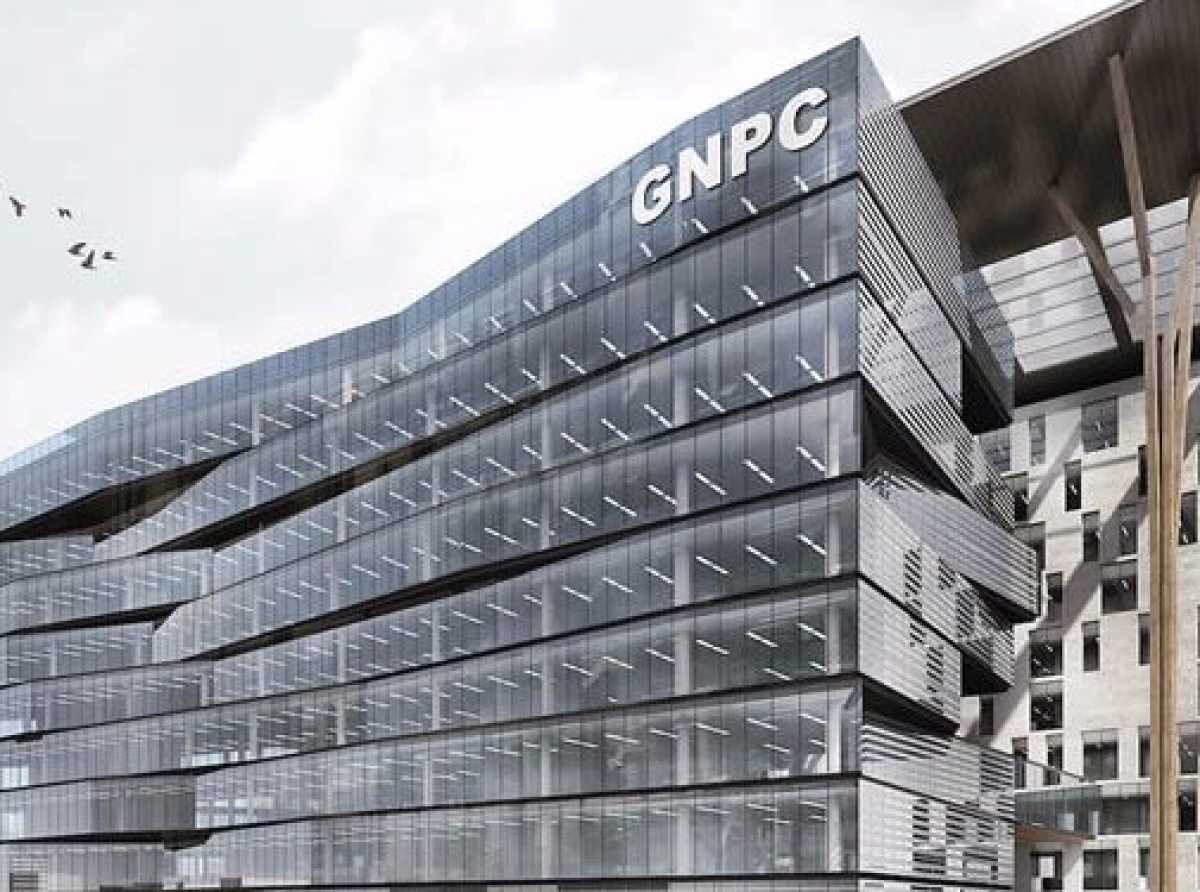
The Ghana National Petroleum Corporation and its industry partners have committed more than $3.5 billion in new investments to expand oil and gas production over the next several years, as Ghana moves to strengthen energy security and meet rapidly growing domestic demand.
The investment commitment was disclosed by Hamis Ussif during the West Africa Gas Summit 2026 held in Accra.
According to Mr. Ussif, the funding will support increased production from key offshore oil and gas assets, including the Jubilee, TEN, and Sankofa fields, while also advancing plans to import liquefied natural gas (LNG) to bridge future supply gaps.
Mr. Ussif revealed that partners operating the Jubilee and TEN fields have pledged approximately $2 billion by 2028 to increase both crude oil and natural gas production.
The investment is expected to enhance output from Ghana’s most productive offshore petroleum assets and support the country’s long-term energy strategy.
“We are working with the Jubilee and TEN partners to increase investment. They have committed to $2 billion investment by 2028 to increase both oil and gas production,” he stated.
The Jubilee and TEN fields remain central to Ghana’s upstream petroleum industry and contribute significantly to government revenue, foreign exchange earnings, and energy supply.
Beyond the Jubilee and TEN projects, partners in the Sankofa field have committed a further $1.5 billion to increase gas production.
The Sankofa project plays a critical role in supplying natural gas for power generation and industrial use, helping reduce Ghana’s dependence on imported fuels.
“We are doing the same with the Sankofa partners where they have committed $1.5 billion to also increase gas production mainly,” Mr. Ussif explained.
Combined, the investments bring the total planned expenditure to more than $3.5 billion.
Despite the planned investments, GNPC has warned that Ghana’s future energy demand could outpace available gas supplies if additional measures are not taken.
According to projections presented at the summit, national gas demand is expected to rise significantly over the next decade.
- Demand is projected to reach 840 million standard cubic feet per day by 2030.
- Consumption could increase to one billion cubic feet per day by 2036.
The anticipated growth is being driven by rising electricity consumption, industrial expansion, urbanisation, and economic development.
“By 2030, we are looking at around 840 million standard cubic feet per day, and by 2036, we are looking at hitting one billion cubic feet of demand per day,” Mr. Ussif noted.
GNPC believes that domestic gas production and imports from Nigeria alone will not be sufficient to satisfy future demand.
As a result, the corporation is accelerating efforts to import Liquefied Natural Gas (LNG) as an additional source of supply.
“From our projections, we can’t meet this from domestic production, nor even with imports from Nigeria. That’s why we are working with partners to import LNG,” he said.
The move forms part of Ghana’s broader strategy to diversify energy sources and ensure uninterrupted fuel supply for power generation.
A key component of the strategy is the construction of an LNG import terminal in Tema.
According to GNPC, the facility is approximately 95 percent complete and is expected to become operational in the near future.
Once completed, the terminal will enable Ghana to import LNG from international markets, regasify it, and distribute it for domestic use.
The facility is also expected to serve neighboring countries and support regional energy trade.
“We will import the LNG and then be able to feed the demand in Ghana, but also to feed demand in the sub-region,” Mr. Ussif stated.
The planned investments align with Ghana’s ambition of becoming a regional energy hub by expanding production, improving infrastructure, and strengthening energy reliability.
Industry stakeholders believe increased gas availability will support:
- Stable electricity generation
- Industrial growth and manufacturing
- Reduced dependence on liquid fuels
- Regional energy exports
- Long-term economic development
The investments are expected to play a crucial role in ensuring that Ghana can meet future energy needs while maintaining competitiveness within the West African energy market.

Aikines Anyomi

News
Food
Politics
Technology
About Us
Download Our Mobile App

