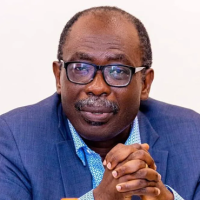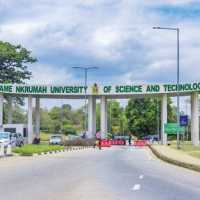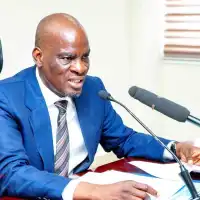
The Ghana Tertiary Education Commission has officially withdrawn its earlier policy directive concerning retirement age and post-retirement contract arrangements for senior academic staff in public universities across the country.
The Head of Public Affairs of the West African Examinations Council, John Kapi, has disclosed that adjustments have been made to examination questions and schedules to address cross-border leakages. The move is part of ongoing efforts by WAEC to strengthen examination security and protect the credibility of certification across West Africa.
Speaking on Badwam on Adom TV, he explained that although Ghana and Nigeria previously wrote the same examination questions at the same time, changes have now been introduced. The coordinated exam system had long been used to maintain standardisation across participating countries.
According to him, the adjustments were necessary due to incidents of “apor” (exam leakages) across borders. These leakages have raised concerns about fairness and the integrity of results, prompting WAEC to review its examination administration processes.
“We’ve made adjustments to the questions and timing. Starting earlier helps prevent cross-border leakages,” he said. He added that early commencement reduces the risk of question papers being shared across borders before examinations begin.
He noted that differences have been introduced in both the questions and the timing of the exams to reduce the risk of leakages. This means candidates in different countries may no longer receive identical question sets at exactly the same time.
He further explained that because Nigeria is an hour ahead of Ghana, the timing has been revised. Instead of the usual 9:00 am start time, exams now begin at 8:30 am in Ghana, with corresponding adjustments in Nigeria. The scheduling shift is designed to limit opportunities for cross-border sharing of exam content.
He said these measures are aimed at ensuring fairness and maintaining the integrity of the examination process across the region. WAEC continues to implement reforms to uphold credibility and ensure that academic assessments reflect genuine student performance rather than compromised results.
The Teacher Trainees’ Association of Ghana has intensified its call for urgent reforms to Ghana’s teacher posting system, warning that the country’s Colleges of Education could face closure if the government fails to absorb the growing number of trained teachers awaiting employment.
The Teacher Trainees Association of Ghana (TTAG) has called on the government to immediately suspend the ongoing teacher recruitment exercise, describing the process as unfair, stressful, and deeply concerning for thousands of trained teachers across the country.
The Ghana Education Trust Fund (GETFund) has released a total of GH₵199.47 million to settle outstanding arrears owed to suppliers of perishable food items under the Free Senior High School (FSHS) and Technical and Vocational Education and Training (TVET) programmes.
The Ghana Education Service (GES) has officially approved the release of long-awaited funds earmarked for the procurement of perishable food items for Senior High Schools and Technical Schools (SHTS) across the country, in a move aimed at stabilising the Free Senior High School (Free SHS) feeding programme.
The Conference of Heads of Assisted Secondary Schools (CHASS) has expressed confidence that the ongoing food funding crisis affecting senior high schools across Ghana will be resolved through stakeholder engagement, despite growing concerns about potential disruptions to academic activities.
Speaking on JoyNews Desk, CHASS National Secretary, Primus Baro, adopted a calm and conciliatory tone, emphasising the organisation’s commitment to dialogue rather than confrontation.
“We hope, like how we have been able to manage all stakeholders — CHASS, government — and have been able to manage similar issues over the past, we will also manage the same so that we will stay smoothly across the river,” he stated.
The comments come amid mounting anxiety among school administrators over delays in government funding for food supplies and other essential operational needs in second-cycle institutions.
The situation has raised fears that some schools could face serious challenges in sustaining feeding programmes, which are critical to student welfare under Ghana’s education system.
Tensions escalated following a stakeholder meeting convened by the Minister for Education, Haruna Iddrisu, which ended without a clear financial resolution. The outcome left many school heads uncertain about how to manage immediate operational demands.
Mr Baro was quick to clarify that CHASS does not have the authority to shut down schools, distancing the organisation from suggestions that closures could be imminent.
“The communication of CHASS is not that we are going to shut down schools. We don’t shut down schools. We only advise,” he explained.
He stressed that CHASS operates primarily as an advisory and coordinating body, guiding school heads while engaging government and other stakeholders to find workable solutions.
According to Mr Baro, CHASS has historically relied on collaboration and negotiation to resolve challenges within the education sector, avoiding actions that could disrupt the academic calendar.
He maintained that while the current situation is serious, there is strong confidence within the organisation that ongoing discussions will lead to a resolution.
The organisation is “very much convinced” that the issue will be addressed, he noted, although no specific timeline has been provided.
The food funding crisis is not new and has become a recurring issue under the Free Senior High School policy. School heads have consistently cited delayed disbursements as a major challenge affecting:
Student feeding programmes
Procurement of essential supplies
Day-to-day school administration
These funding delays have periodically strained school operations, prompting repeated calls for more predictable and timely financial support from government.
While uncertainty remains, CHASS’s stance suggests that schools are unlikely to take drastic measures in the immediate term. Instead, the focus remains on sustained engagement with government to secure the necessary funding and ensure continuity in academic activities.
The coming weeks are expected to be critical as stakeholders work toward a resolution that safeguards both student welfare and the stability of Ghana’s education system.
Clement Apaak, Deputy Minister for Education, has underscored the growing role of Ghana’s universities as key drivers of national transformation through research, innovation, and strategic global partnerships.
The Governing Council of the University for Development Studies (UDS) has appointed Professor Mohammed Muniru Iddrisu as the institution’s new Vice-Chancellor, marking a key leadership transition at one of Ghana’s leading public universities.
The Ghana Scholarships Authority has officially announced the release of first-quarter funds aimed at settling outstanding scholarship arrears owed to Ghanaian students studying abroad. The development comes amid growing concerns over delayed payments that have affected numerous beneficiaries across different countries.