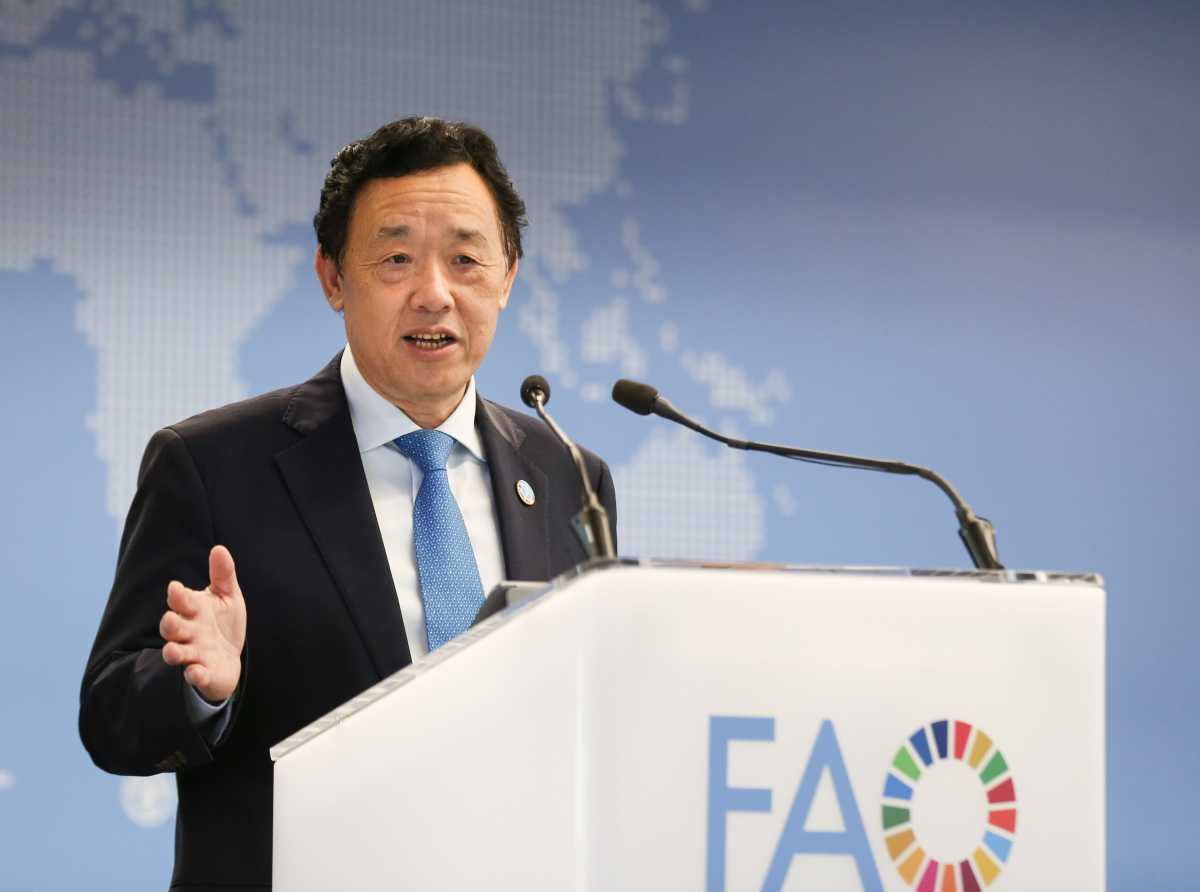
The Director-General of the Food and Agriculture Organization (FAO) of the United Nations, QU Dongyu, has reaffirmed the organisation's commitment to helping countries implement international food safety standards that protect consumers, strengthen food systems and promote fair global trade.
Speaking during the opening of the 49th Session of the Codex Alimentarius Commission (CAC49) in Geneva on Monday, July 6, 2026, the FAO chief stressed that the real value of international food standards lies not only in their adoption but in their effective implementation by member countries.
Addressing participants through a video message, QU Dongyu said the FAO remains dedicated to supporting governments, particularly developing countries, in translating internationally agreed food standards into practical benefits for consumers, food producers and businesses.
The FAO Director-General announced that the FAO Ministerial Conference approved an additional US$500,000 allocation for the Codex Secretariat under the Organisation's 2026–2027 Programme of Work and Budget.
According to him, the additional funding will strengthen the work of the Codex Alimentarius Commission by supporting newly reactivated subsidiary bodies, ensuring the timely publication of Codex standards and upgrading the Commission's digital infrastructure.
The investment is expected to improve the efficiency of the Commission's operations while enabling it to respond more effectively to emerging global food safety challenges.
QU Dongyu emphasised that adopting international food standards alone is not enough, noting that countries must also possess the technical capacity and institutional resources required to implement them effectively.
"Impact depends on implementation – without implementation these standards cannot achieve their intended benefits," he stated.
He explained that while the Codex Alimentarius Commission continues to provide globally recognised food standards that facilitate international trade and protect public health, governments now face the important task of ensuring those standards are fully integrated into national food safety systems.
The FAO, he added, will continue to provide scientific support and technical assistance to member countries, particularly developing nations, to strengthen their food control systems and regulatory frameworks.
The FAO Director-General highlighted the broader economic and social importance of international food standards.
He noted that Codex standards contribute significantly to building consumer confidence, reducing food waste and creating fairer, more competitive agricultural markets.
According to him, internationally harmonised standards also support the transformation of global agrifood systems by making them more efficient, inclusive, resilient and environmentally sustainable.
He stressed that food safety remains a fundamental pillar of sustainable development and global food security.
The Codex Alimentarius Commission was established jointly by the Food and Agriculture Organization (FAO) and the World Health Organization (WHO) and held its inaugural meeting in 1963.
The Commission serves as the United Nations' principal international body responsible for developing food safety standards, guidelines and codes of practice designed to protect consumer health and ensure fairness in international food trade.
Today, the Commission comprises 188 Member Countries, one Member Organization—the European Union—and 246 observer organizations, making it one of the world's most influential food standard-setting bodies.
Although Codex standards are voluntary, they are widely recognised as the international benchmark for food safety and quality.
Many governments use Codex guidelines as the foundation for developing national food regulations, helping to reduce technical barriers to trade while ensuring that food products are safe, properly labelled and of acceptable quality.
The 49th Session of the Codex Alimentarius Commission (CAC49) is taking place in Geneva, Switzerland, from July 6 to July 10, 2026.
The meeting has brought together representatives from member countries, observer organisations, international agencies and food safety experts to review and adopt new international food standards and strengthen global cooperation on food safety.
Discussions during the five-day session are expected to focus on emerging food safety challenges, international trade, scientific risk assessment and strategies to improve implementation of Codex standards across both developed and developing countries.
The outcomes of the meeting are expected to further strengthen global efforts to protect public health, facilitate fair international food trade and support more resilient and sustainable food systems worldwide.

Aikines Anyomi
News
Food
Politics
Technology
About Us
Download Our Mobile App

