Check out the areas and services covered under the Free Primary Healthcare Programme

Ghana’s newly launched Free Primary Healthcare Programme is set to significantly expand access to essential health services, with a strong focus on preventive care, early detection, and community-based interventions.
The initiative was officially launched by President John Dramani Mahama on Wednesday, April 15, at the Shai Osudoku District Hospital in Dodowa, within the Greater Accra Region. The programme aims to bridge gaps in healthcare delivery, particularly in underserved and hard-to-reach communities, by bringing essential services closer to the population.
At the core of the programme is a comprehensive package of healthcare services designed to address major public health needs at the community level while reducing the burden on higher-level health facilities.
Under its basic screening component, citizens will have access to routine health checks, including blood pressure monitoring, blood sugar testing, body mass index (BMI) assessments, and screening for non-communicable diseases such as hypertension and diabetes. Notably, many of these services are expected to be delivered directly within communities, including doorstep outreach initiatives.
Cancer care forms a key pillar of the programme, with services including breast cancer screening, prostate cancer referrals, and cervical cancer education and awareness campaigns. These interventions are aimed at promoting early detection and improving treatment outcomes.
Mental health has also been integrated into the initiative, reflecting growing recognition of psychological well-being as a critical component of overall health. The programme will provide mental health screening and counselling services to support individuals facing stress, anxiety, and other mental health challenges.
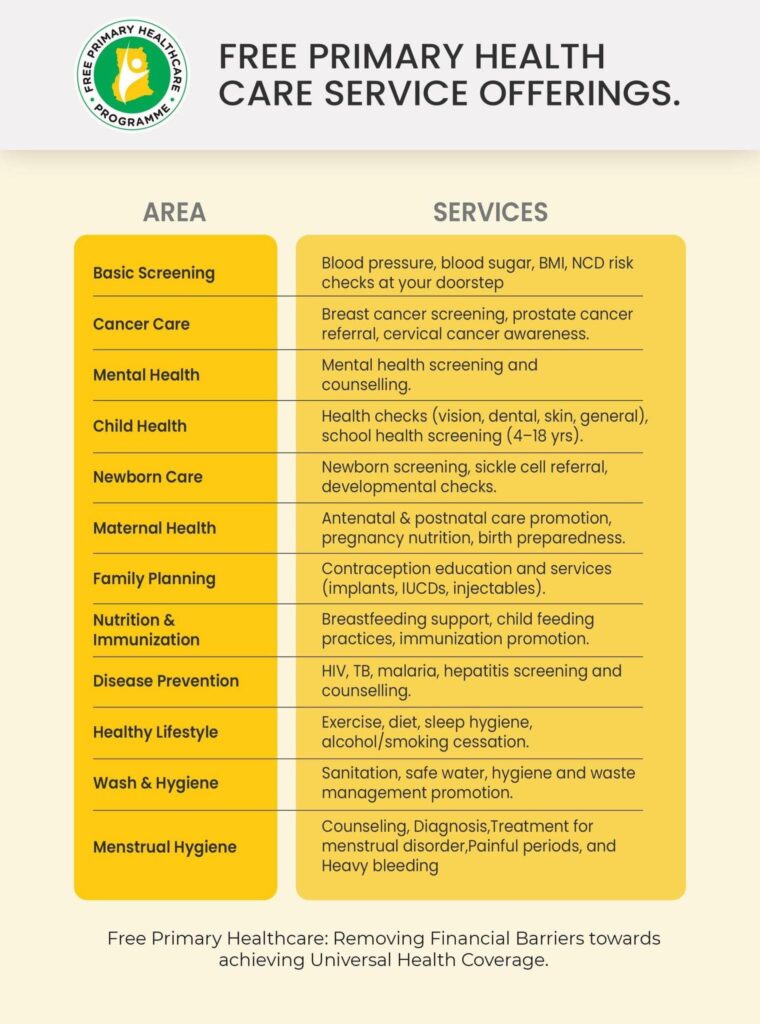
For children and adolescents, a wide range of health services will be offered. These include general health checks covering vision, dental health, and skin conditions, as well as school-based health screening programmes targeting children between the ages of four and 18 years. These efforts are intended to identify health issues early and ensure timely intervention.
Newborn care is another major focus area. Services will include newborn screening, referrals for conditions such as sickle cell disease, and developmental assessments to monitor early growth and identify potential health concerns at an early stage.
Maternal health services will also be strengthened under the programme. Expectant and new mothers will benefit from antenatal and postnatal care, nutritional support during pregnancy, and guidance on birth preparedness to improve maternal and child health outcomes.
Family planning is a central component of the initiative, with expanded access to education and contraceptive methods. These include implants, intrauterine contraceptive devices (IUCDs), and injectable contraceptives, aimed at supporting reproductive health and informed family planning choices.
In addition, the programme incorporates nutrition and immunisation support, offering guidance on breastfeeding, appropriate child feeding practices, and vaccination promotion to enhance child health and reduce preventable diseases.
Disease prevention remains a cornerstone of the initiative, with screening and counselling services targeting infectious diseases such as HIV, tuberculosis, malaria, and hepatitis. These interventions are designed to reduce transmission rates and improve early diagnosis and treatment.
The programme also promotes healthy lifestyle practices, encouraging regular physical activity, balanced nutrition, adequate sleep, and the reduction of harmful behaviours such as excessive alcohol consumption and tobacco use.
Environmental health has been included as part of the broader strategy, with education on sanitation, access to safe water, personal hygiene, and proper waste management to improve living conditions and prevent disease outbreaks.
Menstrual health services will also be provided, including counselling, diagnosis, and treatment for menstrual disorders such as dysmenorrhea (painful periods) and menorrhagia (heavy bleeding), addressing an often-overlooked aspect of women’s health.
The Free Primary Healthcare Programme is expected to cost approximately GH¢1.2 billion annually. It will initially be rolled out across 150 districts, with plans to deploy trained health volunteers, distribute essential medical equipment, and establish more than 350 service delivery points in high-traffic and underserved areas.
The initiative is designed to complement existing healthcare systems while shifting the focus toward prevention and early intervention. It represents a significant step in Ghana’s broader efforts to achieve universal health coverage and improve health outcomes for all citizens.

Aikines Anyomi

News
Food
Politics
Technology
About Us
Download Our Mobile App

