President Mahama must use 3rd Russia-Africa Summit to make a strong case against illegal recruitment of Ghanaians
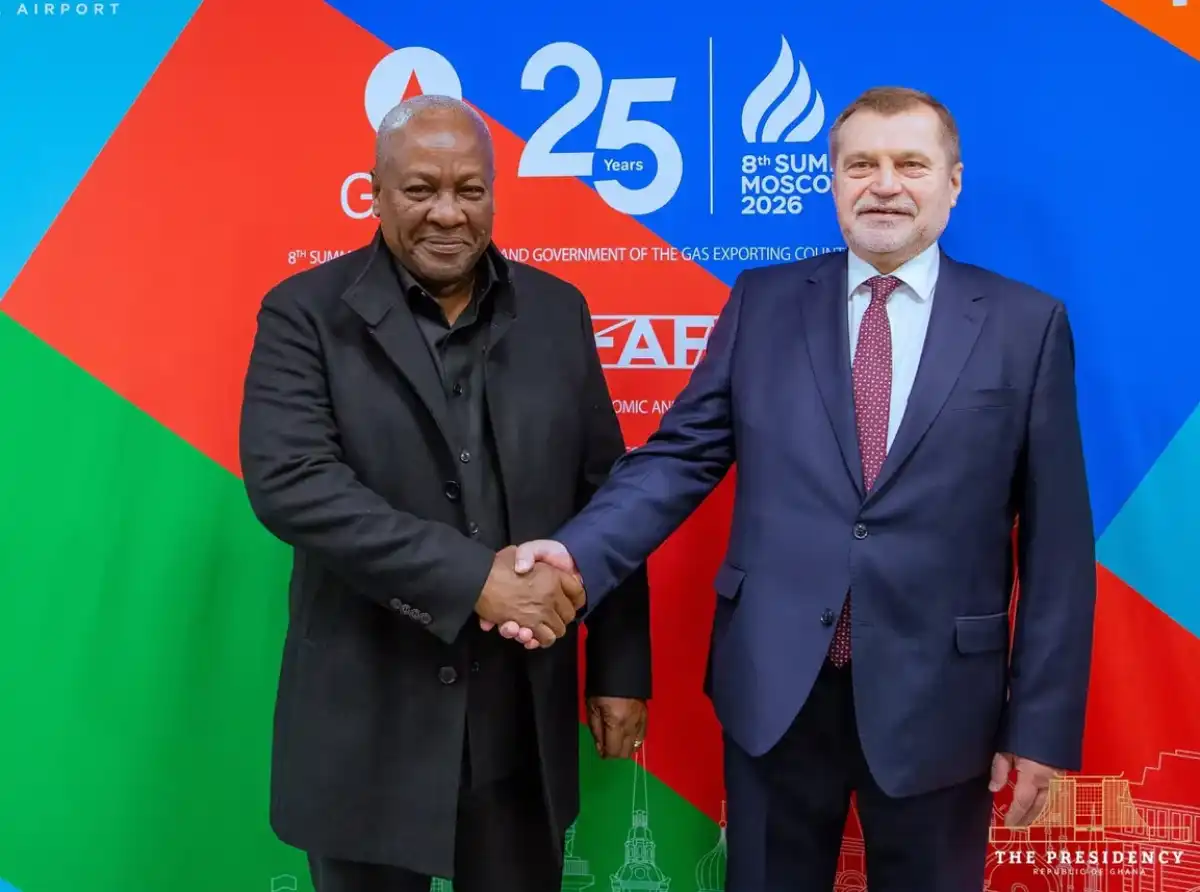
President John Dramani Mahama has been urged to use Ghana’s participation in the Third Russia–Africa Summit in Moscow to press Russian authorities for answers over the deaths of 62 Ghanaians reportedly killed while fighting in the Russia-Ukraine war.
The call follows a disclosure by Foreign Affairs Minister Samuel Okudzeto Ablakwa that 62 Ghanaian nationals had died in the conflict, while another 15 who travelled to Russia remained unaccounted for.
The summit, scheduled for October 28–29, 2026, alongside the Russia–Africa Economic and Humanitarian Forum, presents an opportunity for Ghana to raise concerns about the alleged fraudulent recruitment of its citizens into the Russian military.
President Mahama has confirmed Ghana’s participation in the summit, according to an announcement made by Russian Foreign Minister Sergey Lavrov in August following talks with Mr Ablakwa in Moscow.
Lavrov said the Ghanaian President had confirmed his attendance at the gathering, which brings together African leaders to discuss political, economic, security and humanitarian cooperation with Russia.
The summit comes amid growing concerns about reports that young Ghanaians and other African nationals have been recruited into Russia’s armed forces through allegedly deceptive or exploitative arrangements.
During bilateral discussions with Lavrov in Moscow, Mr Ablakwa said preventing the fraudulent recruitment of Ghanaian youth into the conflict was a key issue for the Ghanaian government.
In a statement shared on his official X account, the minister said the number of Ghanaian deaths had increased to 62, with another 15 citizens missing after travelling to Russia.
“Unfortunately, the number of Ghanaian deaths in Russia has gone up. 62 Ghanaians have now died and 15 who travelled to Russia remain missing,” he stated.
Mr Ablakwa also welcomed Russia’s stated willingness to work with Ghanaian authorities to address the recruitment networks.
“I welcome the pledge of the Russian Government to work with the Government of Ghana to stop the illegal enlistment of our youth,” he said.
“The Government of Ghana will continue to lead advocacy on this matter and ensure that our youth are protected from harm’s way. This is not our war, and it should not be claiming Ghanaian lives.”
Against this background, Ghana is being urged to use the summit to seek concrete commitments from Moscow, including investigations into recruitment practices, assistance in tracing missing citizens and cooperation to secure the return of Ghanaians who may have been unlawfully recruited.
Ghana and Russia have longstanding diplomatic relations dating back to the early years of Ghana’s independence, when the Soviet Union established close links with the government of Kwame Nkrumah.
Cooperation between the two countries historically covered industry, energy, education, medicine and culture. Ghanaian students and professionals received education and technical training in the Soviet Union, while the two countries maintained diplomatic engagement on issues relating to economic development and international affairs.
Russia has previously highlighted these historical connections as an important foundation for contemporary relations with Ghana.
However, the call for Ghana to address the recruitment issue at the summit argues that the historical relationship should not prevent Accra from raising serious concerns about the safety and welfare of its citizens.
The position is that Ghana can maintain diplomatic and economic engagement with Russia while demanding transparency, accountability and protection for Ghanaians who may have been deceived into joining the conflict.
The Russian Embassy in Ghana has reportedly indicated that credible information concerning any Ghanaian who may have been unlawfully conscripted would be reviewed through the relevant authorities, with appropriate remedies pursued where necessary.
Ghana is therefore being encouraged to seek a clear process for submitting cases, verifying the circumstances of recruitment and following up on investigations.
Concerns about the recruitment of foreign nationals into the Russian military have also been raised by international human rights organisation Amnesty International.
The organisation has accused Russian recruitment networks of using deceptive, coercive and exploitative practices to enlist foreign nationals and deploy them to fight in Ukraine.
According to Amnesty International, some recruits from economically vulnerable backgrounds were allegedly promised civilian jobs or non-combat roles before being enlisted into the military.
The organisation said some individuals signed documents in languages they did not understand and subsequently faced restrictions on their movements, deployment to front-line positions with limited preparation, and threats when they attempted to leave.
Amnesty International Secretary General Agnès Callamard said the findings pointed to serious exploitation of foreign nationals.
“Amnesty’s research demonstrates how Russia’s Armed Forces are bolstering their ranks with economically vulnerable foreign nationals and using them as cannon fodder in the war of aggression against Ukraine,” she said.
Callamard added that the level of coercion and deception documented in some cases led the organisation to conclude that the practices could amount to human trafficking under the UN Palermo Protocol.
The allegations underscore the need for investigations into the circumstances under which foreign nationals, including Ghanaians, enter military service in Russia. Individual cases would still need to be assessed on their specific evidence and circumstances.
The article also cites information compiled by Ukraine’s “I Want to Live” project, which reportedly identified 485 Africans confirmed killed while serving in the Russian army.
According to the source’s count of the list, 85 of those named were Ghanaians, representing approximately 18 per cent of the reported total.
The project describes its list as a verified minimum, meaning the actual number of African nationals killed could be higher.
These figures differ from the 62 Ghanaian deaths disclosed by Mr Ablakwa. The two counts may reflect different reporting periods, verification methods or case inclusion criteria and should not be treated as directly equivalent without further clarification.
The discrepancy highlights the importance of a coordinated process involving Ghanaian and Russian authorities to establish the identities and circumstances of Ghanaian nationals reported missing or killed in the conflict.
The recruitment concerns have also renewed attention on the economic pressures that can leave young people vulnerable to fraudulent overseas job offers.
The argument advanced in the source is that Ghana’s response should extend beyond diplomatic engagement to address the conditions that make deceptive recruitment attractive to some young people.
Amnesty International has described some foreign recruits as economically vulnerable individuals targeted through promises of civilian employment and better opportunities abroad.
In Ghana, the limited availability of decent jobs and the challenges faced by young jobseekers can increase the appeal of overseas employment offers, particularly when recruiters promise attractive salaries or secure working conditions.
A World Bank report cited in the source puts youth unemployment in Ghana at 12 per cent and youth underemployment at more than 50 per cent. These figures should be checked against the original report, including its publication date, definitions and reference period, before publication.
Addressing the problem would require stronger public awareness campaigns, verification of overseas job offers, improved career guidance and counselling, work-based learning, mentoring and expanded access to decent employment.
The source also points to the need for more detailed data on young jobseekers by location, gender, skills and capabilities to help policymakers develop employment programmes that respond to specific needs.
Ghana’s participation in the Russia–Africa Summit offers an opportunity to raise the issue of Ghanaian nationals reportedly recruited into the Russian military and seek practical cooperation to protect citizens.
Key priorities could include establishing a joint mechanism to investigate suspected fraudulent recruitment, tracing missing Ghanaians, clarifying the status of citizens believed to have joined Russian military units and supporting those who wish to return home where legally and practically possible.
Ghana could also press for greater transparency in overseas recruitment arrangements and stronger safeguards against traffickers and intermediaries who exploit young people seeking employment.
The wider challenge is to combine diplomatic action with domestic measures that reduce vulnerability to fraudulent recruitment.
For Ghana, the issue concerns not only relations with Russia but also the protection of citizens, the investigation of suspected trafficking networks and efforts to prevent further loss of life.

Aikines Anyomi
News
Food
Politics
Technology
About Us
Download Our Mobile App

