The Board and Management of the National Petroleum Authority (NPA) have announced the death of Deputy Chief Executive, Dr Dramani Bukari.

The Board and Management of the National Petroleum Authority (NPA) have announced the death of Deputy Chief Executive, Dr Dramani Bukari.
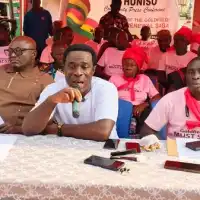
Youth groups and opinion leaders in Huniso and surrounding communities in the Prestea-Huni Valley Municipality of the Western Region have thrown their support behind the renewal of Gold Fields Ghana Limited's lease for the Tarkwa Mine.
The International Monetary Fund (IMF) has urged Ghana to maintain its quarterly electricity tariff adjustment mechanism as part of efforts to reduce persistent fiscal risks and improve the financial sustainability of the energy sector.

The Ministry of Lands and Natural Resources has handed administrative control of Adamus Resources Limited to the Minerals Commission following the conclusion of a ministerial review into the revocation of the company's mining leases.
_thumbnail.jpg)
Ghana and Brazil have reaffirmed their commitment to strengthening bilateral cooperation in agriculture, energy, business and maritime security as the outgoing Brazilian Ambassador to Ghana, Mariana Gonçalves Madeira, concludes her tour of duty.

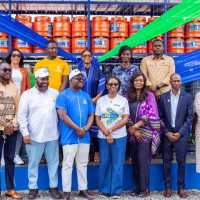
Henos Energy has commissioned Ghana’s first-ever Drive-Thru Cylinder Distribution Outlet (CDO) at East Legon Hills in Accra, introducing an innovative Liquefied Petroleum Gas (LPG) distribution model designed to improve convenience, enhance safety and support the government’s 24-Hour Economy agenda.
The Government of Ghana has officially commenced formal negotiations on the Volta Economic Corridor Agreement, marking a significant milestone in the implementation of the 24-Hour Economy and Accelerated Export Development Programme and paving the way for the development of the ambitious Water-Lake Transport Project.
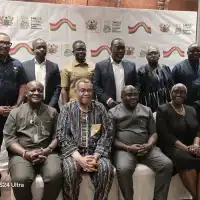
The Tema Youth Association (TYA) has called on the Tema Metropolitan Assembly (TMA) to attract investors and strategic development partners to transform the Five Beach enclave into a modern economic hub capable of creating sustainable employment opportunities and stimulating economic growth within the metropolis.

The Bank of Ghana (BoG) and the Chartered Institute of Bankers (CIB Ghana) have reaffirmed their commitment to strengthening ethics, professionalism, and collaboration across Ghana's banking industry as part of efforts to build a more resilient, secure, and trusted financial sector.
_thumbnail.jpg)
The Deputy Minister for Energy and Green Transition, Richard Gyan-Mensah, has highlighted Ghana's recent progress in stabilising its energy sector, revealing that the government has settled more than US$1.4 billion in legacy energy sector debts over the past 18 months while implementing key reforms aimed at improving electricity reliability and long-term sustainability.

Ghana Manganese Company Limited (GMC) has announced plans to achieve a record monthly production of 700,000 tonnes of manganese ore in August 2026, citing improved weather conditions and the successful deployment of new heavy-duty mining equipment as major factors expected to drive the increase.

The Public Utilities Workers Union (PUWU) has strongly opposed the government's decision to introduce private sector participation in the operations of the Electricity Company of Ghana (ECG) and the Northern Electricity Distribution Company (NEDCo), arguing that recent reforms have already led to significant improvements in the performance of the two state-owned electricity distributors.
The Bank of Ghana (BoG) has published a list of 20 unlicensed digital credit service providers, warning the public against borrowing from mobile loan applications operating without regulatory approval.