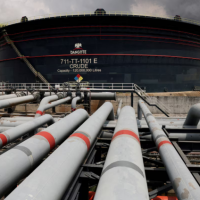
President John Dramani Mahama is expected to perform the official sod-cutting ceremony for Phase II of the Sentuo Oil Refinery Project on June 24, 2026, in what is being described as a landmark step towards transforming Ghana into one of Africa’s leading petroleum refining and trading centres.
The National Petroleum Authority (NPA) has commemorated World LPG Day 2026, reaffirming its commitment to expanding access to Liquefied Petroleum Gas (LPG) and strengthening safety standards as part of Ghana’s clean energy transition agenda.
The government has fully settled the GH¢1.05 billion it owed the Social Security and National Insurance Trust (SSNIT) for 2024, with more than 70 percent of the payments made in cash, according to SSNIT Director-General Kwasi Afreh Biney.
The Director-General of the Social Security and National Insurance Trust (SSNIT), Kwasi Afreh Biney, says the institution's digital transformation efforts have significantly reduced the time required to process pension claims, with most applications now completed within seven days.
The Director-General of the Social Security and National Insurance Trust (SSNIT), Kwasi Afreh Biney, says the institution's biggest challenge is no longer technology infrastructure but encouraging more Ghanaians to embrace its digital platforms.
Minister for Food and Agriculture, Eric Opoku, has raised concerns over the failure of many African governments to meet their commitment to allocate at least 10 per cent of national budgets to agriculture and rural development, warning that inadequate investment is undermining efforts to reduce poverty and drive economic transformation across the continent.
President John Mahama has urged global investors to shift their attention beyond traditional markets and recognize Africa as the next major frontier for economic growth, highlighting the continent’s growing innovation, economic transformation, and investment potential.
Ghana is set to host a Hyundai automotive manufacturing plant as South Korea strengthens its economic engagement with Africa, a move expected to boost industrialisation, create jobs, and reinforce Ghana’s position as a regional manufacturing hub.
President John Dramani Mahama on Wednesday paid a visit to the London Stock Exchange (LSE) as part of efforts to strengthen Ghana’s engagement with global investors and position the country as a leading destination for international capital.
Ivory Coast has slowed forward sales of cocoa for the 2026/27 season amid growing concerns that a potential El Niño weather pattern could negatively impact production across West Africa, according to sources familiar with the matter.
The world's largest cocoa producer has already sold approximately one million metric tonnes of cocoa through export contracts for the upcoming main crop season. However, authorities are now taking a more cautious approach as weather risks threaten future output.
Sources told Reuters that the Abidjan-based Coffee and Cocoa Council (CCC) has reduced the pace of sales while also increasing its export premium from zero to at least £100 per tonne above futures market prices.
The move reflects growing confidence in demand for cocoa as well as concerns that global supplies could tighten further when the new season begins on September 1.
"We have already sold between 950,000 and 1 million tonnes for next season, but we preferred to slow down and be cautious. We are selling less and less," one CCC source disclosed.
Industry insiders estimate that forward sales may already have reached between 1.1 million and 1.2 million tonnes, underscoring the strong appetite among international buyers despite elevated prices.
"The market is allowing them to be a bit more aggressive. They don't need to lower the premium to get contracts in the book," a senior industry trader said.
The CCC's cautious stance is largely driven by fears that El Niño could trigger drought conditions across major cocoa-producing countries, including Ivory Coast, Ghana, Cameroon and Nigeria.
Weather experts have warned that the climate phenomenon could disrupt rainfall patterns during critical stages of cocoa development, potentially reducing yields and tightening global supplies.
According to sources within the CCC, unusually hot conditions experienced between January and May have already raised concerns about the health of cocoa farms.
"In truth, we are observing a certain fragility in the development of the mid-crop and therefore in the next main crop. It was very hot between January and May, and the rains of the past few weeks cannot make up for everything," a CCC source explained.
The source added that if El Niño develops as forecast during June and July, cocoa production could face additional pressure.
Not all market participants agree with the CCC's cautious outlook.
Several exporters interviewed by Reuters argued that El Niño is unlikely to significantly affect cocoa output next season and believe the industry should take advantage of strong market demand.
Others, however, support the council's conservative approach, citing uncertainty around weather conditions and the broader challenges facing cocoa production.
Many industry stakeholders believe the more pressing threat lies in the deteriorating condition of cocoa farms across the region.
Ageing plantations, widespread disease outbreaks and limited access to fertilisers continue to affect productivity in several cocoa-growing areas.
"I don't see El Niño as a threat to production. The real concern is the lack of fertilisers and treatments. It's a shame the CCC is refusing to sell when there's good demand," the head of an Abidjan-based export company said.
The cocoa sector is also grappling with rising fertiliser costs, which could further impact production in the coming season.
Industry observers say fertiliser prices have surged following disruptions linked to the conflict involving Iran, which has affected shipping through the Strait of Hormuz, a critical route for global fertiliser trade.
Higher input costs could limit farmers' ability to maintain plantations and improve yields, adding another layer of uncertainty to cocoa production forecasts across West Africa.
With global demand for cocoa remaining strong and weather risks looming, market participants will be closely monitoring developments in Ivory Coast and other major producing countries in the months ahead.
The government has approved a series of far-reaching structural reforms targeting state-owned enterprises (SOEs) as part of efforts to restore fiscal stability and address Ghana’s growing energy sector debt burden.
The Bank of Ghana has firmly rejected reports suggesting it is considering the sale of its newly commissioned headquarters, describing the claims as "false and misleading."
President John Dramani Mahama has detailed the expected benefits of the newly signed UK-Ghana Growth Partnership Agreement, describing it as a transformative initiative designed to boost investment, create jobs, strengthen infrastructure, and expand opportunities for young people.