
NDC projected to lose 29 parliamentary seats in 2028 – Global InfoAnalytics
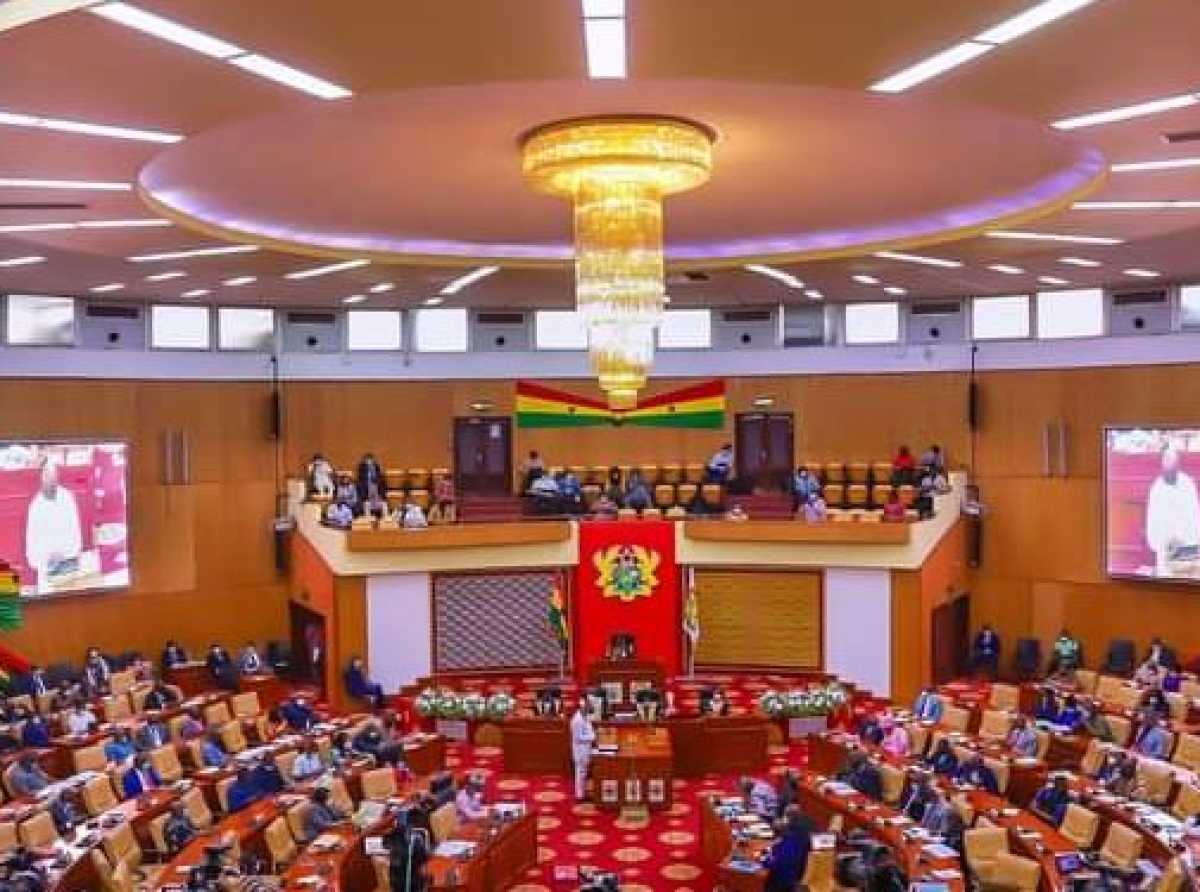
The National Democratic Congress (NDC) could lose 29 parliamentary seats in the 2028 general elections, according to the first parliamentary seat projection released by research organisation Global InfoAnalytics.
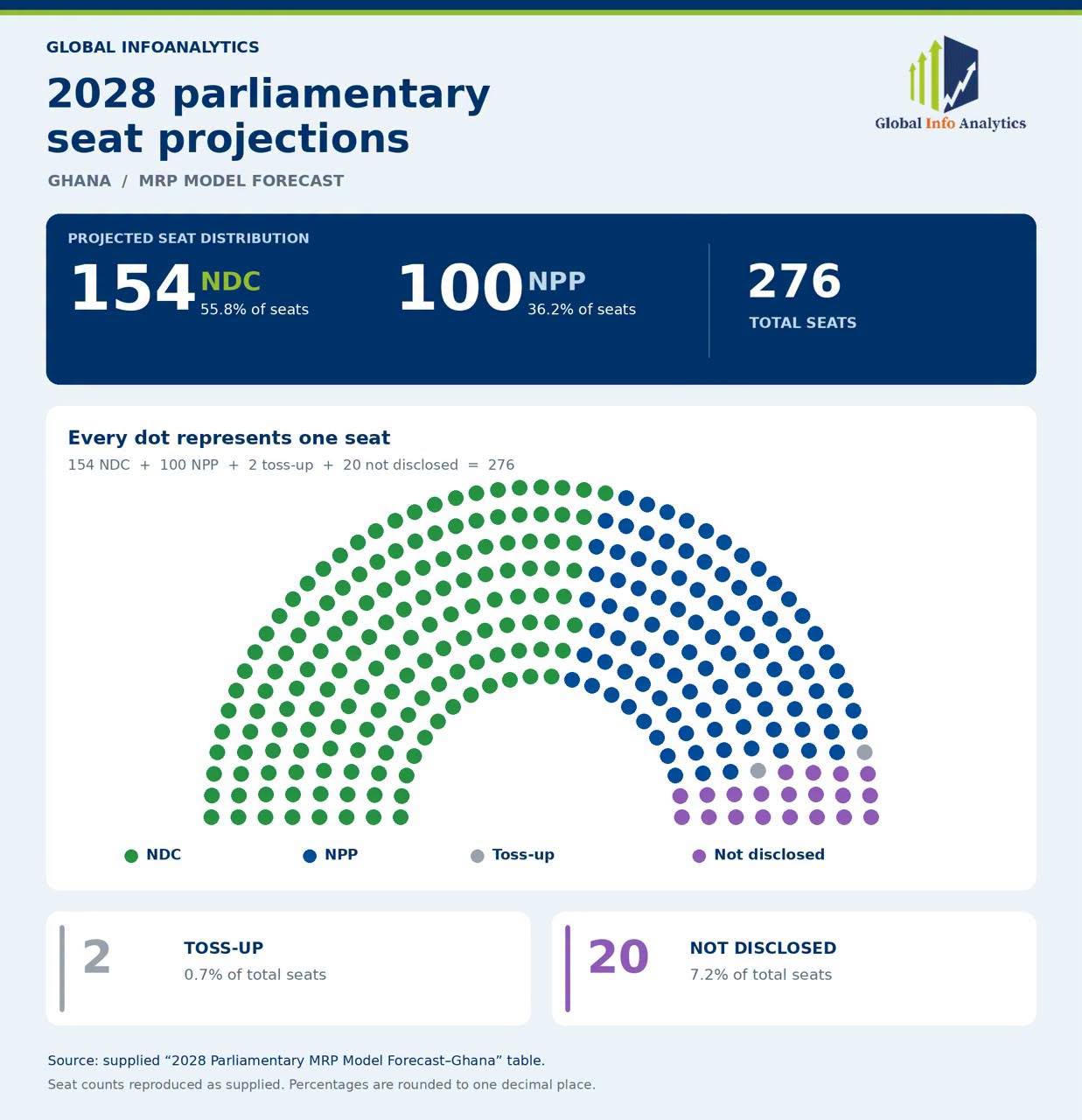
The organisation’s Multilevel Regression and Poststratification (MRP) model projects the NDC to win 154 seats, down from the 185 seats it secured in the 2024 parliamentary elections.
The projected decline would reduce the party’s parliamentary representation, although it would still retain a majority in the 276-member House if the model’s estimates materialise.
The New Patriotic Party (NPP), meanwhile, is projected to increase its representation from 88 seats in 2024 to 100 seats in 2028, representing a potential gain of 12 seats.
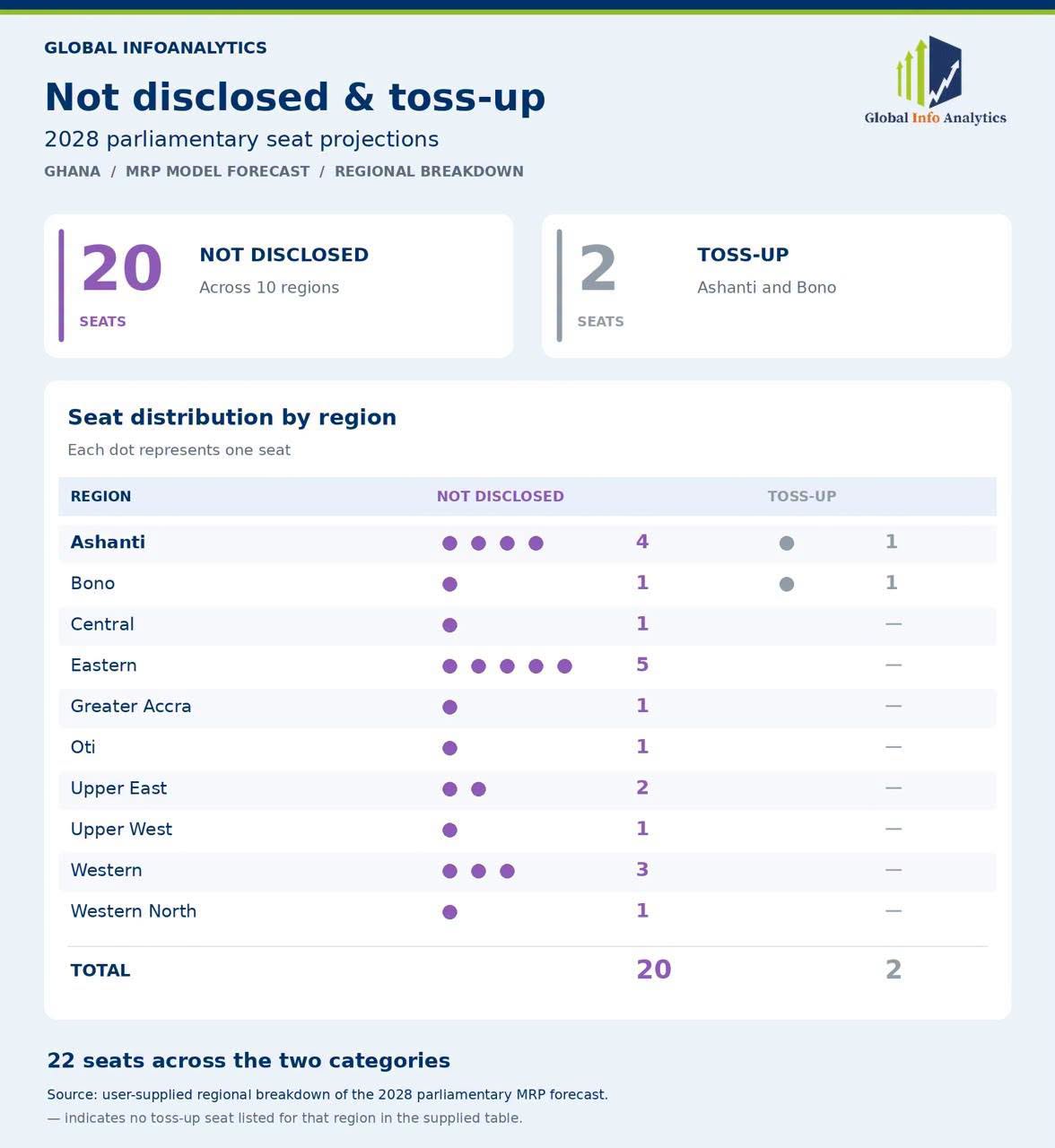
Global InfoAnalytics’ model leaves 22 constituencies unresolved, comprising 20 classified as “not disclosed” and two designated as toss-ups.
The Eastern Region has the highest number of undisclosed constituencies, with five, followed by the Ashanti Region with four.
The Western Region has three undisclosed seats, while the Upper East Region has two.
Central, Greater Accra, Oti, Upper West, Western North and Bono each have one constituency classified as undisclosed.
The two toss-up constituencies are located in the Ashanti and Bono regions.
The projection assigns the NDC 55.8 per cent of the total parliamentary seats and the NPP 36.2 per cent.
The 20 undisclosed constituencies account for 7.2 per cent, while the two toss-up seats represent 0.7 per cent.
The figures point to a potentially narrower parliamentary majority for the governing NDC in 2028, while suggesting an increase in representation for the opposition NPP.
However, the outcome remains uncertain, particularly because the model has not disclosed projected party preferences for the 20 unresolved constituencies and the two toss-up seats remain competitive.
Global InfoAnalytics’ figures should therefore be treated as a projection rather than a prediction of the final election outcome. Actual results will depend on voter preferences, campaign developments, candidate selection and other factors closer to the 2028 polls.

Aikines Anyomi

News
Food
Politics
Technology
About Us
Download Our Mobile App

