
PLATO’S FOLDER: If we faulted Akufo-Addo over National Cathedral location, what is Sentuo’s $1.3bn village doing at 37?
An investigative opinion piece examining the security implications of locating a major foreign-backed real estate development close to Ghana’s key military and intelligence installations.
On Tuesday, September 15, 2026, I was heading towards the Afrikiko area, near Jubilee House, to buy food when I noticed unusually heavy traffic along Giffard Road. Vehicles were barely moving towards the Airport stretch of the boulevard.
I wondered what was happening. Was a prominent visitor arriving? Had there been an accident around the 37 Military Hospital area?
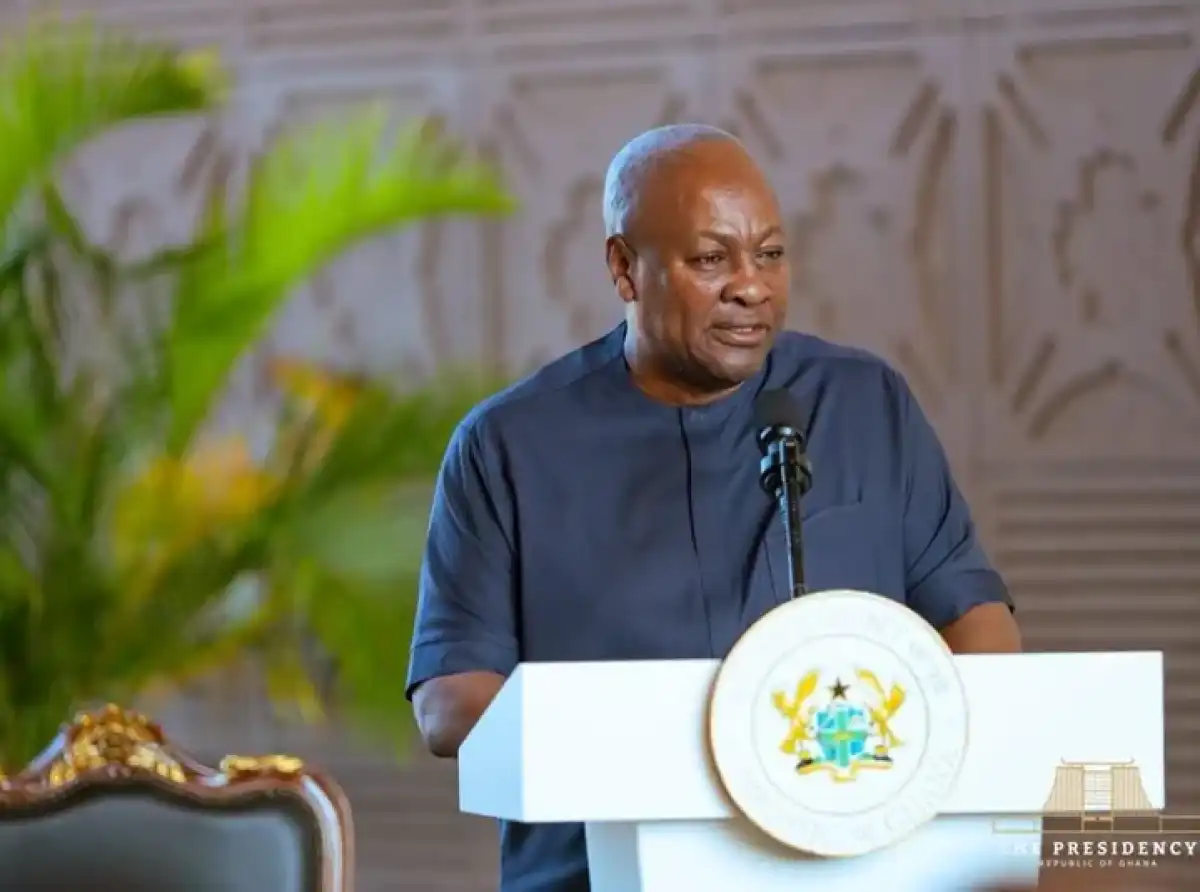
When I returned to the office, however, I found television screens across the newsroom showing the same event: President John Dramani Mahama cutting the sod for the Sentuo Airport Garden City project at 10 Giffard Road.
I had seen advertisements for the development, branded The Garden Above Accra, the previous day but had paid little attention. In Accra, almost every major real estate development seems to describe itself as a garden, city or village.
But the scale of what was being unveiled that afternoon made me reconsider.
The US$1.3 billion project, being developed by Sentuo Group, is expected to comprise 582 premium apartments, a 600-room hotel, a 2,500-capacity conference facility, healthcare services, a shopping mall and other commercial and leisure amenities.
As I watched the President participate in the ceremony, one question kept coming to mind: Have we adequately considered the national security implications of placing such a massive development in this particular location?
To me, this is not simply another real estate investment in Airport Residential Area. It raises questions about what should be permitted within the vicinity of Ghana's sensitive national security infrastructure.
For anyone who has taken time to study the Giffard Road enclave, the location deserves more than the usual conversations about prime real estate, investment opportunities and architectural development.
Within the broader area are important military, defence, intelligence and emergency-response facilities, including the 37 Military Hospital and installations associated with Burma Camp.
The 37 Military Hospital is particularly important to Ghana's emergency response and military healthcare system. Its role extends beyond routine medical services to the treatment of military personnel and the management of serious emergencies.
The wider military enclave also hosts facilities central to Ghana's defence architecture. The proximity of sensitive installations to a large residential and commercial development therefore raises legitimate questions about physical security, surveillance, access control and the protection of sensitive information.
The concern is not that every residential development near a military installation automatically presents a security threat. Rather, the scale, height, intended occupancy and technological infrastructure of a development should be considered when assessing its suitability for such a location.
The Sentuo project is expected to accommodate hundreds of households, hotel guests, conference participants, businesses and other visitors.
What security assessments have been conducted to determine whether the development's design and location are compatible with the security requirements of the surrounding installations?
Have the relevant defence and intelligence agencies examined the potential risks associated with building a large, high-rise residential and commercial complex within this enclave?
These are questions that deserve clear answers.
There is an international precedent that makes the discussion about foreign-backed infrastructure and national security particularly relevant.
In January 2018, French newspaper Le Monde published an investigative report alleging that the African Union headquarters in Addis Ababa, Ethiopia, had been subjected to surveillance.
The building, constructed with Chinese funding and handed over to the African Union in 2012, reportedly experienced unexplained transfers of data from its computer servers to servers in Shanghai.
According to the newspaper's investigation, the transfers were detected by the African Union's IT personnel, who subsequently took measures to strengthen the institution's information security.
The report also alleged that vulnerabilities had been incorporated into the building's information technology infrastructure, potentially exposing sensitive communications and documents.
China rejected the allegations, describing the report as false and preposterous. African Union officials also subsequently disputed the claims, meaning the allegations should not be treated as conclusively established facts.
Nevertheless, the controversy raised important questions about cybersecurity, foreign-supplied technology and the protection of sensitive institutional information.
The lesson is that infrastructure security extends beyond the physical structure of a building. It also includes the management of digital systems, communications networks, access controls and other technologies embedded within modern developments.
That is why Ghana must ask questions about the security arrangements for a project of this scale.
Who will manage its surveillance systems? Who will have access to the data generated by its security infrastructure? What safeguards will prevent unauthorised access to sensitive information? And what oversight will Ghanaian security agencies exercise?
These are not accusations against the developer. They are legitimate questions that should form part of any serious national security assessment.
Ghana has previously witnessed intense public debate over the choice of location for major developments, particularly the National Cathedral project.
During the Akufo-Addo administration, the proposed cathedral site in the Ridge area attracted criticism over the demolition of existing structures, including judges' bungalows, traffic implications and the suitability of the location.
Many critics argued that the problem was not necessarily the idea of constructing a national cathedral but the decision to place it at a congested and sensitive location in the capital.
During his parliamentary vetting on August 27, 2026, Mahama Ayariga, the Minister for Local Government, Chieftaincy and Religious Affairs, expressed a similar distinction.
“I don't think there is anything wrong with the idea, I think it was a good idea that was badly implemented. I personally had issues with the location,” he said.
That argument raises an important question about consistency in public planning.
If the location of the National Cathedral attracted such strong criticism, should the location of a US$1.3 billion mixed-use development close to important military and intelligence installations not receive equally serious scrutiny?
The issue is not whether Ghana should welcome foreign investment. It is whether every proposed investment should be approved without sufficiently examining the long-term implications of its location.
Development must be accompanied by responsible land-use planning and security considerations.
There are several emerging residential and commercial development corridors around Greater Accra that could potentially accommodate large-scale investments.
Areas such as Pokuase-Amasaman, East Legon Hills, the Tema motorway corridor and Appolonia City could be considered for developments of this nature, subject to the necessary land, infrastructure and regulatory assessments.
The question is not whether these locations are automatically suitable or available. Rather, it is whether alternative sites were properly examined before the decision was made to locate the Sentuo development at 10 Giffard Road.
A project worth US$1.3 billion deserves a comprehensive assessment of its economic benefits, environmental implications, traffic impact and national security considerations.
Ghana should not approach such decisions with the assumption that the financial value of an investment automatically outweighs every other public interest.
The concerns surrounding the Sentuo Airport Garden City project should prompt a transparent, professional assessment involving the relevant national security institutions.
At the very least, the assessment should address:
-
Building height and visibility: Whether the proposed structures create security vulnerabilities by providing elevated views into nearby sensitive installations.
-
Surveillance infrastructure: Who will operate the project's CCTV, facial recognition, access-control and other monitoring systems, and what safeguards will govern their use?
-
Digital and communications security: Whether the project's information technology infrastructure could create vulnerabilities or expose sensitive information.
-
Access and occupancy: How the movement of residents, hotel guests, conference participants, employees and visitors will be managed.
-
Emergency preparedness: Whether the development could affect military operations, emergency response routes or access to critical facilities.
-
Regulatory oversight: Whether the relevant security agencies have reviewed the project plans and established enforceable safeguards.
A security assessment should not be confused with hostility towards foreign investors. On the contrary, it would provide greater certainty for the developer, residents, government and the public.
President Mahama has consistently emphasised the importance of attracting private investment to accelerate Ghana's development. That objective is understandable, particularly given the country's infrastructure and employment needs.
But investment should not be measured exclusively by the amount of money committed or the number of buildings proposed.
Its location, implications for surrounding communities, compatibility with national planning objectives and potential security consequences must also matter.
The Sentuo Airport Garden City project may offer significant opportunities in housing, hospitality, tourism, employment and business development. Those potential benefits deserve consideration.
However, the public also deserves answers about the security implications of locating such a development within an area containing important military and intelligence infrastructure.
I am not arguing that the project should automatically be cancelled, nor am I suggesting that its developers have any intention of compromising Ghana's security.
I am asking whether the necessary national security assessments were conducted before the project was launched and whether the findings can be made sufficiently transparent to reassure the public.
Ghana must be able to attract investment without compromising its strategic interests.
Are we so eager to secure US$1.3 billion in investment that we have forgotten that some locations require considerations beyond their commercial value?
Not every strategic piece of land should be viewed through the lens of real estate. Sometimes, its greatest value lies in what it protects.

Aikines Anyomi

News
Food
Politics
Technology
About Us
Download Our Mobile App

