
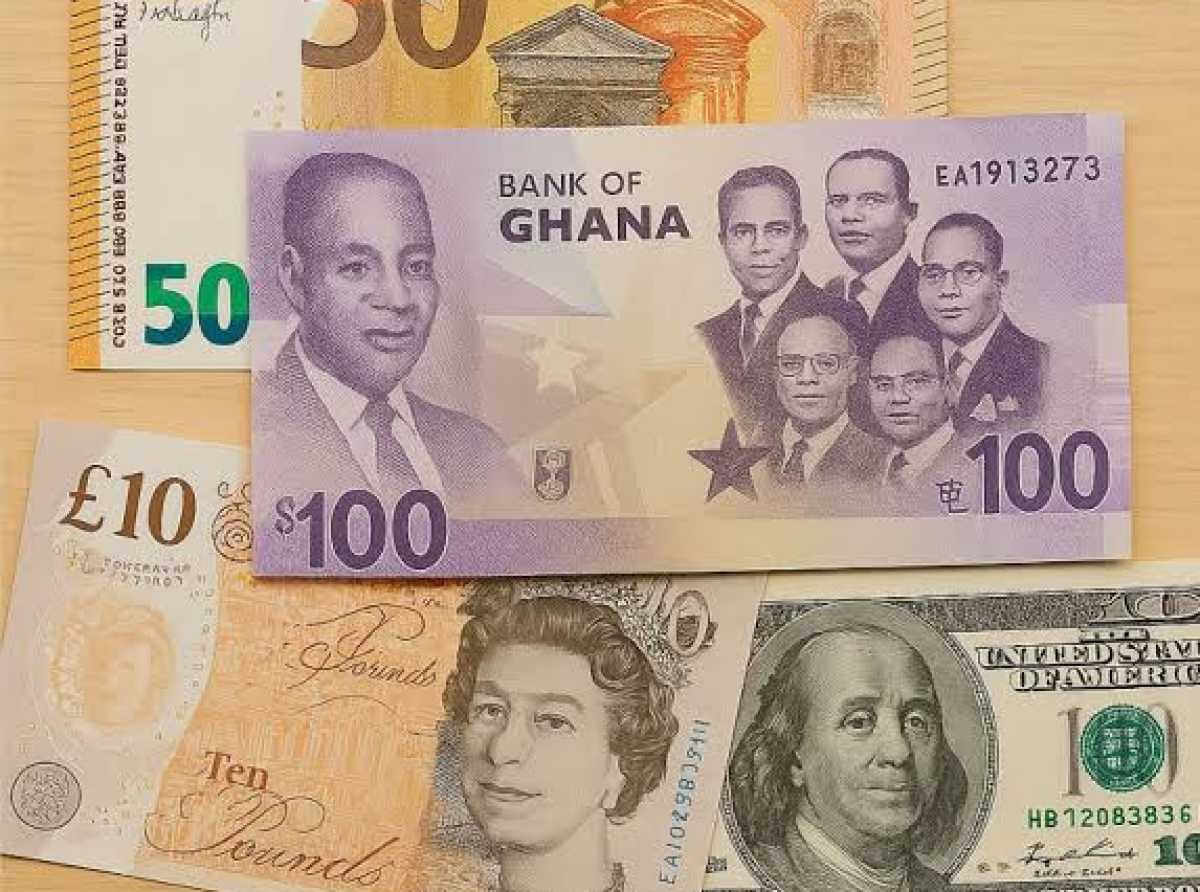
The Ghana cedi's depreciation against the US dollar has widened to 10.6 per cent in November 2026, from 9.5 per cent in September, amid renewed pressure on the local currency from foreign exchange supply constraints.
The latest Summary of Economic and Financial Data released by the Bank of Ghana (BoG) shows that the cedi traded at GH¢11.69 to the US dollar in November, compared with GH¢11.66 in September.
The local currency also recorded losses against other major international currencies during the period, reflecting continued pressure in the foreign exchange market.
Bank of Ghana data indicate that the cedi depreciated by 9.2 per cent against the British pound and 5 per cent against the euro on the interbank market in November.
The local currency traded at GH¢15.47 to the pound and GH¢12.92 to the euro.
The latest performance highlights the challenges facing the cedi after a year characterised by periods of depreciation and intermittent recoveries, partly supported by foreign exchange interventions by the central bank.
Foreign exchange supply constraints remain a key concern for the currency's stability, particularly as demand for dollars to finance imports and other external transactions continues to influence market conditions.
The outlook for the cedi in 2027 also points to the possibility of further depreciation.
Fitch Solutions projects that the local currency will average GH¢12.40 to the US dollar next year, citing developments in international gold prices, foreign exchange supply and the government's efforts to rebuild Ghana's foreign exchange reserves.
Associate Director at Fitch Solutions, Mike Kruiniger, said these factors could reduce the amount of foreign currency available on the domestic market and put additional pressure on the cedi.
“We expect to see the currency to weaken a little bit, and that is going to bring back some important price pressures next year,” he said.
Mr Kruiniger explained that changes in foreign exchange intermediation, particularly the shift from the Bank of Ghana to the Ghana Gold Board, could influence the availability of foreign currency.
He also pointed to the expected moderation in international gold prices and the government's efforts to accumulate reserves under the Ghana Reserve Accumulation Programme (GANRAP).
According to him, lower gold prices could reduce Ghana's export earnings, while efforts to build foreign exchange reserves could limit the supply of dollars available on the domestic market.
A stronger US dollar could also place additional downward pressure on international gold prices, potentially worsening the effect on Ghana's foreign exchange earnings.
Further depreciation of the cedi could increase the cost of imported goods and industrial raw materials, with possible consequences for domestic inflation.
Businesses that depend heavily on imported inputs could face higher operating costs, while consumers may experience increases in the prices of imported products if exchange-rate pressures persist.
The projected weakening of the cedi therefore raises questions about Ghana's ability to maintain currency stability while rebuilding its foreign exchange reserves and managing changes in international commodity markets.

Aikines Anyomi

News
Food
Politics
Technology
About Us
Download Our Mobile App

