
258 Galamsey Suspects Arrested in Six Months as Government Declares: ‘The Era of Impunity Is Over’
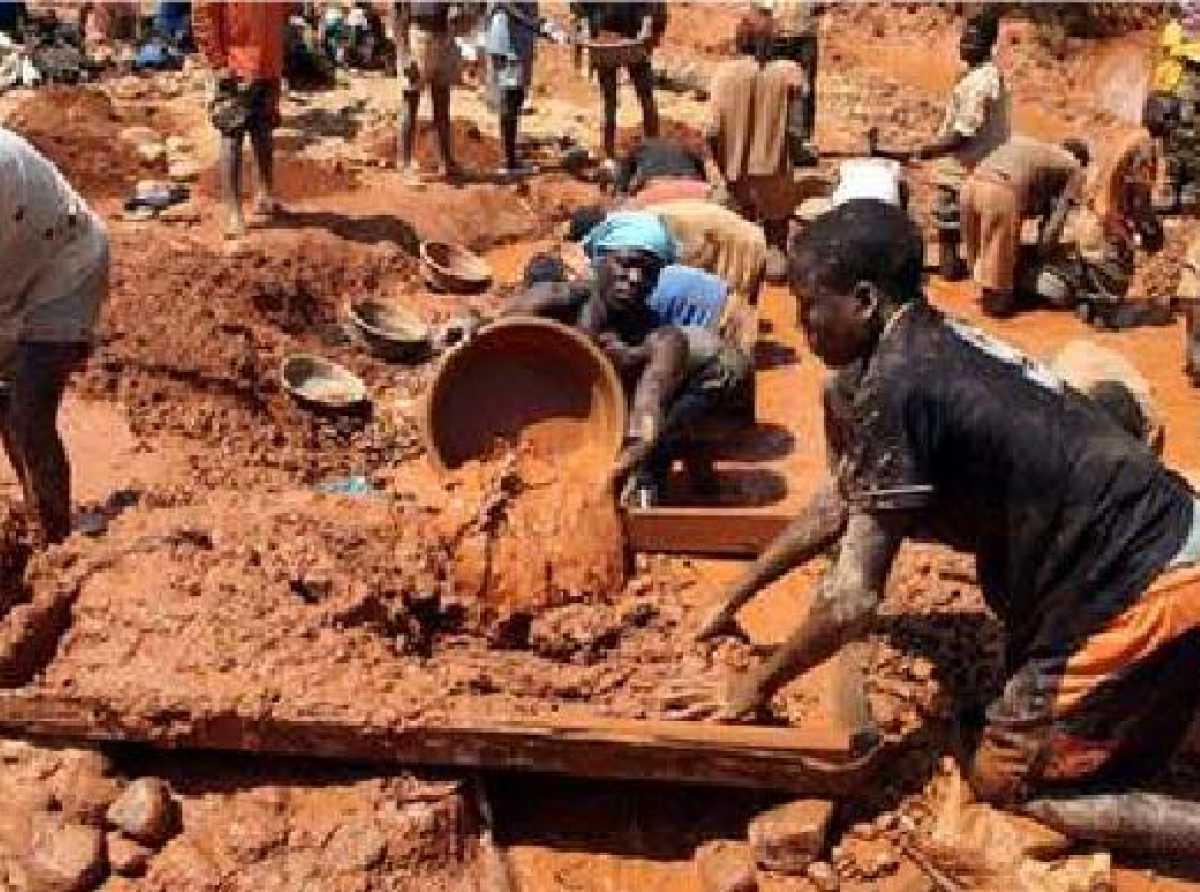
The Government has intensified its fight against illegal mining, announcing that 258 suspected illegal miners have been arrested during the first six months of 2026 as part of a nationwide enforcement campaign that has also led to the seizure and immobilisation of 168 excavators, the destruction of thousands of illegal mining machines, and the recovery of a significant cache of weapons and ammunition.
Presenting his ministry's mid-year performance during the Government Accountability Series at Jubilee House on Wednesday, the Minister for Lands and Natural Resources, Emmanuel Armah-Kofi Buah, said the latest results demonstrate the Mahama administration's determination to reclaim Ghana's forests and water bodies from illegal mining activities.
Declaring that "the era of impunity is over," the minister warned that the government would continue to dismantle criminal networks profiting from environmental destruction.
The fight against illegal mining remains one of the Ministry's highest priorities,
Mr Buah said. Our rivers are not for sale. Our forests are not expendable. Our mineral wealth is a sacred national inheritance that we have a duty to protect."
He stressed that the government's strategy extends beyond arresting illegal miners to targeting financiers and organised criminal syndicates behind illicit mining operations.
Government will continue to pursue every individual, every financier and every criminal syndicate that profits from the destruction of our environment. The law will be applied without fear or favour."
According to the minister, the latest enforcement campaign was spearheaded by the National Anti-Illegal Mining Operations Secretariat (NAIMOS) in collaboration with the Forestry Commission and the security services.
Between January and June 2026, authorities carried out 200 coordinated operations across 53 districts in six regions heavily affected by illegal mining—Ashanti, Western North, Eastern, Bono, Ahafo and Central.
Mr Buah said the operations achieved an 84 per cent operational success rate, with security personnel targeting illegal mining sites operating within forest reserves, along river bodies and inside protected mining concessions.
He explained that the government has shifted from intermittent enforcement exercises to sustained, intelligence-led operations aimed at permanently dismantling illegal mining networks.
The minister disclosed that 258 suspects were arrested during the nationwide operations and handed over to the appropriate security agencies for investigation and possible prosecution.
He said the arrests form part of the government's broader strategy to ensure that individuals engaged in illegal mining are prosecuted through the courts rather than escaping accountability through administrative sanctions.
One of the most significant outcomes of the campaign, according to Mr Buah, has been the removal of heavy earth-moving equipment from illegal mining sites.
He announced that:
- 78 excavators were seized
- 90 excavators were immobilised
This brings the total number of excavators taken out of illegal mining operations to 168.
The minister noted that excavators remain one of the greatest contributors to environmental destruction because they enable large-scale degradation of forests, riverbanks and farmlands.
In addition to the excavators, authorities also:
- Destroyed approximately 2,800 chanfang machines used to mine directly in rivers;
- Demolished 1,244 makeshift camps serving as operational bases for illegal miners.
Mr Buah described the recovery of weapons during the operations as one of the most alarming aspects of the campaign, saying it underscores the increasingly organised nature of illegal mining syndicates.
Security personnel recovered:
- 112 pump-action shotguns;
- Two pistols;
- Two locally manufactured firearms; and
- 1,637 rounds of assorted ammunition.
Authorities also seized:
- 302 water pumps;
- 31 vehicles;
- 72 motorbikes;
- 18 generators;
- Two payloaders;
- Five gold detector machines;
- Three outboard motors;
- Three weighing scales; and
- Two mini washing machines used at illegal mining camps.
- When you look at the quantity of arms and ammunition recovered, you begin to appreciate the scale of the battle we are fighting," the minister said.
Mr Buah also announced what he described as a major breakthrough in the anti-galamsey campaign.
For the first time in several years, no forest reserve in Ghana is currently classified as a "red zone"—areas previously regarded as being completely overrun by illegal miners.
He attributed the achievement to sustained enforcement operations carried out by the Forestry Commission with support from the security services.
"I'm happy to tell you today that we no longer have any red zones in our forest reserves," he announced.
This shows that Government's interventions are beginning to restore control over our protected forests."
The minister said the government is complementing physical enforcement with technology to prevent excavators from returning to illegal mining sites.
He disclosed that 1,864 GPS tracking devices have already been installed on heavy mining equipment under a nationwide monitoring programme.
Nearly 2,000 excavators are now being monitored through a geofenced digital tracking platform operated around the clock by the Minerals Commission.
The system enables authorities to monitor excavators in real time and immediately detect when equipment leaves authorised mining concessions.
According to Mr Buah, the long-term objective is to ensure that every excavator operating in Ghana is digitally monitored, making it significantly more difficult for heavy machinery to be diverted to illegal mining activities.
While expressing satisfaction with the progress made, the minister cautioned that government alone cannot win the fight against illegal mining.
He called on traditional authorities, religious leaders, civil society organisations, mining communities, security agencies and the media to support efforts to protect Ghana's natural resources.
"This battle cannot be won by Government alone," he said.
"It is Ghana's fight."
Quoting Ghana's first President, Dr Kwame Nkrumah, Mr Buah urged citizens to unite behind the shared objective of preserving the country's environmental heritage.
"The forces that unite us are intrinsic and greater than the superimposed influences that keep us apart."
He concluded with a firm commitment that the government would continue its campaign until illegal mining is brought under control.
"We will not retreat. We will not relent. We will not surrender."
Together, we shall reclaim our rivers, restore our forests, protect our natural wealth, and secure a greener, stronger and more prosperous Ghana for generations yet unborn."

Aikines Anyomi

News
Food
Politics
Technology
About Us
Download Our Mobile App

