
Forestry Commission CEO says over 350 private companies involved in forest plantations as sector generates $260 million
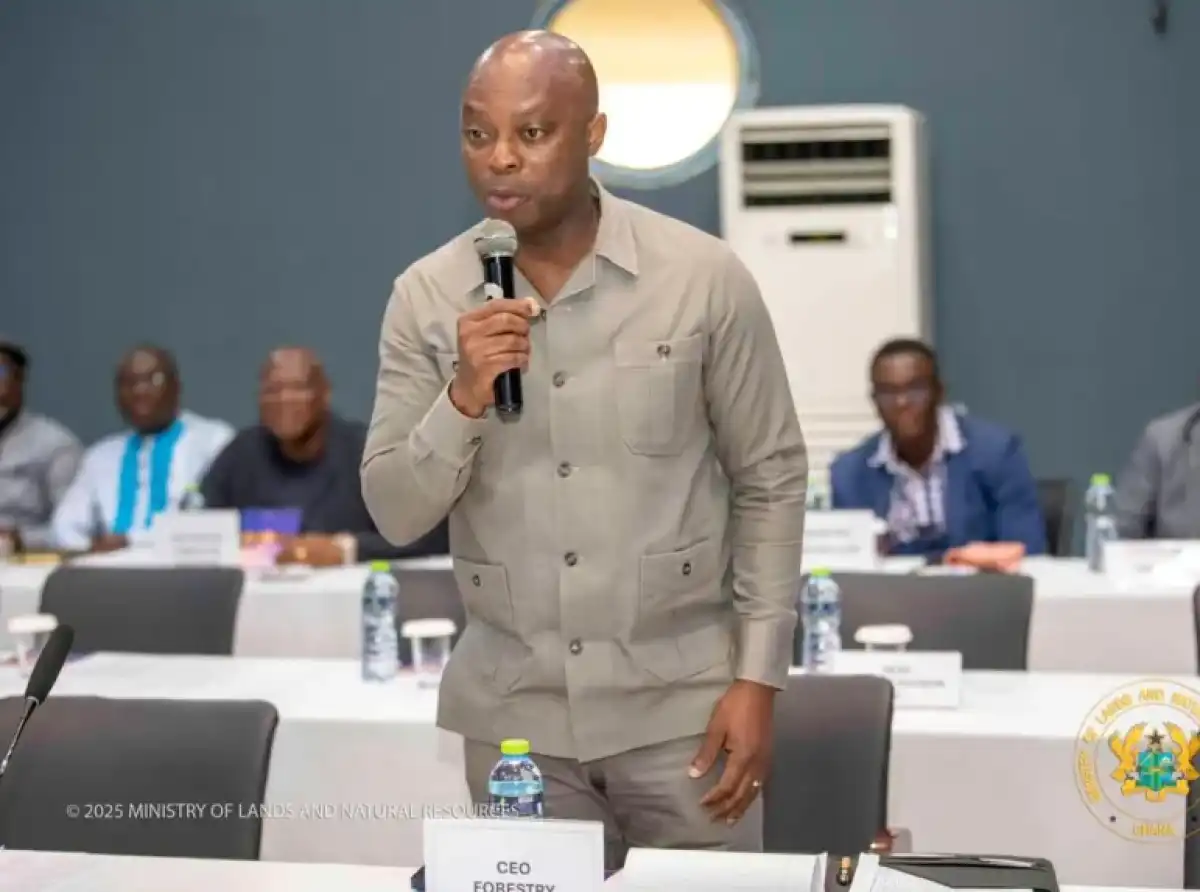
The Chief Executive Officer of the Forestry Commission of Ghana, Dr. Hugh C. A. Brown, has revealed that more than 350 private companies and individuals are actively participating in commercial forest plantation development within the country’s forest reserves.
Speaking at the 2026 Tree for Life Reforestation Initiative held at West Africa Senior High School on June 5 under the theme “Forests and Economies,” Dr. Brown said the growing involvement of the private sector reflects increasing confidence in Ghana’s forest restoration and sustainable forestry agenda.
“Currently, a total of over 350 private companies and individuals are engaged in commercial forest plantations within forest reserves, mainly for timber production and carbon credits,” he stated.
According to Dr. Brown, the forestry sector continues to make a significant contribution to Ghana’s economy through timber production, exports, employment creation, and environmental sustainability.
He disclosed that in 2025, the sector supplied approximately 952,000 cubic metres of timber and timber products to both domestic and international markets.
“In 2025, a total volume of 952,000 cubic metres of timber and timber products were supplied to the domestic and export markets, valued at roughly $260 million,” he said.
The Forestry Commission CEO noted that the figures highlight the sector’s growing role in generating foreign exchange and supporting livelihoods across the country.
Beyond timber production, Dr. Brown said Ghana’s protected forests and wildlife reserves are increasingly attracting tourists, contributing to the growth of the ecotourism industry.
“Visitation to ecotourism sites within wildlife parks and forest reserves was estimated at roughly 800,000 visitors, an increase of over 20 percent over the previous year,” he revealed.
Despite these positive developments, Dr. Brown expressed concern over the continued threat posed by deforestation and forest degradation, particularly within Ghana’s high forest zones.
He warned that ongoing destruction of forest resources threatens biodiversity, wildlife habitats, climate resilience, and the livelihoods of communities that depend on forests for survival.
“However, in spite of these socio-economic and ecological benefits that we derive from our forests, deforestation and forest degradation continue, especially in the high forest zone, threatening wildlife habitats and biodiversity, climate resilience, and the health and livelihoods of forest-dependent communities,” he said.
The Forestry Commission boss called on government agencies, private sector players, local communities, and development partners to strengthen efforts to protect and restore Ghana’s forest resources.
He also highlighted achievements recorded under the Tree for Life Reforestation Initiative, describing it as a key component of the country's environmental restoration strategy.
According to Dr. Brown, a total of 23,600 hectares of degraded and deforested land were restored across the country in 2025 through enrichment planting and forest plantation development programmes.
“In 2025, a total of 23,600 hectares of deforested and degraded landscapes across the country were put under restoration through enrichment planting and forest plantation development,” he stated.
He emphasized that the initiative remains critical to Ghana’s efforts to reverse forest loss, improve environmental sustainability, strengthen climate resilience, and create economic opportunities through responsible forest management.
The Tree for Life Reforestation Initiative forms part of broader national efforts to promote sustainable forestry practices while balancing environmental conservation with economic development.

Aikines Anyomi

News
Food
Politics
Technology
About Us
Download Our Mobile App

