The Government of Ghana has announced plans to formally integrate tricycle waste collectors and waste transfer loading stations into the country's long-term sanitation framework as part of efforts to build a more efficient and sustainable waste management system.
The Minister for Local Government, Chieftaincy and Religious Affairs, Ahmed Ibrahim, said the initiative forms part of broader reforms aimed at modernising waste collection, improving environmental sanitation and strengthening public-private partnerships within the sector.
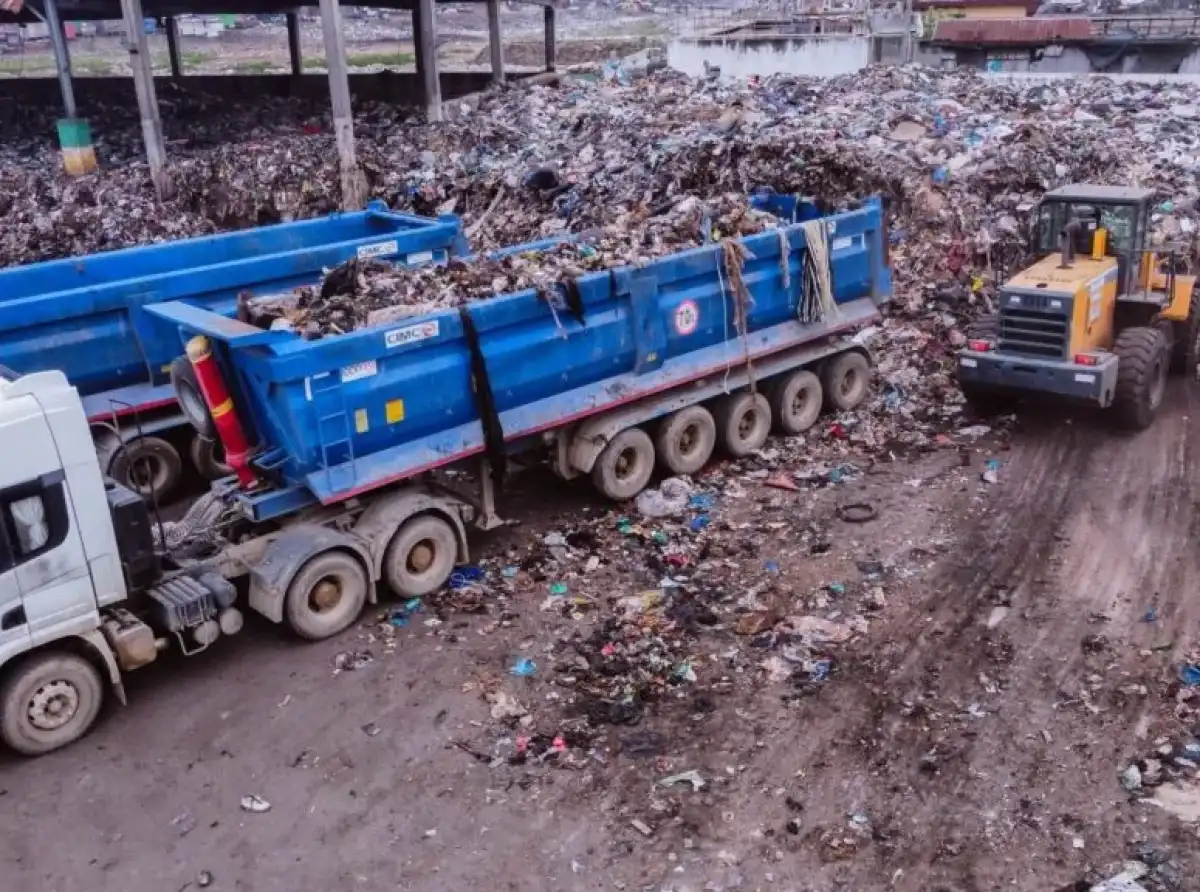
Mr. Ibrahim disclosed the plans during a working visit to the Zoomlion Integrated Recycling and Compost Plant (IRECOP) in Accra on Monday, where the facility is currently operating as a waste transfer station serving the Jamestown area.
According to the Minister, the reforms will establish a more structured and comprehensive waste management system capable of meeting the growing sanitation needs of rapidly expanding urban communities.
He explained that formalising the operations of tricycle waste collectors would improve efficiency, accountability and coordination while creating a sustainable business model for thousands of operators across the country.
Mr. Ibrahim revealed that five of the six designated waste transfer stations in the Greater Accra Region are now operating at full capacity following government intervention after the recent National Sanitation Day exercise.
The operational transfer stations include:
- Abokobi
- Teshie
- Achimota
- Ashaiman
- Jamestown
He said the facilities were reopened on the directive of President John Dramani Mahama to accelerate waste evacuation and prevent the accumulation of refuse that could have resulted in a major public health emergency.
To facilitate rapid waste removal, the Minister explained that government temporarily suspended routine administrative procedures, including waste weighing charges normally imposed at transfer station entry points.
The temporary measure was introduced to allow refuse collection trucks and tricycle operators to dispose of waste quickly without unnecessary delays.
According to him, the intervention significantly improved the movement of waste from communities to designated disposal and processing facilities.
Despite the progress, Mr. Ibrahim noted that the Malam Transfer Station remains non-operational because it lacks a suitable access road.
He disclosed that National Security, working together with the 48 Engineer Regiment of the Ghana Armed Forces, has been tasked to construct the access road to enable the facility to begin operations.
Once completed, the station is expected to reduce pressure on the other transfer facilities serving the Greater Accra Region.
The Minister revealed that the Jamestown transfer station currently serves approximately 800 tricycle waste collectors out of an estimated 4,000 operators who collect refuse daily across Greater Accra.
To prevent congestion, especially considering the station's proximity to the Korle Bu Teaching Hospital, government has introduced a 24-hour operational system.
Under the arrangement, tricycle operators discharge waste during daytime hours, while articulated trucks transport compacted refuse overnight to engineered landfill sites and recycling facilities located in the Eastern Region.
The system is expected to improve operational efficiency while minimising traffic congestion and environmental nuisance around the transfer station.
Mr. Ibrahim also defended government's continued reliance on the Public-Private Partnership (PPP) model in waste management.
He explained that effective sanitation services require significant investments in specialised equipment, landfill infrastructure, logistics, recycling facilities and technical expertise, making private sector participation essential.
The Minister commended the Jospong Group of Companies for responding swiftly to government's request by supplying heavy equipment and operational support on credit during the sanitation exercise.
According to him, the intervention played a critical role in preventing what could have developed into a serious public health crisis.
As part of the broader reforms, Mr. Ibrahim announced that the Ministry is developing a sustainable framework to regulate and formalise tricycle waste collection services nationwide.
The proposed policy will seek to provide operators with a structured legal and operational framework while improving service delivery and environmental standards.
He disclosed that government will engage the Council of State Sub-Committee on Sanitation, seek Cabinet approval for the policy and collaborate with the Ministry of Finance to secure funding for additional engineered landfill sites, waste transfer stations and modern recycling infrastructure.
The Minister expressed confidence that the reforms will create a cleaner, healthier and more sustainable waste management system capable of supporting Ghana's long-term environmental and urban development objectives.

Aikines Anyomi

News
Food
Politics
Technology
About Us
Download Our Mobile App

