
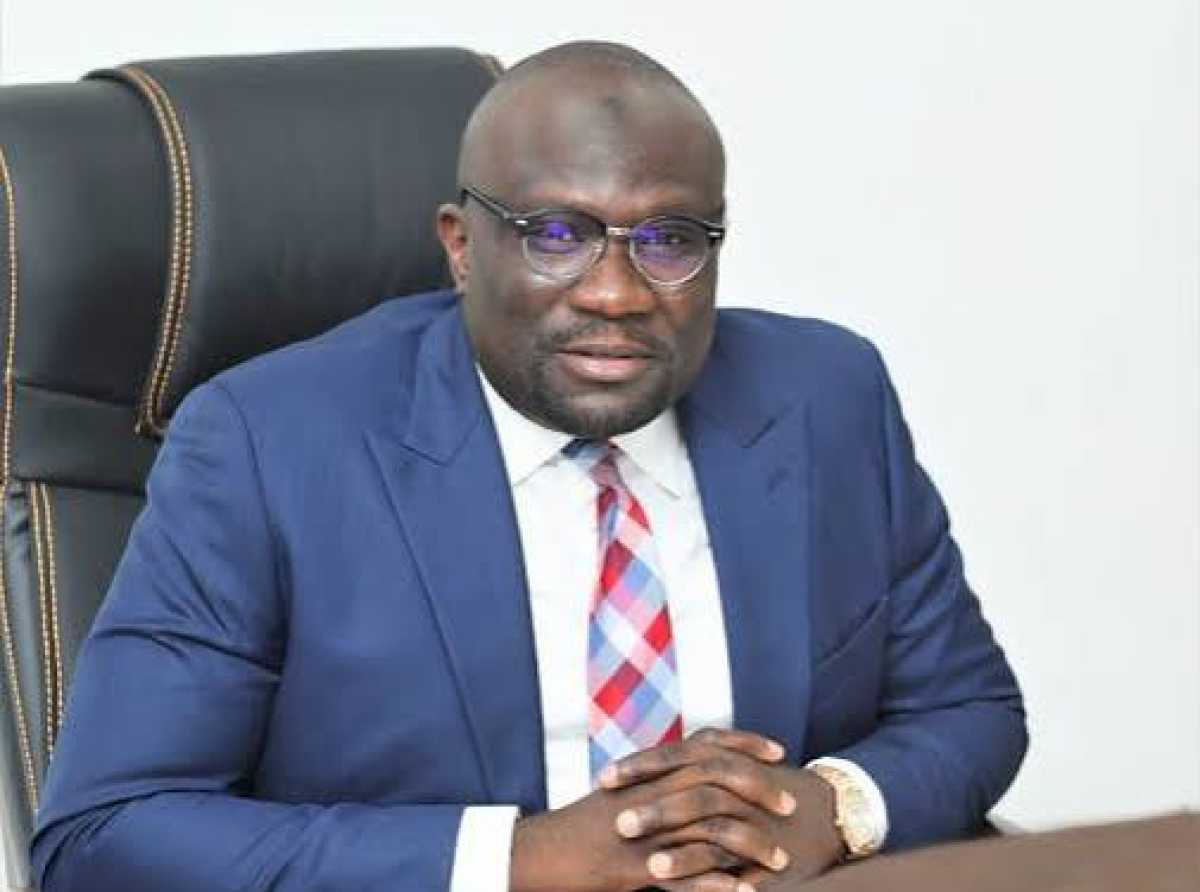
Former Chief Executive Officer of the National Food and Buffer Stock Company (NAFCO), Hanan Abdul-Wahab Aludiba, has been released from the custody of the Economic and Organised Crime Office (EOCO) following days of detention over allegations linked to his attempt to access a frozen bank account before travelling abroad.
Sources familiar with the development said Mr. Abdul-Wahab was released at about 8:00 p.m. on Wednesday, July 8, 2026, and was not required to meet any bail conditions before regaining his freedom.
His release comes after a highly publicised re-arrest that has intensified the legal dispute between the Attorney-General's Office and his legal team.
Mr. Abdul-Wahab was re-arrested by EOCO on the night of Saturday, July 4, 2026, at the Accra International Airport shortly before he was expected to travel to the United Kingdom for specialist medical treatment.
Investigators alleged that the former NAFCO CEO attempted to use false means to gain access to a frozen account held at Republic Bank despite existing court orders restricting transactions on the account.
The allegations prompted EOCO to intervene, leading to his detention and fresh investigations into the matter.
The re-arrest immediately sparked legal controversy, with lawyers for the former public official questioning both the legal basis of the arrest and the procedure followed by investigators.
Following the arrest, Deputy Attorney-General and Minister for Justice, Dr. Justice Srem-Sai, announced that the Attorney-General intended to return to the High Court to seek a review of the earlier ruling that permitted Mr. Abdul-Wahab to travel outside Ghana.
According to the Attorney-General's Office, new evidence had emerged after the court granted the travel order, raising concerns over whether the accused should be allowed to leave the jurisdiction while investigations and criminal proceedings remain ongoing.
The state maintains that the latest developments justify a reconsideration of the court's decision.
Mr. Abdul-Wahab has remained at the centre of a high-profile legal dispute arising from allegations of financial misconduct connected to his tenure as Chief Executive Officer of the National Food and Buffer Stock Company.
He and his wife, Faiza Seidu Wuni, were initially charged alongside other accused persons over alleged financial offences involving the state-owned company.
However, the Attorney-General's Office later withdrew the charges against all the accused persons after indicating that fresh evidence had emerged, leading to their discharge by the High Court.
Despite that development, EOCO subsequently re-arrested Mr. Abdul-Wahab and his wife, a move that generated renewed public debate over the legality of the investigations and the exercise of the Office's powers.
Throughout the proceedings, Mr. Abdul-Wahab has consistently denied any wrongdoing and maintains that he is innocent of the allegations against him.
His legal team, led by former Attorney-General Godfred Yeboah Dame, has strongly challenged the state's actions, arguing that the re-arrest was unlawful and unsupported by the facts.
Mr. Dame contends that contrary to assertions made by the Attorney-General's Office, no application had been filed before the High Court to review the travel order before his client's arrest at the Accra International Airport.
He further described the Attorney-General's public explanation as misleading and an attempt to justify what the defence considers to have been an unlawful detention.
EOCO has rejected claims that the re-arrest was improper, insisting that its actions were lawful and carried out in accordance with due process.
The anti-corruption agency maintains that its investigations are continuing and that every procedural step taken has been consistent with its statutory mandate to investigate suspected economic and organised crime.
Although Mr. Abdul-Wahab has now been released, the broader legal battle surrounding the NAFCO case remains unresolved, with the High Court expected to consider the Attorney-General's application regarding his travel permission while investigations continue.

Aikines Anyomi

News
Food
Politics
Technology
About Us
Download Our Mobile App

