Ghana’s presidency too powerful; constitutional review must fix it – Swiss Ambassador
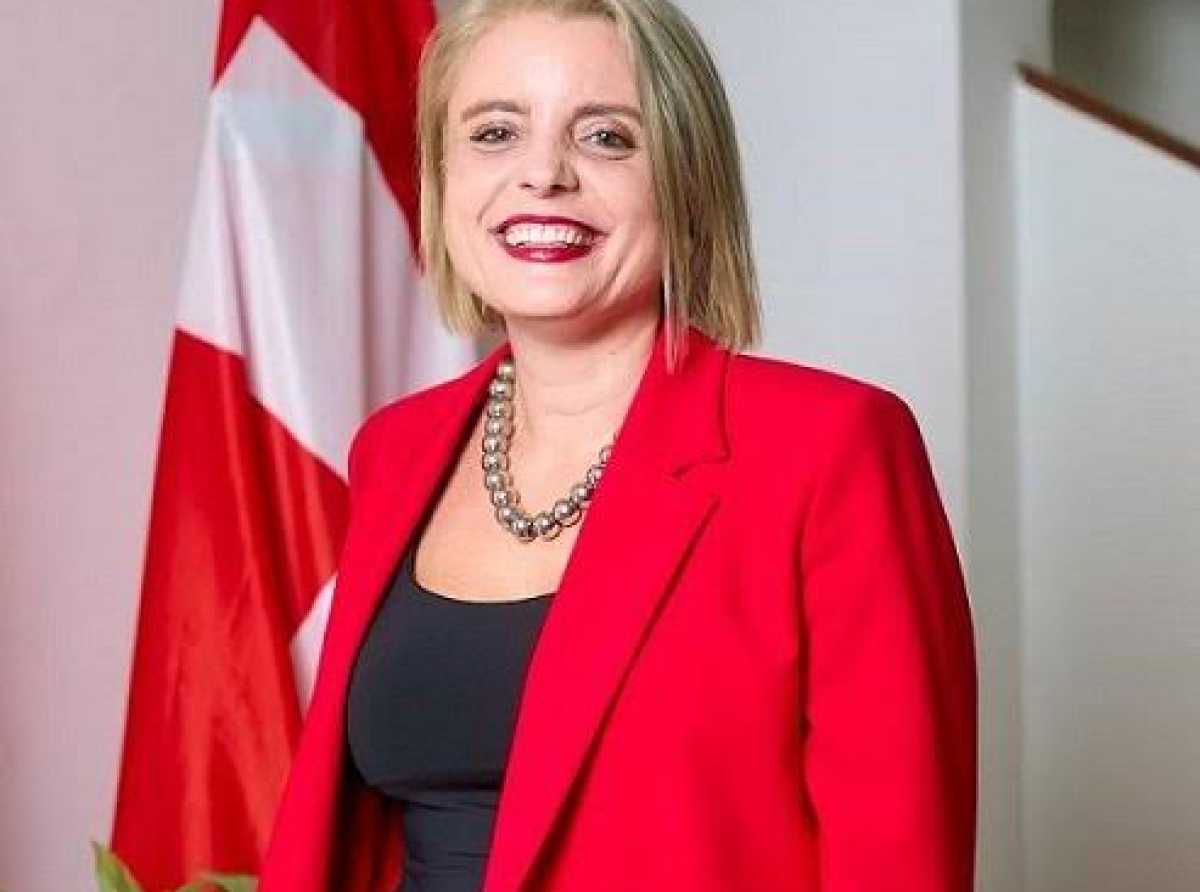
Outgoing Swiss Ambassador to Ghana, Benin and Togo, Simone Giger, has urged Ghana to use its ongoing constitutional review process to reduce the concentration of power in the presidency, arguing that stronger checks and balances are essential to consolidating the country's democratic gains.
Speaking on Citi FM's Citi Breakfast Show on Thursday, July 9, Ambassador Giger said Ghana's 1992 Constitution has played a historic role in the country's democratic transition but believes the time has come to reform aspects of it to reflect Ghana's political maturity and evolving governance needs.
The Swiss diplomat commended Ghana for its long-standing democratic stability, describing the country's peaceful elections and orderly transfers of political power as an example for many countries across Africa.
Reflecting on Ghana's most recent general election, Ambassador Giger said witnessing the peaceful transition of power reinforced her confidence in the country's democratic institutions.
We saw it also with the last elections. Again, a peaceful transfer of power. I went to observe the elections. It really touched my heart."
She noted that Ghana's democratic achievements provide a solid foundation upon which further constitutional reforms can be built.
Ambassador Giger disclosed that Switzerland has been supporting Ghana's constitutional review efforts through various governance and parliamentary development programmes.
According to her, Switzerland works closely with Parliament, including young legislators and the Parliamentary Women's Caucus, to promote democratic governance and institutional strengthening.
We work with Parliament, especially with young parliamentarians and with the Women's Caucus. We support the constitutional reform process."
She described the constitutional review exercise as an important opportunity to strengthen Ghana's democratic institutions and improve governance.
While acknowledging the historical importance of the 1992 Constitution, Ambassador Giger argued that its governance framework remains highly centralised, with significant authority concentrated in the Office of the President.
She explained that the Constitution was originally designed to facilitate Ghana's transition from military rule to constitutional democracy and therefore reflected the realities of that period.
It was a brilliant constitution for the time of the day. But it was also a transitional constitution. You have so many powers vested in the president. It's very centralized. Everything is in Accra."
According to the outgoing envoy, Ghana's next phase of democratic development should focus on redistributing authority among state institutions and strengthening oversight mechanisms.
Ambassador Giger advocated greater decentralisation of political authority and stronger institutional independence to improve accountability and democratic governance.
She said no single institution should wield excessive power, arguing that effective governance depends on multiple institutions exercising oversight over one another.
I really think the next step should be to decentralize power, deconcentrate power, and have proper checks and balances. All the institutions should have a say."
She explained that dispersing authority among different institutions helps reduce the risk of excessive concentration of power while strengthening democratic accountability.
Drawing comparisons with Switzerland's political system, Ambassador Giger said one of the country's greatest strengths is its highly decentralised governance structure.
According to her, authority is shared across institutions and different levels of government, creating a system in which no single individual or institution dominates decision-making.
I think what the Swiss got right, better than anyone else probably, is that no one really holds power in Switzerland because everybody has a little bit of power. So we all keep each other in check."
However, she emphasised that Ghana should not attempt to copy Switzerland's constitutional model wholesale.
Instead, she encouraged Ghana to design reforms that reflect its own political history, social realities and national aspirations.
You cannot copy from any other country. But I think that was a major insight many, many years ago. Deconcentration is key."
When asked whether she supports proposals to decentralise political power through Ghana's constitutional review process, Ambassador Giger gave an unequivocal endorsement.
A hundred per cent. A hundred per cent."
She expressed optimism that meaningful constitutional reforms would strengthen Ghana's democratic institutions, improve governance and position the country for sustained political and economic development.
I'm 100 per cent sure that if you get this right now, then Ghana will be a different country."
As Ghana continues its constitutional review process, Ambassador Giger's remarks add to the broader national conversation on governance reforms, institutional independence and the need to modernise the 1992 Constitution to meet the demands of a more mature constitutional democracy.

Aikines Anyomi
News
Food
Politics
Technology
About Us
Download Our Mobile App

