Interior Minister briefs Veep Opoku-Agyemang on major security reforms
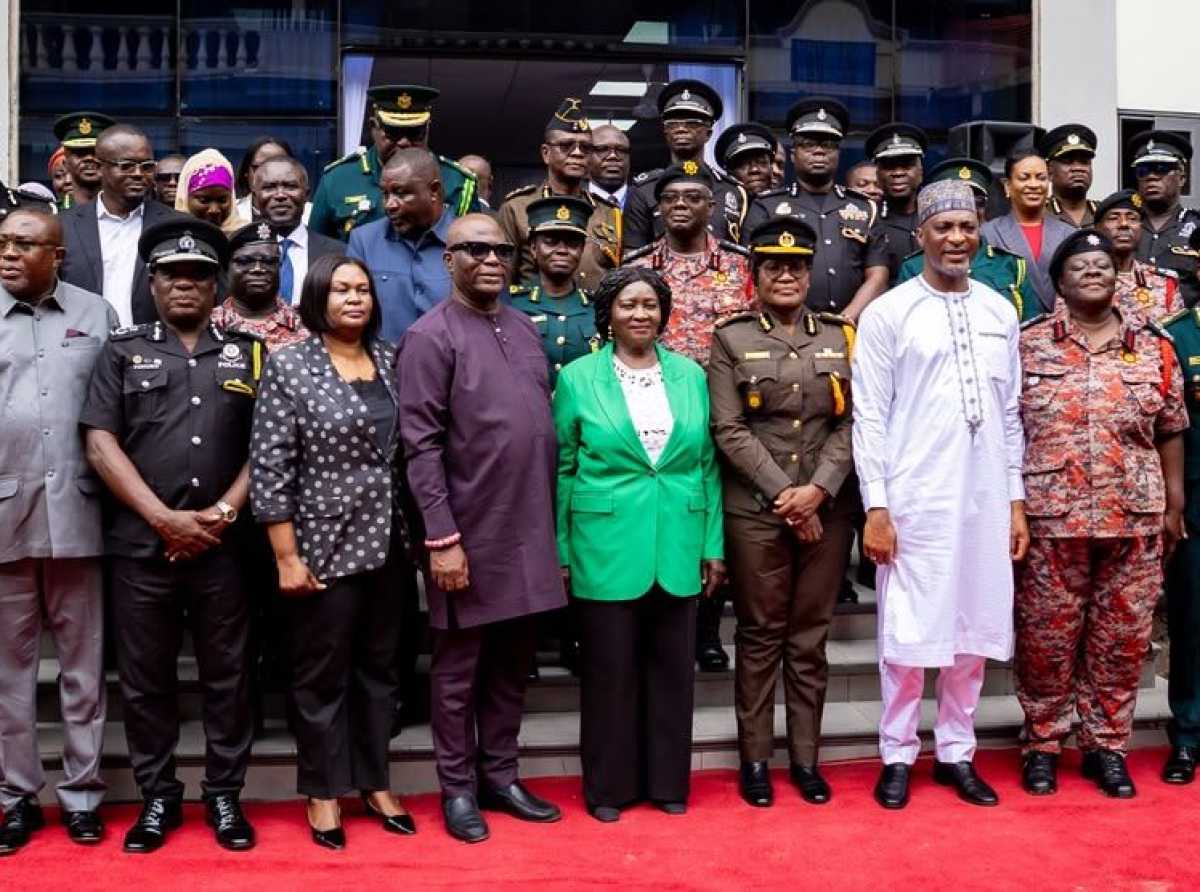
The Minister for the Interior, Muntaka Mohammed-Mubarak, has outlined a series of major reforms, legislative milestones and operational improvements undertaken by the Ministry of the Interior, describing them as critical steps toward strengthening Ghana's internal security architecture and improving public service delivery.
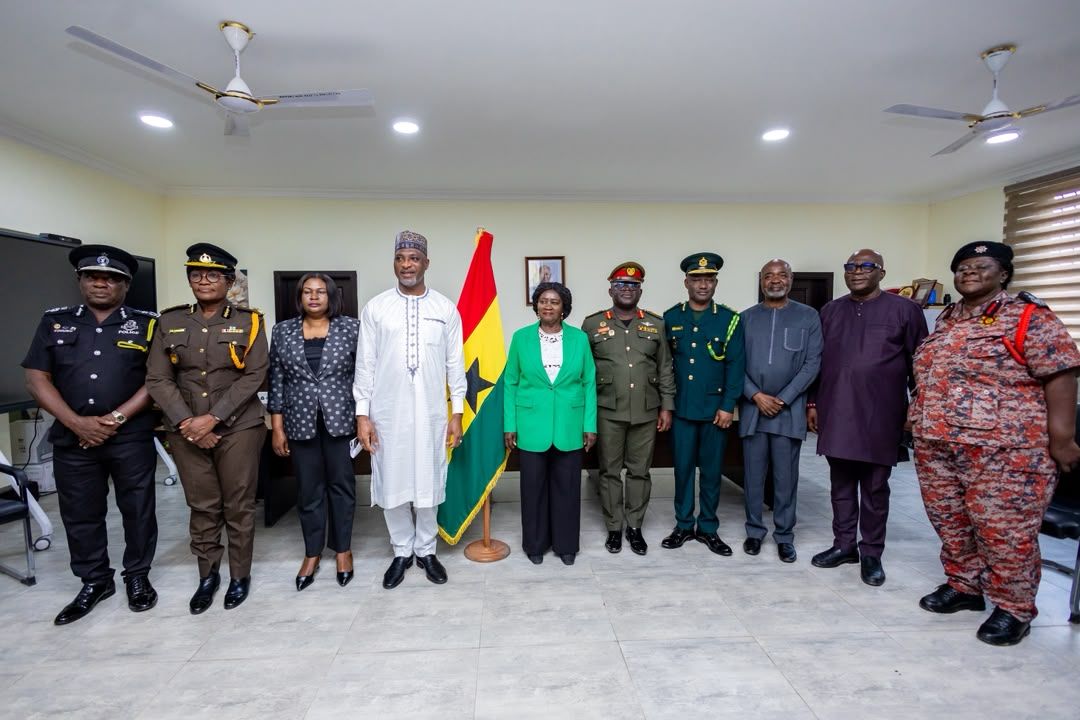
Speaking during a working visit by Vice President Professor Naana Jane Opoku-Agyemang to the Ministry on Monday, July 13, 2026, the Minister said the visit provided an opportunity to present the Ministry's strategic direction, showcase key achievements, discuss existing challenges and outline future priorities.
He noted that the Ministry remains at the centre of maintaining law and order, coordinating national security institutions, managing migration and disasters, promoting peaceful coexistence and creating a secure environment that supports economic growth and national development.
The Ministry's work is closely aligned with government's national transformation agenda. Effective internal security is fundamental to sustainable development, investor confidence, social cohesion, and the successful delivery of public services," he said.
Mr. Mohammed-Mubarak revealed that Parliament has approved several important pieces of legislation aimed at modernising Ghana's security framework.
Among them is the Security and Intelligence Agencies Act, while the Ghana Prisons Service Bill has also been passed by Parliament and is awaiting presidential assent.
He described the passage of the Prisons Service Bill as a landmark achievement, noting that reforms to the legislation had been under discussion since Ghana returned to constitutional rule in 1992.
The Minister further disclosed that Parole Regulations are nearing completion following parliamentary consideration.
According to him, once implemented, the regulations will significantly reform Ghana's correctional system by introducing parole and strengthening the implementation of community service to help reduce prison overcrowding.
He also highlighted amendments to the Public Holidays Act, which now allow public holidays falling on weekends to be observed in a manner that supports tourism, productivity and economic activity.
The Interior Minister announced that the Ministry has significantly expanded its digital transformation agenda, with 18 public services now available online.
He explained that citizens no longer need to visit ministry offices physically to access several administrative services, including the registration of private security organisations and other regulatory processes.
The Ministry is also working to integrate digital platforms across all agencies under its supervision to improve efficiency, reduce paperwork and enhance service delivery.
One of the major milestones, he said, is the introduction of an electronic visa (e-Visa) system by the Ghana Immigration Service.
According to the Minister, the platform has already recorded nearly 1,500 visa applications from 78 countries within a short period after its launch.
He added that the Narcotics Control Commission (NACOC) has also digitised its licensing processes, including applications relating to industrial cannabis.
Mr. Mohammed-Mubarak said government has invested significantly in strengthening the operational capacity of security agencies through the acquisition of vehicles and equipment.
According to him:
- The Ghana Police Service has received 160 pickup vehicles and 50 armoured vehicles.
- The Ghana Prisons Service has been provided with 25 pickup vehicles and buses.
- The Ghana National Fire Service has taken delivery of approximately 20 pickup vehicles.
- The Ghana Immigration Service has received about 25 additional operational vehicles.
- The Narcotics Control Commission, which reportedly had not received new operational vehicles for nearly a decade, has now been equipped with 22 vehicles to strengthen its operations.
The Minister said the logistical support is expected to improve mobility, operational readiness and the effectiveness of security agencies nationwide.
Mr. Mohammed-Mubarak revealed that government has shifted its anti-narcotics strategy away from targeting drug users and towards dismantling organised drug trafficking networks.
He said authorities are now focusing on identifying drug kingpins, disrupting trafficking operations and confiscating assets linked to illicit drug activities.
According to the Minister, several assets connected to suspected drug traffickers have already been seized as part of the intensified enforcement campaign.
He further announced the establishment of a dedicated narcotics court to handle drug-related offences more efficiently.
In addition, the Narcotics Control Commission has been granted prosecutorial powers, allowing it to prosecute cases directly instead of relying exclusively on the Office of the Attorney-General.
To support the new arrangement, lawyers are currently undergoing specialised training to improve prosecutions and increase conviction rates in narcotics-related cases.
Beyond law enforcement, the Interior Minister stressed that public education remains an essential pillar of the government's anti-drug strategy.
He said sustained awareness campaigns will complement enforcement efforts by educating the public about the dangers of illicit drug use while encouraging communities to support the fight against organised crime.
The Minister expressed confidence that the combined legislative reforms, digital transformation initiatives, logistical investments and targeted anti-crime strategies will strengthen Ghana's internal security system and contribute to national development.

Aikines Anyomi

News
Food
Politics
Technology
About Us
Download Our Mobile App

