'The sword does not cut one way' - Mahama pledges to prosecute corrupt appointees
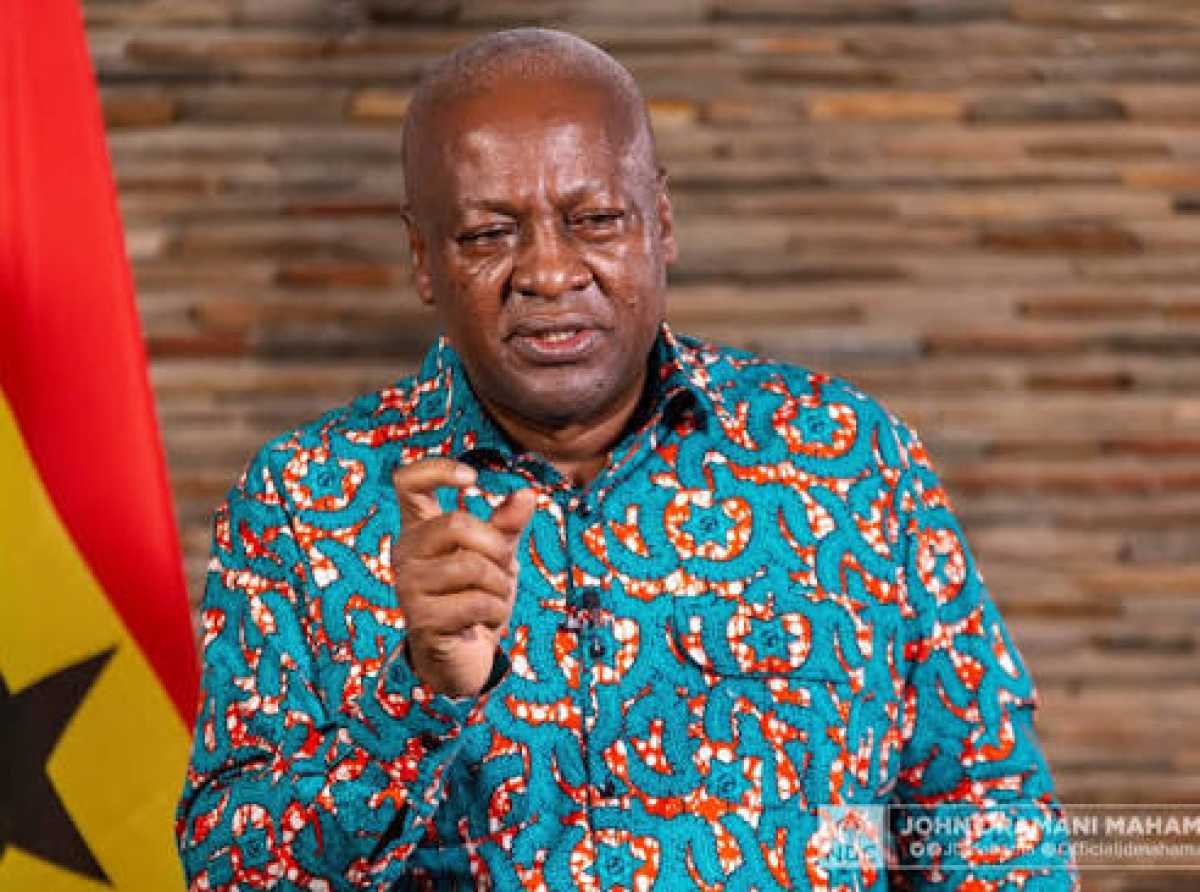
President John Dramani Mahama has reaffirmed his administration's commitment to fighting corruption, declaring that no government appointee found to have abused public office will be shielded from accountability regardless of political affiliation.
The President said his government's anti-corruption drive would be guided strictly by evidence and due process, insisting that investigations into alleged wrongdoing would apply equally to both current and former public officials.
Speaking during the Citizens Engagement with the President in Ho, Volta Region, on Friday, July 17, President Mahama stressed that his administration would not tolerate misconduct within its own ranks and warned appointees against bypassing established procedures.
President Mahama disclosed that he has consistently cautioned ministers, chief executives and other government officials to uphold the highest standards of integrity and comply fully with public sector regulations.
He said any official found to have abused the public trust would face the full force of the law.
"Like I keep saying, the sword does not cut one way. If we find evidence that any of our current appointees or persons working in government under our tenure has also abused the public trust, the way the sword is cutting that way, it will cut this way too."
The President further advised government officials to avoid shortcuts that could expose them to allegations of corruption or misconduct.
"I always caution my appointees to be very careful. Be sure you follow the procedure; don't cut corners."
Responding to claims that state institutions were targeting political opponents, President Mahama rejected suggestions that ongoing investigations were driven by partisan considerations.
He maintained that every case is assessed independently and only proceeds when investigators establish sufficient evidence.
"It should not be like we are trying to hound our political opponents or something. We proceed on the basis of evidence we have received and then the evidence is weighed to determine if it is sufficient."
According to the President, the government remains committed to ensuring that justice is administered fairly and transparently without political interference.
President Mahama explained that investigative bodies thoroughly examine allegations before making arrests or initiating prosecutions.
He noted that many complaints received by anti-corruption agencies do not automatically result in criminal charges, as investigators first assess whether the available evidence meets the required legal threshold.
"There are many times we have reports and all that. Sometimes the evidence comes and it is not substantive and so you would say, on the weight of this evidence, you cannot proceed to court, and so discard it or investigate further and see if there is something else that you have not found," he said.
He stressed that where evidence is insufficient, investigators either discontinue the matter or undertake further inquiries before deciding on the appropriate course of action
The President also defended the work of state investigative agencies, including the Economic and Organised Crime Office (EOCO) and the Office of the Special Prosecutor (OSP), describing their investigations as detailed and evidence-driven.
According to him, these institutions spend several months reviewing documents, interviewing witnesses and gathering evidence before taking enforcement action.
"By the time EOCO or OSP comes to arrest a person, it means that months of work have taken place reviewing the evidence."
He said the investigative process is designed to ensure that arrests and prosecutions are based on credible evidence rather than speculation or political pressure.
President Mahama's remarks come amid heightened public interest in ongoing investigations involving several former public officials and renewed calls for greater transparency and accountability in public administration.
The President reiterated that his administration remains committed to strengthening the rule of law, protecting public resources and ensuring that every allegation of corruption is handled fairly, professionally and in accordance with Ghana's laws.

Aikines Anyomi

News
Food
Politics
Technology
About Us
Download Our Mobile App

