
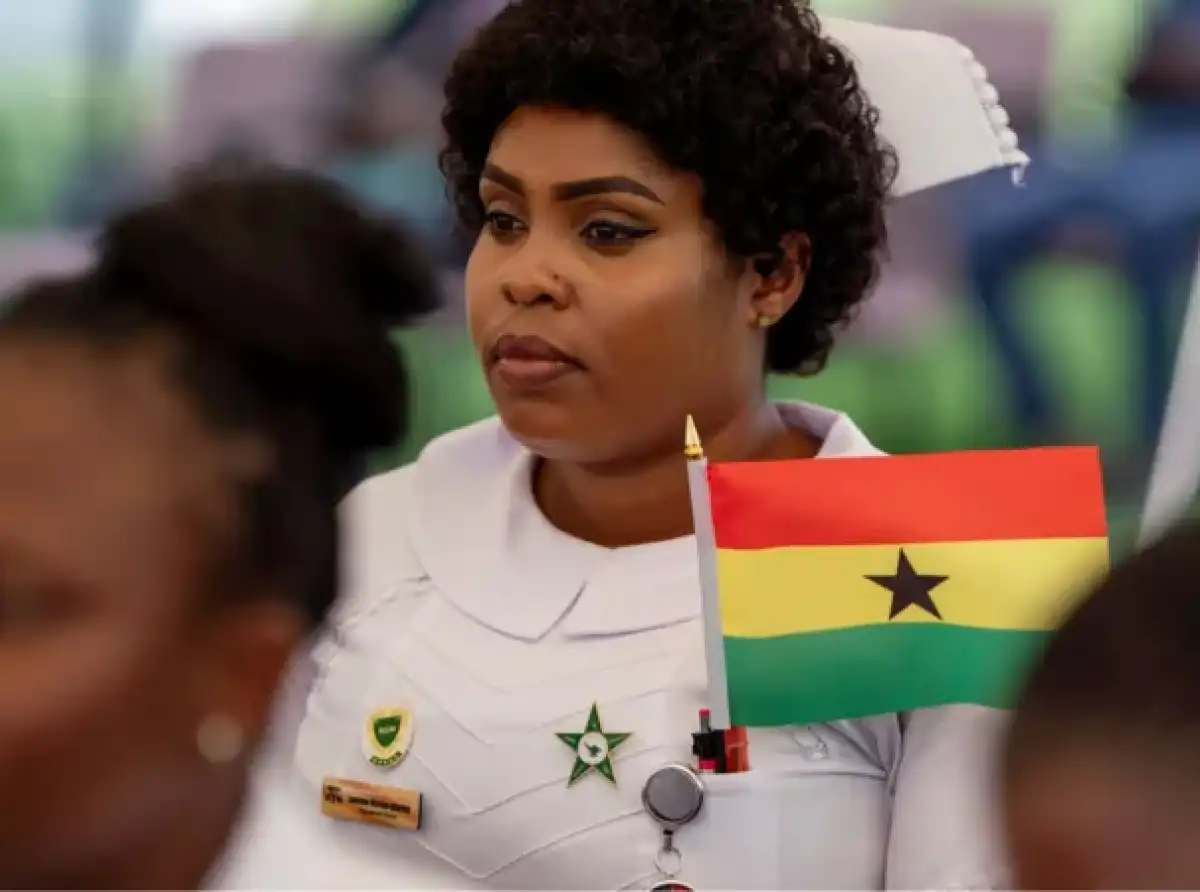
Ghana has declined to sign a new United States global health funding agreement introduced by the administration of President Donald Trump, citing concerns over data privacy, national sovereignty and the protection of sensitive health information.
The decision places Ghana among a small group of African countries, including Zimbabwe and Zambia, that have resisted the new bilateral health partnerships despite Washington's offer of hundreds of millions of dollars in healthcare support.
The agreements form part of the Trump administration's new global health strategy following the dismantling of the United States Agency for International Development (USAID), a move that significantly reduced American-funded health programmes across Africa.
After shutting down USAID's traditional foreign assistance operations, the United States shifted to negotiating direct government-to-government health agreements with partner countries.
Unlike previous aid programmes that channelled funding through international organisations and non-governmental organisations, the new approach requires recipient governments to increase domestic health spending while partnering directly with Washington.
US Secretary of State Marco Rubio has described the strategy as one designed to help countries build sustainable healthcare systems instead of relying indefinitely on foreign aid.
Under the new framework, the United States says assistance is intended not only to address immediate health challenges but also to strengthen local institutions and improve long-term self-reliance.
Kenya became the first African country to sign the new Memorandum of Understanding (MoU), valued at approximately $2.5 billion, although the agreement initially faced legal challenges before eventually receiving cabinet approval.
Under the arrangement, the United States will contribute about $1.6 billion, while Kenya is expected to invest approximately $850 million over a five-year period.
Washington hopes similar agreements will be adopted across Africa as part of its redesigned foreign assistance programme.
Despite the potential financial support, Ghana declined to endorse the proposed agreement after raising concerns about provisions relating to health data sharing.
Executive Director of Ghana's Data Protection Commission, Arnold Kavaarpuo, explained that the government was uncomfortable with the extent of medical data that would be transferred to US authorities.
According to him, the proposed arrangement lacked sufficient guarantees regarding the protection of Ghanaian data once it left the country's jurisdiction.
"We had concerns around the scope and breadth of data that was being required," he said.
"It was us generating data and passing it on to the US authorities, and there were no real reciprocal measures when it comes to the protection of Ghanaian data and Ghanaian sovereignty."
He added that Ghana would lose control over how such information might be used after it was transferred outside the country.
Zambia has also declined to sign the agreement after objecting to what it described as attempts to tie healthcare funding to broader economic negotiations.
Foreign Affairs Minister Mulambo Haimbe disclosed that American negotiators sought to connect the health agreement with discussions involving Zambia's critical mineral resources.
According to the minister, Zambia insisted that the two matters should be negotiated separately rather than as part of a single package
Zimbabwe likewise rejected the proposal, expressing concerns about requests for pathogen samples and medical information that could be shared with US pharmaceutical companies.
Authorities questioned whether medicines or vaccines developed using Zimbabwe's biological resources would ultimately be made available to Zimbabweans.
The government argued that existing international mechanisms under the World Health Organization already provide a more balanced framework for sharing disease data and ensuring equitable access to future treatments.
The US State Department has defended the new approach, insisting that American foreign assistance should advance US strategic and commercial interests alongside humanitarian objectives.
Officials argue that the agreements are designed to produce stronger healthcare systems while encouraging countries to finance a greater share of their own public health services.
The Trump administration has also made clear that American pharmaceutical companies will play a central role in research, development and delivery of treatments under the partnerships.
According to the policy framework, US global health assistance is intended to serve as "a strategic mechanism to further our bilateral interests around the world."
The new bilateral agreements also reflect Washington's broader move away from multilateral institutions.
Earlier this year, the United States withdrew from the World Health Organization (WHO), accusing the UN agency of mismanaging the COVID-19 pandemic, lacking transparency and placing an unfair financial burden on the United States.
Health experts say the new strategy marks a significant shift from international cooperation through global institutions toward country-specific agreements driven by strategic interests.
The controversy surrounding the new health partnerships has intensified following a fresh Ebola outbreak in the Democratic Republic of Congo.
Although DR Congo signed one of the new US agreements, humanitarian organisations argue that earlier cuts to USAID programmes weakened emergency preparedness and delayed the initial response to the outbreak.
Aid organisations say reductions in staffing, medical supplies and disease surveillance created gaps in frontline response efforts, although the United States maintains that its new funding arrangements remain effective and has pledged approximately $270 million to support Ebola response activities.
Health policy experts warn that infectious diseases do not respect national borders and require coordinated international action.
Former US Centers for Disease Control official Dr Kevin DeCock argued that global health challenges cannot be addressed effectively through bilateral arrangements alone.
"Global health problems require global approaches, and no country can go it alone," he said.
Others, however, believe the Trump administration's strategy deserves time to demonstrate whether direct partnerships with governments can produce more accountable and sustainable healthcare systems than previous donor-driven models.
While more than 30 countries across Africa, Latin America and the Caribbean have reportedly accepted the new agreements, several African governments continue to weigh the benefits against concerns over sovereignty, data protection and national interests.
For Ghana, the decision reflects a broader commitment to protecting citizens' personal data and ensuring that international partnerships respect the country's legal framework and sovereign control over sensitive national information.
As negotiations continue across the continent, the future of America's redesigned global health strategy in Africa remains uncertain, with governments balancing much-needed healthcare investment against concerns over strategic conditions attached to the funding.

Aikines Anyomi

News
Food
Politics
Technology
About Us
Download Our Mobile App

