
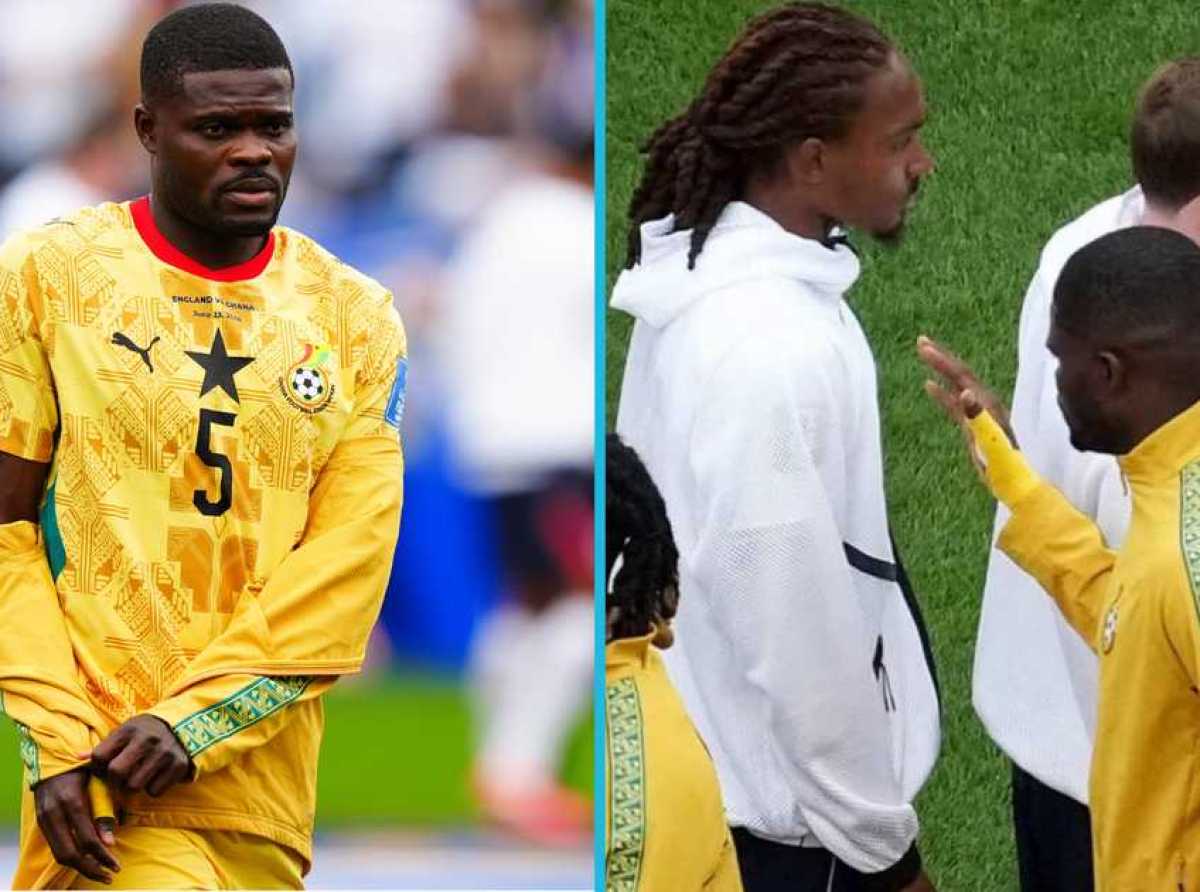
Veteran Ghanaian broadcaster and media personality Samuel Attah-Mensah has called for respect for the principle of due process in an open letter addressed to England defender Djed Spence following a widely discussed incident involving Ghana midfielder Thomas Partey before a recent international match.
In the letter, Attah-Mensah reflected on a moment during the pre-match introductions ahead of the Ghana-England encounter, where video footage circulating online appeared to show Spence declining to shake Partey’s hand.
The incident quickly generated debate among football fans and commentators, with some interpreting the gesture as a response to the legal charges currently facing the Ghanaian midfielder in England.
While acknowledging that the intentions behind the incident remain unclear, Attah-Mensah argued that public reactions should be guided by the principles of justice and fairness rather than assumptions.
Central to Attah-Mensah’s message was the legal principle that every individual is presumed innocent until proven guilty by a court of competent jurisdiction.
He noted that while Thomas Partey has been charged and faces ongoing legal proceedings, the former Arsenal midfielder has publicly denied the allegations and is entitled to defend himself through the judicial process.
“The foundation of every credible justice system is the principle that an individual is presumed innocent until proven guilty,” Attah-Mensah wrote.
He emphasized that determining guilt or innocence is the responsibility of judges and juries, not athletes, fans, media personalities, or social media commentators.
According to him, allowing legal institutions to perform their role without external pressure remains essential to maintaining confidence in the justice system.
Attah-Mensah also highlighted the influence professional athletes wield, particularly among younger generations who often view footballers as role models beyond their performances on the field.
He suggested that public figures should exercise caution when addressing matters that remain before the courts, arguing that restraint can sometimes communicate stronger values than public displays of judgment.
“You are a talented young footballer with a promising career ahead of you. With that promise comes influence,” he stated.
The veteran broadcaster noted that life often teaches lessons about humility, patience, and the importance of allowing facts to emerge before conclusions are reached.
According to Attah-Mensah, if the gesture was intended as a moral statement regarding the allegations against Partey, it may not have produced the desired effect.
He argued that some observers viewed the incident as a premature judgment of a person whose legal case has yet to be determined by the courts.
Rather than generating support for the perceived message, he suggested that the episode may have strengthened sympathy for Partey among sections of the public who believe strongly in due process and the presumption of innocence.
At the same time, Attah-Mensah stressed that allegations of sexual violence should always be treated with seriousness and sensitivity.
He cautioned against dismissing such accusations but maintained that respecting the rights of the accused remains equally important in ensuring that justice is ultimately served.
The broadcaster further reflected on football’s unique ability to unite people from different backgrounds, cultures, religions, and political beliefs.
He described the traditional pre-match handshake as a symbol of mutual respect between competitors, regardless of personal opinions or disagreements.
“Football has always had the power to bring people together,” he wrote, adding that the gesture does not necessarily imply friendship or endorsement but rather recognition of shared humanity and sportsmanship
Concluding his letter, Attah-Mensah encouraged Spence and others in the public spotlight to resist pressure to make immediate judgments on unresolved legal matters.
He argued that justice often requires patience and that facts and evidence should be allowed to guide outcomes rather than public sentiment.
“Let the courts do their work. Let justice move at its own pace. And let football remain a stage where competition is fierce but respect endures,” he wrote.
The letter has since sparked conversations among football supporters, legal observers, and social media users about the balance between personal convictions, public conduct, and the principle of due process in high-profile cases.
As discussions continue, the incident serves as another reminder of the growing intersection between sports, social issues, and public perceptions of justice in the digital age.

Aikines Anyomi

News
Food
Politics
Technology
About Us
Download Our Mobile App

